Chickens Stopped Laying Eggs? Here’s Why and What to Do
When your chickens stopped laying eggs, the first thing to figure out is whether you’re dealing with the whole flock or just one hen.
A sudden drop in egg production usually has an explanation. Shorter days, molting, broodiness, feed or water problems, extreme weather, stress, age, or illness can all cause hens to slow down or stop laying.
But don’t start changing everything in the coop at once.
First figure out whether you’re dealing with the whole flock or one hen, and whether production stopped suddenly or gradually. Those two clues will narrow the problem down surprisingly fast.
Why Did My Chickens Stop Laying Eggs?
When otherwise healthy chickens stop laying, the most common causes include decreasing daylight, molting, broodiness, poor nutrition and stress. Age and health problems can also reduce production.
Here’s where I would look first.
| What You’re Seeing | Start Here |
|---|---|
| Whole flock slowed as fall arrived | Shorter daylight |
| Feathers suddenly everywhere | Molting |
| One hen refuses to leave a nest | Broodiness |
| Whole flock suddenly stopped | Feed, water, weather or major stress |
| Production dropped during hot weather | Heat stress and water |
| Hens visit nests but eggs disappear | Hidden nests or egg eating |
| One older hen gradually slowed | Age |
| Hen stopped laying and acts sick | Illness or parasites |
The important part is not treating every possibility as equally likely.
First, Is It the Whole Flock or One Hen?
If nearly your entire flock stopped laying within a short period, look for something affecting all of them.
Ask yourself:
- Did the days suddenly get noticeably shorter?
- Did the weather turn extremely hot?
- Did the water freeze or run dry?
- Did you change feed?
- Did you move the flock or add new chickens?
- Has a predator been bothering the coop?
- Are several birds beginning to molt?
Those are flock-level problems.
If one hen stopped while everyone else continues laying, look at the individual bird instead. She may be broody, molting, older, sick, or laying her eggs somewhere you haven’t found.
That distinction can save you a lot of unnecessary tinkering.
The Most Common Reason Chickens Stop Laying: Shorter Days
If your chickens stopped laying as summer turned to fall, daylight is the first place I would look.
Chickens are surprisingly tuned in to the changing seasons. As the days get shorter, egg production naturally begins to slow. Some hens will continue laying here and there through winter, while others may quit almost completely until the days begin to lengthen again.
This is especially noticeable when you have been gathering a dependable number of eggs all summer. One week the basket is full, and a few weeks later you’re wondering what happened.
Nothing may be wrong with your chickens at all.
Hens generally need about 14 to 16 hours of light each day to maintain their highest level of egg production. Once the days shorten in fall, their bodies begin putting less energy toward producing eggs. This also happens to be the time of year many chickens begin molting, so the two often arrive together and make the drop in eggs seem even more dramatic.
Should You Add Supplemental Light in Winter?
You can add supplemental lighting to the coop if maintaining winter egg production is important to you. If you do, use a timer and add the extra light in the early morning rather than keeping the coop brightly lit late into the evening. That allows the chickens to settle onto the roost naturally as daylight fades.
But supplemental lighting isn’t something you have to do.
I am perfectly comfortable letting chickens be chickens. If shorter winter days mean fewer eggs for a while, I don’t consider that a problem that needs fixing. I would rather adjust my expectations than immediately start manipulating the coop because the egg basket isn’t as full as it was in July.
Before you change anything, look at the calendar.
If your chickens are healthy, eating and drinking normally, and egg production dropped right along with the shortening days, you may already have your answer.
Molting Can Bring Egg Production to a Halt
If the days are getting shorter and it suddenly looks like a feather pillow exploded inside your chicken coop, there’s another very likely explanation.
Your chickens are molting.
Molting is the natural process of shedding old feathers and replacing them with new ones. Most adult chickens go through a molt periodically, often in late summer or fall as daylight begins to decrease.
Growing an entirely new set of feathers takes a considerable amount of nutrition and energy. Egg production becomes much less important during that process, so hens commonly slow down considerably or stop laying altogether.
Look at the chicken, not just the nesting box.
You’ll usually see loose feathers throughout the coop and run, worn feathers being shed, and new pin feathers beginning to come in. Some hens go through an obvious molt and look downright pitiful for a while. Others replace their feathers gradually enough that you barely notice until you realize how nice they suddenly look.
Molting chickens can also be more sensitive about being handled. Those new pin feathers are tender, so give them a little space.
This isn’t something I try to hurry along.
Keep a good complete feed available, make sure they have plenty of fresh water, and let their bodies do what they’re supposed to do. Don’t try to make up for poor nutrition by dumping endless treats and handfuls of mealworms into the coop. A balanced diet matters more than a collection of extras.
Once the molt is finished and daylight begins cooperating again, egg production should gradually return.
A Broody Hen Will Stop Laying Eggs
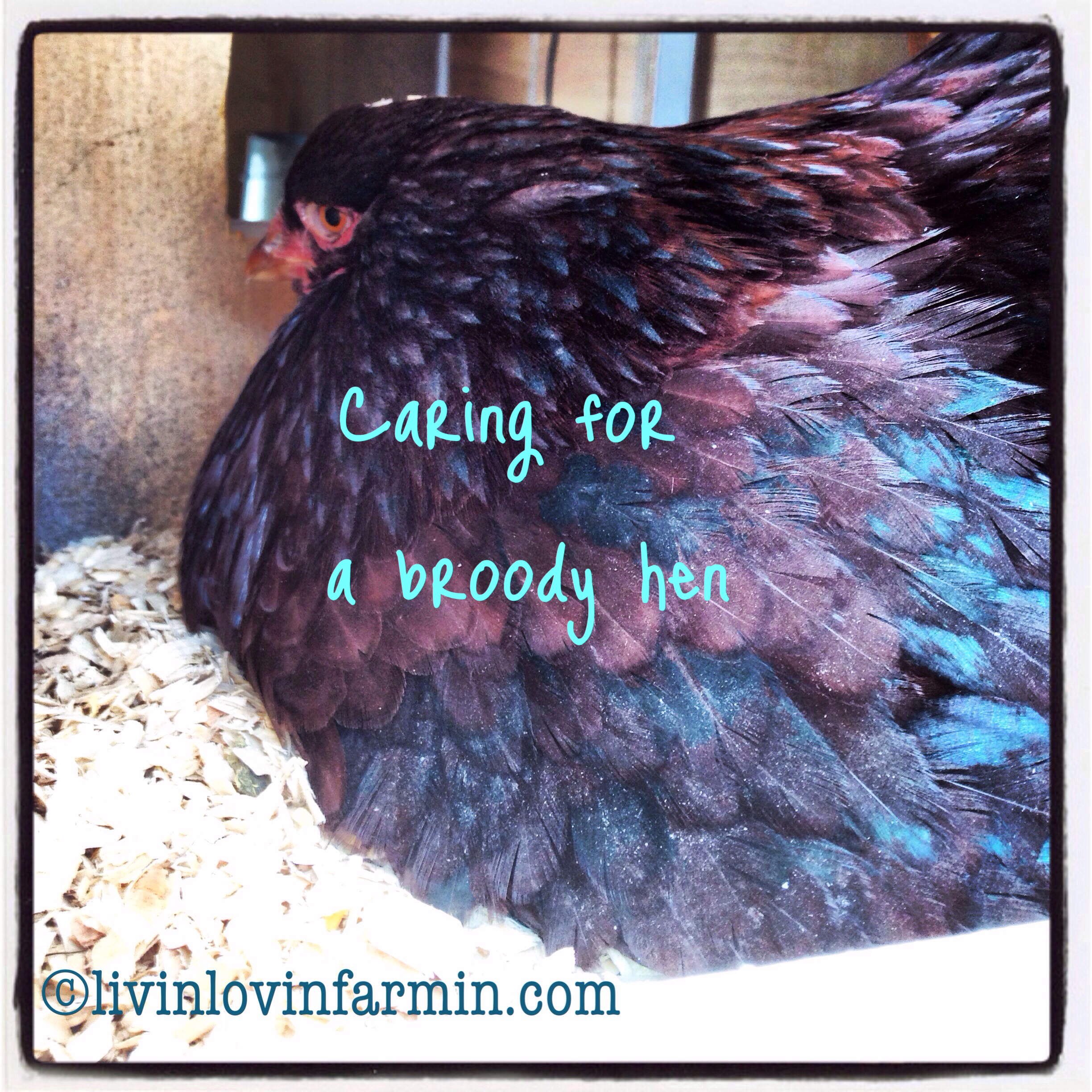
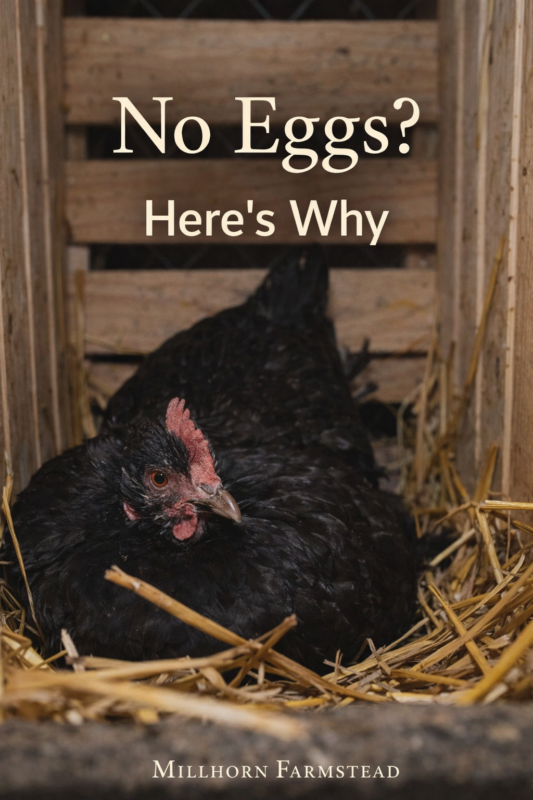
If the rest of the flock is laying normally but one hen has suddenly taken up permanent residence in a nesting box, you may have a broody hen.
And usually, she isn’t subtle about it.
A broody hen wants to hatch eggs. Once those hormones kick in, producing more eggs is no longer her priority. She’ll sit on the nest for most of the day and may only get up briefly to eat, drink, and relieve herself.
She may also puff herself up, growl at you, flatten herself over the eggs, or try to take a piece of your hand when you reach underneath her.
Some breeds are far more inclined toward broodiness than others, and once you’ve kept chickens for a while, you’ll probably learn which hens in your flock are the repeat offenders.
If you want chicks and have fertile eggs, broodiness can be useful.
If you don’t want chicks, you’ll need to interrupt the behavior. Start by removing her from the nesting box and collecting eggs frequently. Persistent hens may need to be separated from the nest for several days in a well-ventilated broody pen.
Once the broodiness passes, don’t expect an egg the next morning. Give her body some time to return to normal production.
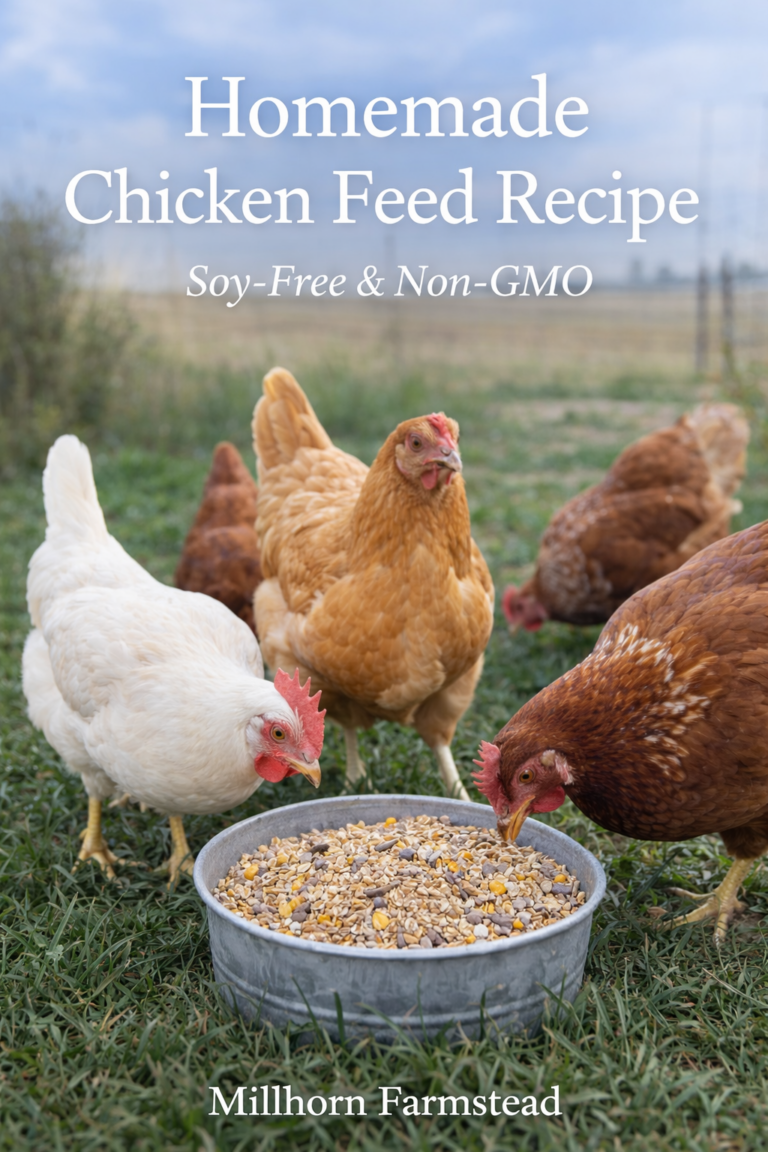
This is where your feed matters more than almost anything else. If you want to see exactly what we feed and how we keep production steady, you can read our full guide to homemade poultry feed here.
Check the Feed Before You Blame the Chicken
If daylight, molting, and broodiness don’t explain the missing eggs, go look at the feeder.
More importantly, look at what your chickens are actually eating.
A laying hen needs a balanced diet to keep producing eggs. A complete layer feed is designed to provide the protein, calcium, vitamins, and minerals she needs.
The trouble usually starts when everything else begins replacing it.
Scratch grains, cracked corn, mealworms, garden produce, bread, kitchen scraps, and leftovers can all have a place around the farm. But if your chickens spend the day filling up on extras, they’re going to eat less of the balanced feed.
I’ve never been interested in making chicken keeping unnecessarily complicated. Start with a good complete feed. Keep it available. Then treat scraps and extras like exactly what they are: extras.
If your chickens stopped laying eggs and you’ve been generous with treats lately, pull back on them for a while and see what happens.
Also check the feed itself.
Make sure it is fresh, dry, and hasn’t become moldy. Check that you’re actually feeding a layer ration rather than scratch grain or another feed that isn’t formulated as a complete diet for laying hens.
Sometimes the answer really is that simple.
Come Join Me on the Homestead
Get my newsletter for practical homesteading, family milk cows, from-scratch cooking, preserving the harvest, and whatever we’re working on around the farm.
What About Oyster Shell?
Laying hens need plenty of calcium to build eggshells.
Even when I’m feeding a complete layer ration, I like oyster shell offered separately so the hens can take what they need.
Don’t assume calcium is the answer to every egg problem, though.
If you’re finding thin shells, soft shells, or shell-less eggs, calcium and overall nutrition deserve a closer look. If the hens have simply stopped laying altogether, I would keep working through the rest of this list rather than dumping more calcium into their feed.
Don’t Overlook Water
Before you start diagnosing some obscure chicken problem, check the waterer.
Seriously.
Is it full?
Is the water clean?
Did it freeze overnight?
Did somebody knock it over?
Is there enough water available for the entire flock during hot weather?
A lack of water can bring egg production down quickly. Eggs require a tremendous amount of water to produce, and a hen can’t keep laying normally when she isn’t drinking enough.
This is particularly easy to miss during weather extremes.
In winter, water freezes.
In summer, chickens drink more and waterers empty faster.
If the whole flock suddenly stopped laying eggs, feed and water are two of the first things I would physically check before looking for a more complicated explanation.
Extreme Heat Can Mean Fewer Eggs
Chickens can handle a lot, but extreme heat is hard on them.
When temperatures climb, you may notice hens panting, holding their wings away from their bodies, spending more time in the shade, drinking heavily, and eating less.
Egg production may fall right along with their feed intake.
At that point, I’m not worried about getting another egg out of them. I’m worried about keeping the chickens comfortable and hydrated.
Give them shade, ventilation, and plenty of fresh water. Make sure the coop isn’t trapping hot air, and keep an especially close eye on heavier birds during prolonged heat.
Once the weather settles and the chickens recover, production often begins coming back.
Winter is a little different. When eggs disappear during cold weather, don’t automatically blame the temperature. Short daylight hours, frozen water, molting, and the general change of season may be much bigger factors.
Stress Can Shut Egg Production Down
Stress gets blamed for almost everything with chickens, so I wouldn’t jump to it because somebody started the tractor next to the coop.
Think bigger.
A predator repeatedly circling the coop, adding several new chickens, moving the flock, a dog chasing them, extreme weather, losing access to food or water, or a major disruption to the pecking order can absolutely affect laying.
If production suddenly changed, think back over the last week or two.
What else changed?
Predator Pressure
Sometimes the chickens know you have a predator problem before you do.
You may notice the flock acting nervous, refusing to use an area they normally love, staying unusually close to cover, hesitating to leave the coop, or becoming restless at night.
Look around.
Check for tracks, digging along the coop, damaged fencing, missing birds, scattered feathers, or anything else that suggests something has been visiting.
Fix the predator problem first. Worry about the egg basket later.
New Chickens and Pecking Order Changes
Adding new birds can turn a perfectly peaceful flock into a middle-school cafeteria for a while.
Everybody has to figure out where they belong again.
A little pecking and posturing is normal. Constant harassment, injuries, or preventing a lower-ranking hen from reaching food and water is not.
Moving the flock into a new coop can cause a similar disruption.
If everyone is healthy and safe, give them some time to settle. Egg production may dip temporarily while the flock adjusts.
Maybe Your Chickens Are Laying Eggs. You Just Can’t Find Them.
If you free-range your chickens, don’t overlook the most annoying possibility.
They may be laying just fine.
Just not where you want them to.
I’ve found nests in places that make absolutely no sense when there was a perfectly good nesting box sitting twenty feet away.
Look under bushes, behind equipment, in hay, inside sheds, along fence lines, under porches, and anywhere else a hen can tuck herself into a quiet little corner.
You can also keep the flock confined to the coop and run through the morning for a few days.
If the egg basket suddenly fills back up, congratulations.
You don’t have an egg-production problem.
You have chickens who found better real estate.
Egg Eating Can Look Like Stopped Production
Sometimes the eggs are being laid and disappearing before you collect them.
Look for broken shells, sticky nesting material, yolk residue, or hens paying a little too much attention to freshly laid eggs.
Before declaring one of your hens a hardened egg thief, figure out whether eggs are breaking accidentally.
Keep enough clean nesting material in the boxes. Collect eggs regularly. Pay attention to thin or weak shells. Make sure the flock is eating a complete diet.
A broken egg can turn into an easy meal, and unfortunately chickens are quick learners.
When Chickens Stop Laying Because They’re Sick
Most of the time, a healthy chicken that stops laying isn’t facing some terrible disease.
But a chicken that stops laying and also looks sick is a different situation.
Watch for changes beyond the missing eggs:
Lethargy, loss of appetite, weight loss, abnormal droppings, respiratory symptoms, a pale comb, isolation from the flock, unusual posture, swelling, or obvious discomfort all deserve attention.
Parasites can also contribute to poor condition and reduced egg production.
Check underneath the wings, around the vent, and down near the skin for lice, mites, irritated skin, or eggs attached around the base of the feathers. Some parasites are easier to spot after dark.
Internal parasites are another possibility when poor production comes with weight loss, diarrhea, or declining body condition.
Don’t automatically reach for a dewormer because you’re getting fewer eggs. Figure out whether you actually have a parasite problem first.
If a hen stopped laying and she looks unwell, stop treating it as an egg problem.
At that point, you’re looking for a health problem.
Older Hens Naturally Lay Fewer Eggs
Sometimes there isn’t anything to fix.
Your hen is simply getting older.
Young hens generally give you their highest egg production, and production gradually decreases as they age. There isn’t a birthday when every chicken suddenly retires. Breed, genetics, health, season, and the individual bird all make a difference.
But don’t expect a four or five-year-old hen to keep pace with a flock of young layers.
If your older hens are healthy and gradually producing fewer eggs, better feed, more treats, or rearranging the chicken coop isn’t going to turn them back into pullets.
Set realistic expectations.
If keeping a steady supply of eggs matters to you, adding a few younger hens periodically is one of the simplest ways to maintain production without replacing the entire flock at once.
What About Young Hens That Aren’t Laying Yet?
The other end of the age spectrum can confuse people too.
Many pullets begin laying somewhere around five or six months old, but that is not a deadline.
Breed, season, nutrition, and the individual bird all matter.
Their first weeks of egg production can also be inconsistent. You may get an egg, then nothing for several days. The first eggs may be tiny, oddly shaped, or otherwise different from what you’ll see later.
If your young hens are healthy, eating well, and approaching laying age, give them time.
Chickens Stopped Laying Eggs? Check These Things in Order
Don’t start with the strangest explanation. Work through the most likely causes first.
The whole flock stopped suddenly: Check water, feed, extreme weather, and any major source of stress.
Production gradually slowed across the flock: Look at daylight, molting, nutrition, and the age of your hens.
Only one hen stopped laying: Check for broodiness, molting, a hidden nest, age, or an individual health problem.
The eggs seem to have disappeared: Healthy-looking chickens may simply be using a hidden nest. Also look for broken shells or other signs of egg eating.
The chickens look sick: A drop in egg production accompanied by lethargy, poor appetite, abnormal droppings, weight loss, or other symptoms deserves a closer look at the birds themselves.
Most of the time, you don’t need to change ten things at once. Start with what changed, work through the obvious causes, and you’ll usually find the answer.
Frequently Asked Questions
Why did my chickens suddenly stop laying eggs?
If the whole flock stopped laying at about the same time, look for something that affected everyone. Check the water and feed first, then consider extreme heat, predator pressure, a recent move, new birds, or another major change. If it happened as summer turned to fall, shorter daylight and molting are two of the most likely explanations.
Do chickens stop laying eggs in winter?
Many chickens slow down considerably or stop laying during winter. Shorter daylight is usually a bigger factor than cold temperatures alone. Some hens will continue producing a few eggs, while others may take most of the winter off and begin laying more regularly as the days lengthen.
How long will chickens stop laying while they molt?
It depends on the hen. Some chickens move through a molt fairly quickly, while others take several weeks or longer to replace their feathers. Egg production commonly slows considerably or stops during this time. Keep a good complete feed and fresh water available and let the molt run its course.
Can stress cause chickens to stop laying eggs?
Yes. Significant stress can temporarily reduce egg production. Predator pressure, extreme weather, moving the flock, adding new chickens, being chased by dogs, or losing access to food or water can all be enough to disrupt laying. If the problem started suddenly, think about what changed around the same time.
Can feed cause chickens to stop laying?
Absolutely. A laying hen needs a balanced diet, and too many treats, scratch grains, kitchen scraps, or other extras can replace the complete feed she actually needs. If nutrition may be the problem, simplify the diet and make a good layer feed the foundation again.
At what age do chickens stop laying eggs?
There isn’t one specific age. Hens generally produce the most eggs when they’re young, then gradually lay fewer as they get older. Some older hens continue producing occasional eggs for years. If an otherwise healthy older hen has gradually slowed down, age may be the entire explanation.
How do I know if my chickens are laying eggs somewhere else?
If your chickens free-range and look perfectly healthy despite a suddenly empty egg basket, start looking for a hidden nest. Check bushes, tall grass, sheds, hay, equipment, and other quiet hiding places. You can also keep the flock in its normal coop and run through the morning for a few days. If the eggs suddenly reappear, the hens probably hadn’t stopped laying at all.