
If you have kept chickens for very long, chances are you have walked into the coop to find one hen planted firmly in a nesting box with absolutely no intention of moving.
She is puffed up twice her normal size. She is making that unmistakable low growl. And when you reach underneath her for the eggs, she may very well try to take a piece of your hand with her.
You have a broody hen.
Broodiness is completely natural, and some hens take the job of becoming a mother very seriously. Once those maternal instincts kick in, her priorities change. She stops laying eggs, settles onto a nest, and prepares to spend the next three weeks trying to hatch a clutch of eggs.
I have raised and hatched a lot of chickens over the years, and one thing I have learned is that you do not need to make caring for a broody hen complicated.
You really have two choices.
You can let her hatch chicks, or you can break her broodiness.
What you do next depends on which one you choose.
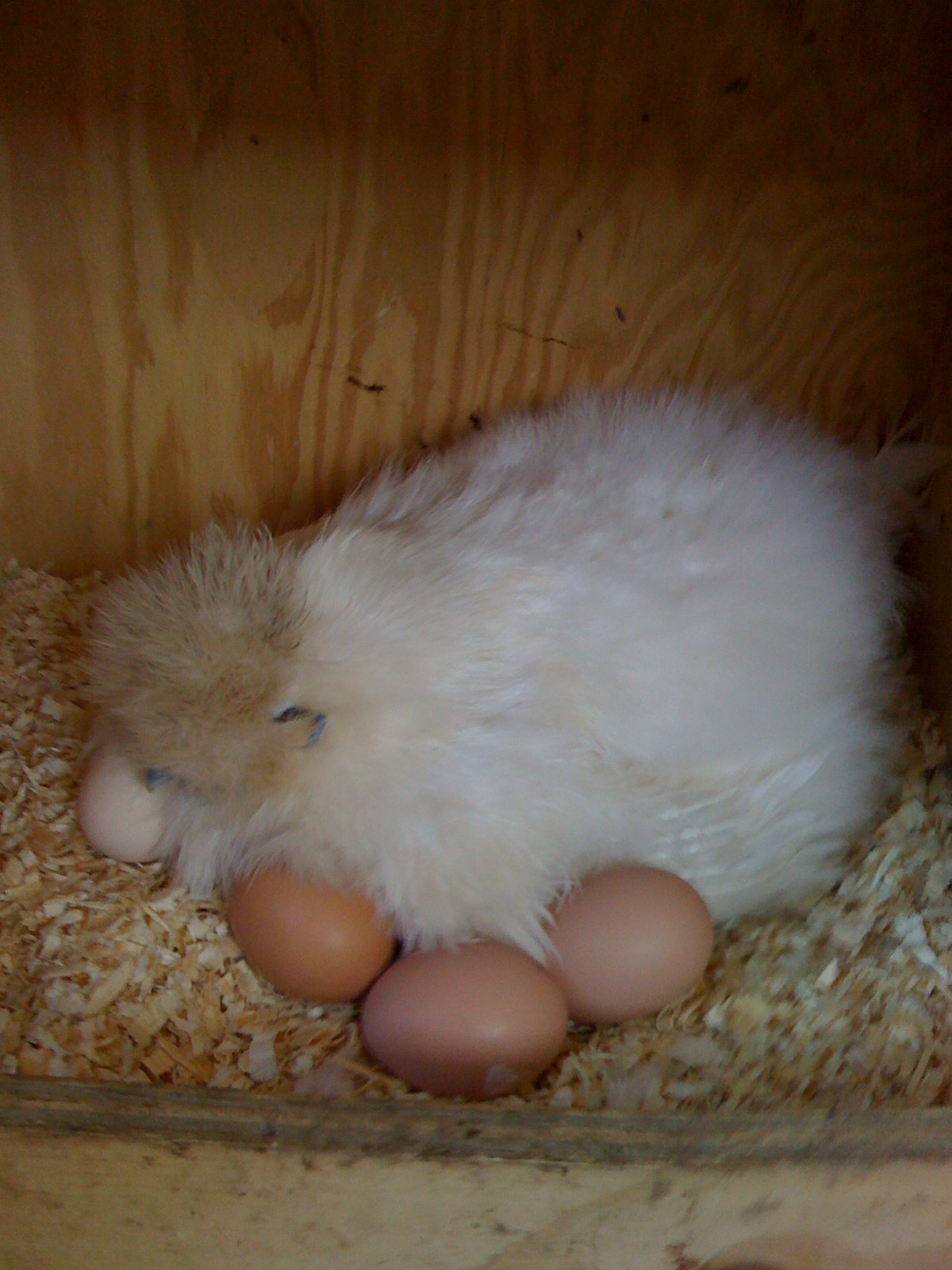
Setting Up a Broody Hen
A broody hen is a laying hen whose maternal instincts have kicked in and told her it is time to hatch chicks.
Instead of laying her egg and going about her day, she settles into the nest and stays there.
And stays there.
She may leave briefly to eat, drink, poop, and stretch her legs, but she will generally head straight back to her clutch of eggs.
Once a hen becomes truly broody, she also stops laying eggs. Her body is no longer putting its energy toward producing more eggs. It is preparing to incubate the eggs she already has.
This is one reason broodiness should be on your list of things to check when your chickens suddenly stop laying eggs.
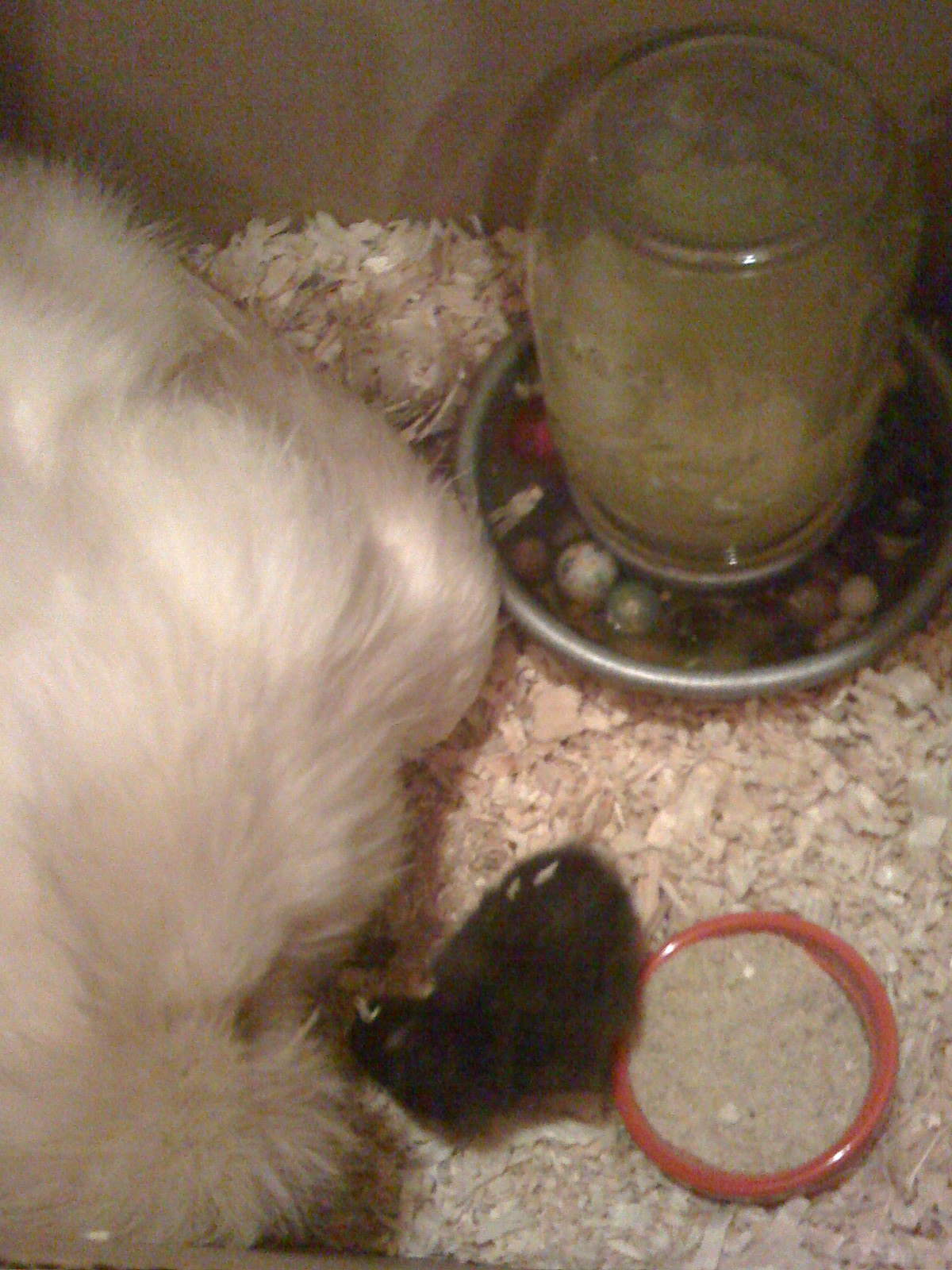
How to Tell if You Have a Broody Hen
A hen spending an hour in the nesting box is not necessarily broody. Sometimes she is simply laying an egg.
A truly broody hen is usually pretty easy to identify.
Look for these signs:
- She stays in the nest for most of the day.
- She returns to the nest quickly when removed.
- She sleeps in the nesting box instead of on the roost.
- She flattens herself over the eggs.
- She puffs up her feathers when you approach.
- She growls, clucks, or pecks when you reach underneath her.
- She stops laying eggs.
- She may pull feathers from her breast.
- She leaves behind an unusually large and particularly unpleasant broody poop when she finally gets off the nest.
That last one tends to remove any remaining doubt.
A broody hen spends long periods sitting on the nest, so she holds her droppings much longer than a chicken normally would. When she finally gets up, you will know it.
Why Do Hens Go Broody?
Broody behavior is driven by hormones and the hen’s natural instinct to reproduce.
It often shows up during the warmer spring and summer months when conditions are favorable for raising baby chicks, although a determined hen can certainly decide to become broody at a less convenient time.
Some chicken breeds are also far more likely to become broody than others.
Heritage breeds and breeds that have retained strong maternal traits tend to make good mother hens. Modern production breeds have often been selected heavily for egg production, which means broodiness is less desirable because a broody hen stops laying.
My own chicken keeping started with Buckeyes. In fact, those first chickens eventually led to me flying in hatching eggs from breeders and raising far more chickens than I originally intended. You can read more about that story in How to Start a Homestead.
Chickens have a funny way of multiplying around here.
Sometimes because I put eggs in an incubator.
Sometimes because a hen takes matters into her own hands.
Does a Hen Need a Rooster to Go Broody?
No.
This confuses a lot of new chicken keepers.
A rooster has absolutely nothing to do with whether a hen becomes broody. Broodiness is a hormonal response in the hen.
She can become broody while sitting on fertile eggs, unfertilized eggs, fake eggs, or sometimes what amounts to an empty nest.
However, if you want baby chicks, she obviously needs a clutch of fertile eggs.
If you do not have a rooster but want to let your broody hen hatch chicks, fertile hatching eggs can be obtained from another flock.
How Long Does a Broody Hen Sit?
Chicken eggs take approximately 21 days to hatch.
A broody hen with fertile eggs will generally spend those three weeks incubating her clutch, leaving the nest only briefly.
If you have ever hatched eggs artificially, the timeline is the same. I walk through the incubation process in much more detail in Incubating Chicken Eggs 101.
The difference is that instead of you worrying about incubator temperature, humidity, and turning eggs, the mother hen handles most of it herself.
If she is sitting on unfertilized eggs, there is obviously no hatch coming at day 21. Some hens eventually give up. Others can remain stubbornly broody well beyond three weeks.
That is hard on the hen, which is why I would not simply let her sit indefinitely if there is no possibility of chicks.
Should You Let a Broody Hen Hatch Eggs?
This is the first real decision you need to make.
If you want more chickens and have fertile eggs, a good broody hen can do an excellent job raising a clutch of chicks.
Before sliding a dozen eggs underneath her, however, think through what happens after they hatch.
Do you actually want more chickens?
Do you have enough room?
Do you have a safe place for a mother hen and baby chicks?
And what are you going to do with the roosters?
Because chicks do not conveniently hatch according to the ratio we would prefer.
If you are intentionally growing your flock or raising birds for meat, that may not be a problem. Chickens can also become a productive part of the farm beyond simply supplying your family with eggs. I cover some of those possibilities in 20 Ways Livestock Can Make Money.
But do not hatch chicks simply because you have a broody hen.
Have a plan for the chickens first.
How Many Eggs Can a Broody Hen Hatch?
The right number of eggs depends on the size of the hen and the size of the eggs.
A full-sized hen may be able to comfortably cover around 8 to 12 standard chicken eggs. A smaller hen or bantam will need fewer.
The important thing is not reaching a magic number.
Look at the hen.
She needs to be able to completely cover the entire clutch of eggs with her body. If eggs are constantly sticking out around her edges, there are too many.
Those outside eggs can cool and reduce your chances of a successful hatch.
Once you decide how many eggs she will hatch, place the clutch under her at the same time so the chicks are due together.
Mark Your Hatching Eggs
If your broody hen is sitting in a nest that other chickens can access, mark the eggs you want her to hatch.
I prefer a pencil.
This lets you quickly identify the original clutch of fertile eggs.
Why does that matter?
Because other hens have absolutely no respect for your carefully planned hatch date.
They may climb right into the broody hen’s nest and lay fresh eggs alongside the developing ones.
Now you have eggs at completely different stages of incubation.
Check underneath your broody hen each day and remove any new, unmarked eggs.
Once the first chicks hatch, the mother hen will eventually leave the nest to care for them. Eggs that were added several days later may be abandoned before they have a chance to hatch.
Should You Separate a Broody Hen From the Flock?
You can let a broody hen remain with the rest of the flock, and sometimes it works perfectly well.
I still prefer having the option of a quiet, secure area where she will not constantly be bothered.
Other hens may climb into her nest to lay eggs. Eggs can be broken. Two broody hens may decide they want the same nesting box. And once chicks hatch, you have a whole new set of tiny problems running around the chicken coop.
A separate broody box, dog crate, small pen, or sectioned-off portion of the coop can make management much easier.
That does not mean you should immediately grab an established broody hen in the middle of the afternoon and relocate her.
Some hens tolerate being moved.
Others will decide the entire arrangement is unacceptable and abandon the nest.
If I need to move a broody hen, I would rather do it early and after dark when she is settled. Move the hen and her eggs together, keep the new nest quiet and secure, and make sure she accepts the new location.
Setting Up a Broody Hen
A broody hen does not need an elaborate setup.
She needs a safe nest, clean bedding, fresh water, food, ventilation, and protection from predators.
Keep the nest low enough that newly hatched chicks will not fall from a high nesting box.
Make sure the bedding stays clean and dry.
Keep food and water close enough that she can easily get to them when she leaves the nest, but I would not put open water where it can spill into the bedding or onto the eggs.
The area should also be protected from rats, snakes, cats, raccoons, and any other predator capable of reaching the eggs or chicks.
Simple and secure beats fancy every time.
Caring for a Broody Hen During the 21 Days
Most of the work belongs to the hen.
Your job is to make sure she stays healthy while she does it.
Most broody hens get off the nest once or twice a day to eat, drink, stretch, dust bathe, and relieve themselves.
Pay attention to whether yours is actually doing it.
Some hens are so committed to the job that they barely want to move.
Keep fresh water and a balanced chicken feed available. This is not the time to replace good nutrition with piles of treats simply because you are worried she is not eating enough.
Broody hens naturally eat less while sitting.
Watch her overall condition instead.
If she becomes excessively thin, weak, dehydrated, or otherwise appears unwell, something needs to change.
Good nutrition matters for the rest of your flock too. If egg production or flock condition has been a problem, start with the basics rather than adding endless supplements and treats. I talk more about feed, water, and nutrition in Why Chickens Stop Laying Eggs.
Check Your Broody Hen for Mites and Lice
A hen sitting in one place for three weeks deserves a little extra attention for external parasites.
Check underneath her wings, around her vent, and down near the base of her feathers.
Also inspect the nesting area.
Mites can be especially troublesome because some species hide in cracks and crevices during the day and feed on chickens at night.
If you find an infestation, use a poultry-appropriate parasite treatment according to its label and address the coop or nesting area when necessary.
Do not assume every broody hen needs to be dusted or treated just because she is sitting.
Check first. Treat an actual problem.
Should You Candle Eggs Under a Broody Hen?
You can.
Candling allows you to look for signs that the embryos are developing. Around day 7, developing eggs may show visible blood vessels and a darkening embryo. As incubation progresses, more of the egg becomes dark.
I usually prefer to disturb a good broody hen as little as possible, but candling can help identify eggs that never developed or stopped developing.
If you want to understand what you are looking for inside the egg, my Incubating Chicken Eggs 101 guide goes deeper into candling and incubation.
Handle hatching eggs carefully and return them promptly.
What Happens Around Day 21?
This is the part everyone wants to watch.
And it is also the part where you need to resist constantly interfering.
As hatch day approaches, you may begin hearing tiny peeps coming from beneath the hen.
The chick first breaks through the internal membrane and eventually makes a small hole in the shell called a pip. From there, hatching can take quite a while.
Do not assume a chick is stuck simply because it has not climbed out of the shell an hour after you noticed the first pip.
Hatching is work.
The chick is completing an important process inside that shell, including absorbing the remaining yolk.
Helping too early can cause serious problems.
Unless there is a clear reason to intervene and you understand exactly what you are looking at, let the hen and chick do their jobs.
Caring for a Broody Hen After Chicks Hatch
The first chicks may hatch while other eggs are still working.
Mama will usually stay put while the hatch finishes, keeping those damp little chicks warm underneath her.
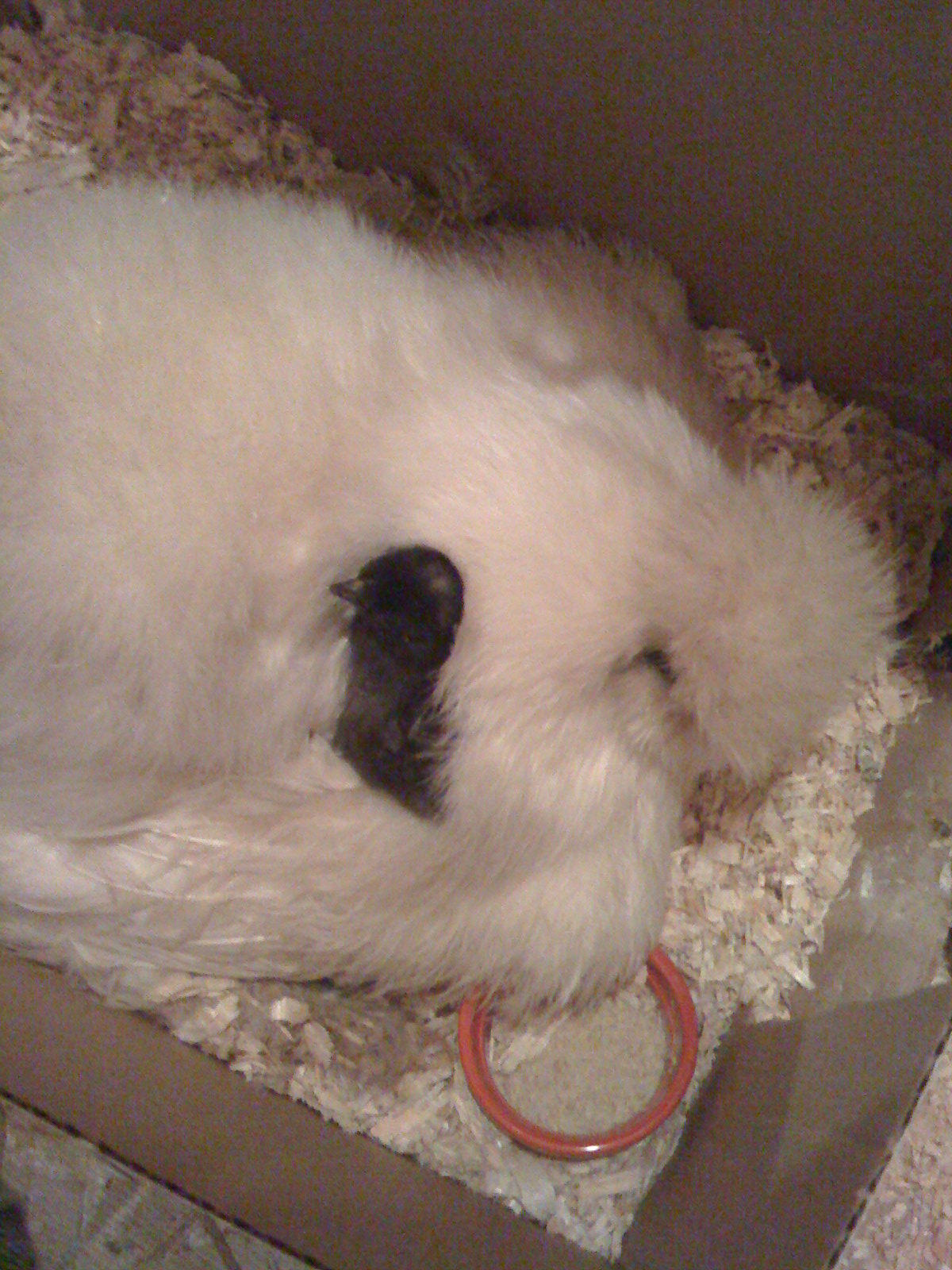
Once the chicks are dry and she is ready, the mother hen will begin bringing them off the nest.
Have chick starter and chick-safe water available where they can reach it.
Watching a good mother hen raise baby chicks is one of my favorite parts of keeping chickens.
She will call them to food, show them how to scratch, gather them underneath her when they are cold, and quickly let everyone know when they have wandered too far.
If you are raising chicks without a hen, the setup is obviously different. My Bookshelf to Chicken Brooder shows one of the brooders I built for chicks we hatched ourselves.
Whether chicks are hen-raised or brooder-raised, they still need the same basics: appropriate feed, clean water, warmth, a dry environment, and protection.
Can Mama and Chicks Stay With the Rest of the Flock?
This depends heavily on your flock and setup.
Some experienced mother hens successfully raise chicks right alongside the rest of the flock.
Others do better with their own protected area, particularly when the chicks are tiny.
Watch the birds rather than relying on a hard rule.
If other chickens are aggressively pecking chicks, keeping them away from food, or creating an unsafe environment, separate mama and her clutch.
The advantage of allowing safe contact with the flock is that the chicks grow up as part of that social group.
The disadvantage is obvious. Tiny chicks are vulnerable.
Use the setup that keeps them safe.
What About the Eggs That Do Not Hatch?
Not every fertile egg becomes a chick.
Even with a good mother hen, some eggs may never develop or may stop developing during incubation.
Once mama has finished hatching and leaves the nest with her clutch of chicks, remove the remaining eggs.
Do not leave old unhatched eggs sitting around the coop.
Then clean out the nesting material and give mama and her chicks a clean place to settle.
How to Break a Broody Hen
Sometimes you do not want more chickens.
That is perfectly reasonable.
If a hen is sitting on unfertilized eggs, or you simply do not want chicks, I would rather break the broodiness than let her sit indefinitely waiting for something that is never going to hatch.
Start by collecting eggs frequently and removing her from the nesting box.
Block access to the nest if practical.
Sometimes that is enough, particularly when you catch the broody behavior early.
A determined hen may need a broody breaker.
Using a Broody Breaker
A broody breaker is simply a well-ventilated cage that prevents the hen from settling into a warm, dark nest.
A wire-bottom dog crate can work well because air can circulate underneath her.
Give her food and fresh water and place the crate somewhere bright, protected from weather, and where she remains safely around normal flock activity.
Do not give her a cozy pile of nesting material in the corner. That defeats the entire purpose.
The goal is to interrupt the nesting behavior and allow her body to come out of the broody cycle.
Check her regularly and make sure she remains comfortable, hydrated, protected from weather, and safe from predators.
Many hens will give up after a few days.
Some are much more stubborn.
Once she stops puffing up, growling, and immediately racing back to a nesting box, return her to the flock and watch what she does.
When Will a Broody Hen Start Laying Again?
Do not expect an egg the moment you break her broodiness.
Her body needs time to transition back into normal laying.
How quickly that happens varies by the individual hen, her age, condition, season, nutrition, and how long she was broody.
If she has raised chicks, the break from laying will naturally be longer because her job did not end when the eggs hatched. She moved from incubating eggs to raising chicks.
If she has been successfully broken from broodiness but still is not laying after some time, look at the bigger picture.
Daylight, molting, nutrition, age, stress, weather, and health can all affect production. My guide to why chickens stop laying eggs will walk you through those causes in order.

Meet My New Cookbook: The Olive Table
Frequently Asked Questions About Broody Hens
Will a Broody Hen Sit on Unfertilized Eggs?
Yes. A hen does not know whether an egg is fertile. She can sit just as faithfully on unfertilized eggs as fertile ones. If you do not have fertile eggs and do not want chicks, it is generally better to break her broodiness rather than allowing her to sit indefinitely.
How Long Will a Broody Hen Sit?
Chicken eggs generally hatch at around 21 days, so a hen incubating fertile eggs will sit for approximately three weeks. A hen without developing eggs may continue sitting beyond that point.
Do Broody Hens Eat and Drink?
Yes, although they generally eat and drink less frequently than normal. Most leave the nest briefly each day. Keep clean water and good feed readily available and monitor her body condition.
Will a Broody Hen Stop Laying Eggs?
Yes. Once a hen becomes truly broody, egg production stops while her body focuses on incubation. If only one bird in your flock has suddenly stopped laying and she has taken up residence in a nesting box, broodiness should be high on your list of suspects.
Should I Move a Broody Hen?
Only when there is a reason. If her nest is safe and undisturbed, leaving her alone may be easiest. If she needs to be moved, doing it early and after dark can improve your chances of her accepting the new nest. Watch her afterward to make sure she settles back onto the eggs.
How Many Eggs Should I Put Under a Broody Hen?
There is no perfect number for every chicken. A full-sized hen may handle roughly 8 to 12 standard eggs, but the real test is whether she can completely cover the clutch. Give smaller hens fewer eggs.
Can a Broody Hen Raise Chicks Without a Heat Lamp?
A healthy mother hen provides the warmth her chicks need by allowing them to tuck underneath her. They still need a dry, protected environment, appropriate chick feed, clean water, and protection from predators.
Can You Stop a Hen From Being Broody?
Yes. Remove eggs promptly, prevent access to her chosen nesting spot when possible, and repeatedly remove her from the nest. Persistent hens may need several days in a properly managed broody breaker before the behavior stops.
Broody Hens Are Part of Keeping Chickens
A broody hen can be incredibly useful when you want to grow your flock.
She handles the incubation. She keeps the chicks warm. She teaches them to eat, forage, scratch, and behave like chickens without you standing over a brooder worrying about every little thing.
But broodiness is not useful when you do not want chicks.
In that case, do not let her spend weeks sitting on unfertilized eggs and losing body condition simply because the behavior is natural. Break the broodiness and get her back with the rest of the flock.
That is really the heart of caring for a broody hen.
Decide whether you want chicks. If you do, give her a safe place and a manageable clutch of fertile eggs, then let a good mother hen do what she does best.
If you do not, break the broodiness early.
Either way, keep an eye on the hen in front of you. Chickens have a way of reminding us that they have their own ideas about how things should be done.
If you are just beginning with chickens as part of a larger homestead, you may also want to read How to Start a Homestead or my thoughts on starting a homestead when everything begins to feel overwhelming. Chickens are often where it all begins. They certainly were for me.
-
Chickens Stopped Laying Eggs? Here’s Why and What to Do
Chickens Stopped Laying Eggs? Here’s Why and What to Do When your chickens stopped laying eggs,…
-
Incubating Chicken Eggs 101
Incubating Chicken Eggs 101 Yahoo! It’s officially spring time. Okay, that’s not true. And as a…
-
How to Start a Homestead: A Beginner’s Guide
Starting a homestead doesn’t always begin with a perfectly planned farm. For many families, it begins…
-
To Wash or Not to Wash Fresh Eggs
To wash or to not wash farm fresh eggs. That is the question. Growing up we…
-
10 Practical Jobs for Kids on the Homestead That Actually Teach Responsibility
Published January 3, 2016 • Updated April 2026 If you’re raising kids on a homestead, you…
-
How to Prepare Your Homestead for Winter
Winter has a way of finding every weak spot on a homestead, usually sometime after dark…





DONT USE A SHARPIE ON THE EGGS! It has bad chemicals in it and could make the chickie sick. I dont know what else to use instead, maybe a sticker? But please do not put sharpie on chicks whose immune systems arent developed. We wrote the date with pencil on each egg. It didnt rub off too bad.
Thank you for your comment. I have never had a issue with chicks getting sick from a sharpie. My hatches are quite strong, but I completely understand where your coming from. Please keep me posted if you find a alternative.
Raising chickens can be a hand full. It’s quite rewarding when you bite into your first homestead chicken though. I still remember the first time I had a free range chicken fresh from the farm and nothing compares. Even the eggs are 10x better. I’m the type of person that enjoys watching them as well. They are quite smart and entertaining. Predators are really the only problem with free range. You’ve got to have a close eye or a couple of dogs. I found a really neat new website that helps local farmers and homesteaders sell their products to the community. Anyone heard of FIFY? (Farm It For You)
No I haven’t hear of it, but Ill check it out for sure. Thank you
Thank you so much! I have two broody hens and no idea what to do after a chick arrives, we just seem to be letting the rooster run the show. He keeps all the other hens on the other side of the coop.
I’m not sure if I should move them. We moved one once and she was frantic to get back to coop.
I`ve set one or two additional nesting spots for chickens so they don’t need to fight for their favorite places.