
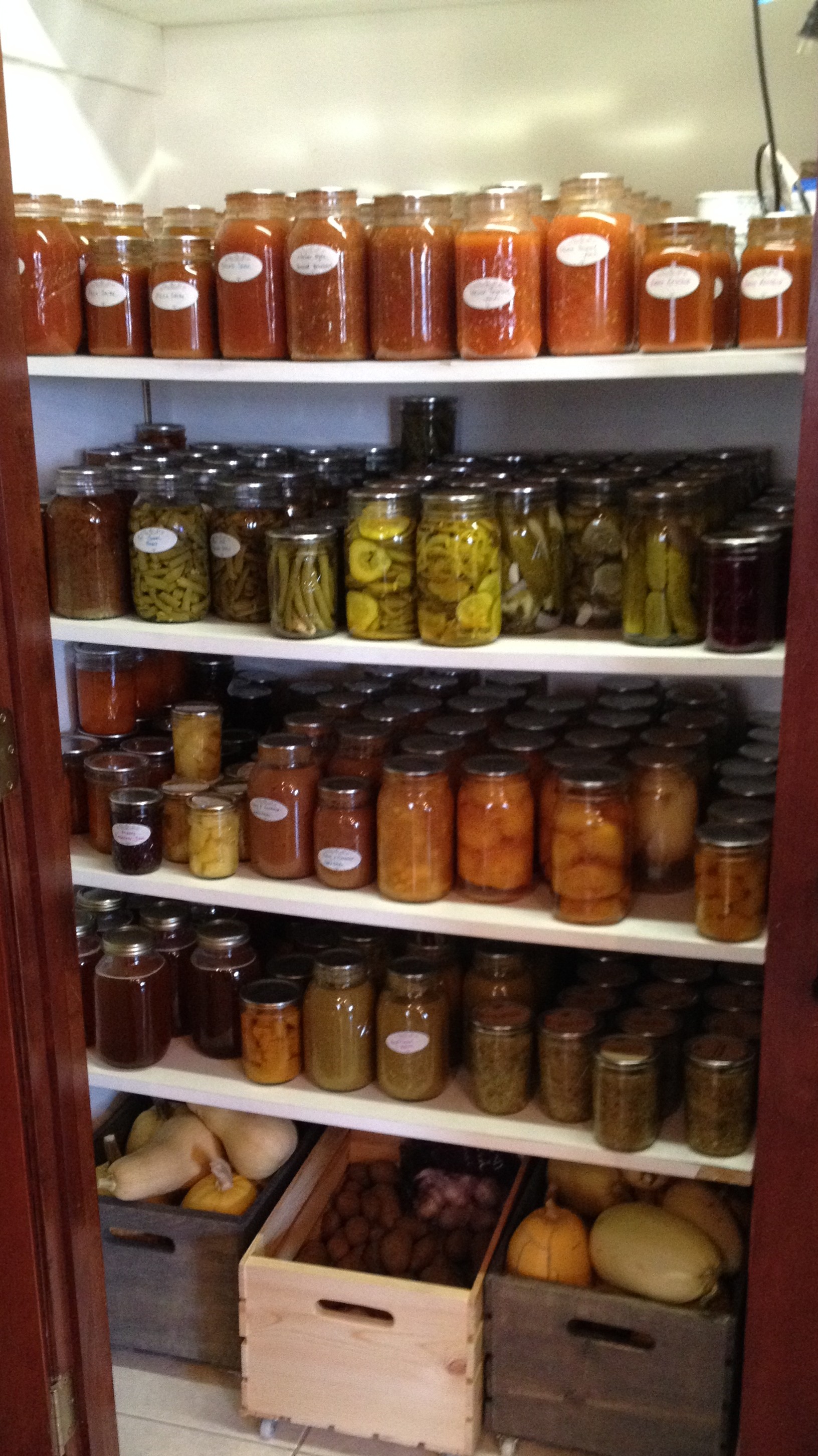
There are few things I like seeing lined up in the pantry more than jars of homemade tomato sauce.
When the garden starts producing tomatoes faster than we can eat them, canning marinara sauce is one of my favorite ways to put that harvest to good use. A jar can become spaghetti dinner, lasagna, pizza sauce, the base for soup, or an easy meal on a night when I don’t have much time to cook.
I’ve been canning tomatoes for decades, and they are still one of the things I preserve every year. Marinara earns its place on the pantry shelf because it isn’t something I can just to have another jar put away. It’s something we actually use.
This homemade marinara starts with fresh tomatoes and simple seasonings, then cooks down into a rich sauce before being processed in a pressure canner. Because marinara contains onions, garlic, and other low-acid ingredients along with the tomatoes, the proportions and processing method matter.
The result is exactly what I want from a summer day spent canning: garden tomatoes turned into ready-to-use meals for the months ahead.
Is Marinara Sauce Safe to Can?
Yes, but the recipe matters.
Plain tomato sauce and marinara aren’t necessarily the same thing from a home-canning standpoint.
A basic tomato product can have tested boiling-water canning instructions. Once we add low-acid vegetables such as onions, garlic, peppers or mushrooms, we cannot simply add lemon juice and assume the finished sauce is safe for water-bath canning.
For this recipe, we’re using a tested pressure-canning formula based on the USDA/National Center for Home Food Preservation Spaghetti Sauce Without Meat recipe. Their tested recipe is pressure processed and specifically limits the amount of low-acid vegetables that can be added.
That means this is one recipe where I don’t recommend getting creative before the jars go into the canner.
Make it according to the tested proportions. Once you open a jar for dinner, doctor it up however you’d like.
Pressure Canning Homemade Marinara Sauce
Ingredients
Method
- Wash the tomatoes thoroughly.
- Remove the cores and quarter the tomatoes.
- Place the tomatoes in a large saucepan and boil uncovered for 20 minutes.
- Run the cooked tomatoes through a food mill or sieve to remove the skins and seeds.
- In a separate pan, sauté the onion, garlic, celery or green pepper, and optional mushrooms in the vegetable oil until tender.
- Combine the vegetables with the tomato pulp.
- Add the oregano, parsley, black pepper, salt and brown sugar.
- Bring the marinara sauce to a boil.
- Reduce the heat and simmer uncovered until the sauce reaches a good serving consistency. The original volume should reduce by approximately half. Stir frequently to prevent scorching.
- Ladle the hot marinara into hot canning jars, leaving 1 inch of headspace.
- Remove air bubbles, check the headspace again and wipe the jar rims.
- Center the lids and apply the bands fingertip tight.
- Place the jars in a properly prepared pressure canner and process according to your canner type and elevation.
- Pints: 20 minutes
- Quarts: 25 minutes
- Dial-gauge canner: 11 PSI at 0–2,000 feet; 12 PSI at 2,001–4,000 feet; 13 PSI at 4,001–6,000 feet; 14 PSI at 6,001–8,000 feet.
- Weighted-gauge canner: 10 PSI at 0–1,000 feet; 15 PSI above 1,000 feet.
- After processing, allow the canner to depressurize naturally according to your canner manufacturer’s instructions. Remove the jars and allow them to cool undisturbed before checking the seals.
Best Tomatoes for Canning Marinara Sauce
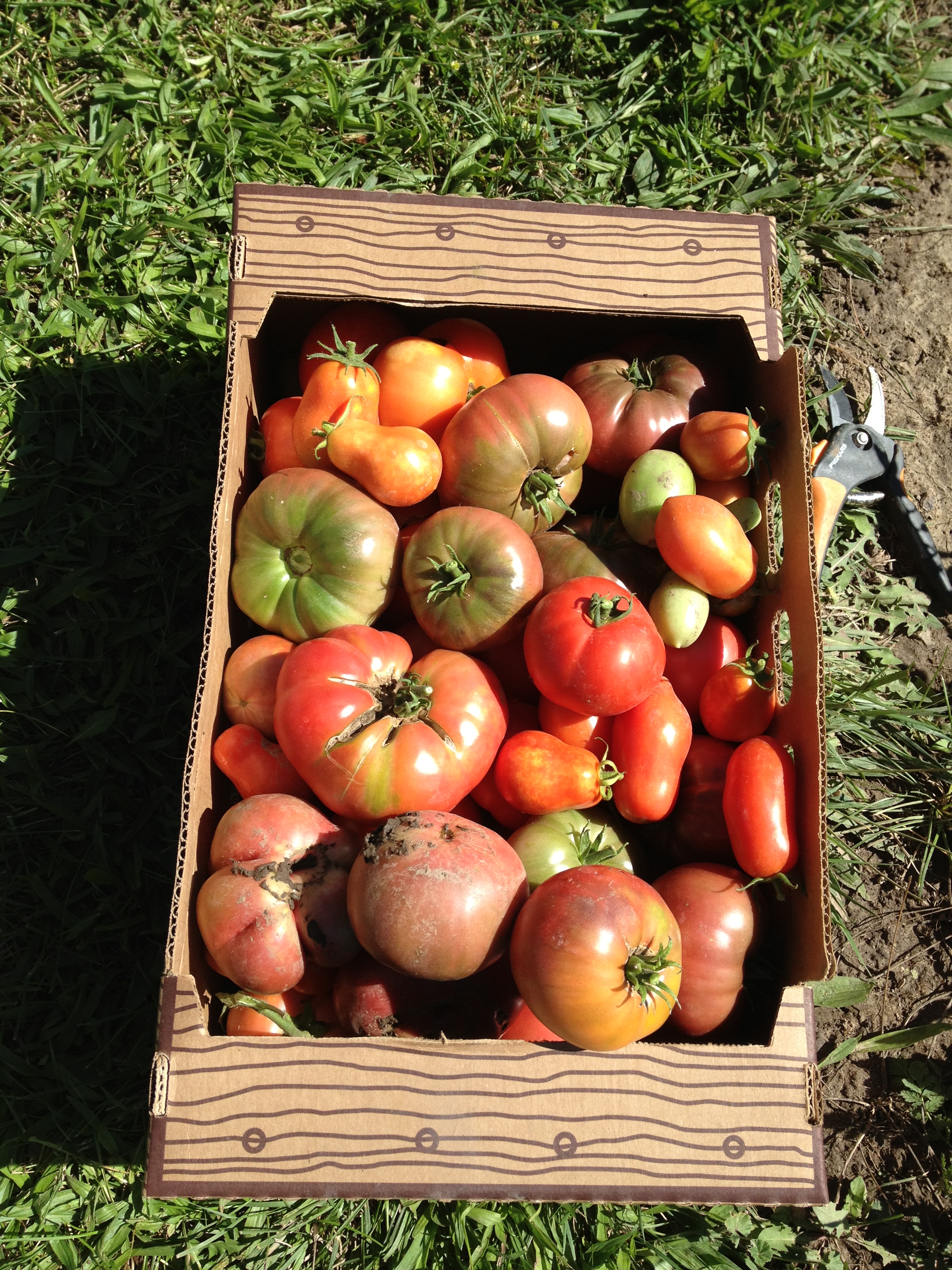
Paste tomatoes are my first choice for making marinara because they contain more flesh and less juice than most slicing tomatoes.
Good choices include:
- Roma tomatoes
- San Marzano-type tomatoes
- Amish Paste
- Other meaty plum or paste varieties
That doesn’t mean you can’t use your regular garden tomatoes.
I have canned plenty of sauce from whatever tomatoes were ripe in the garden. Slicing tomatoes simply contain more liquid, which means you’ll spend more time cooking the sauce down.
The important thing is to start with good-quality tomatoes. Don’t use moldy, spoiled or badly overripe tomatoes for canning.
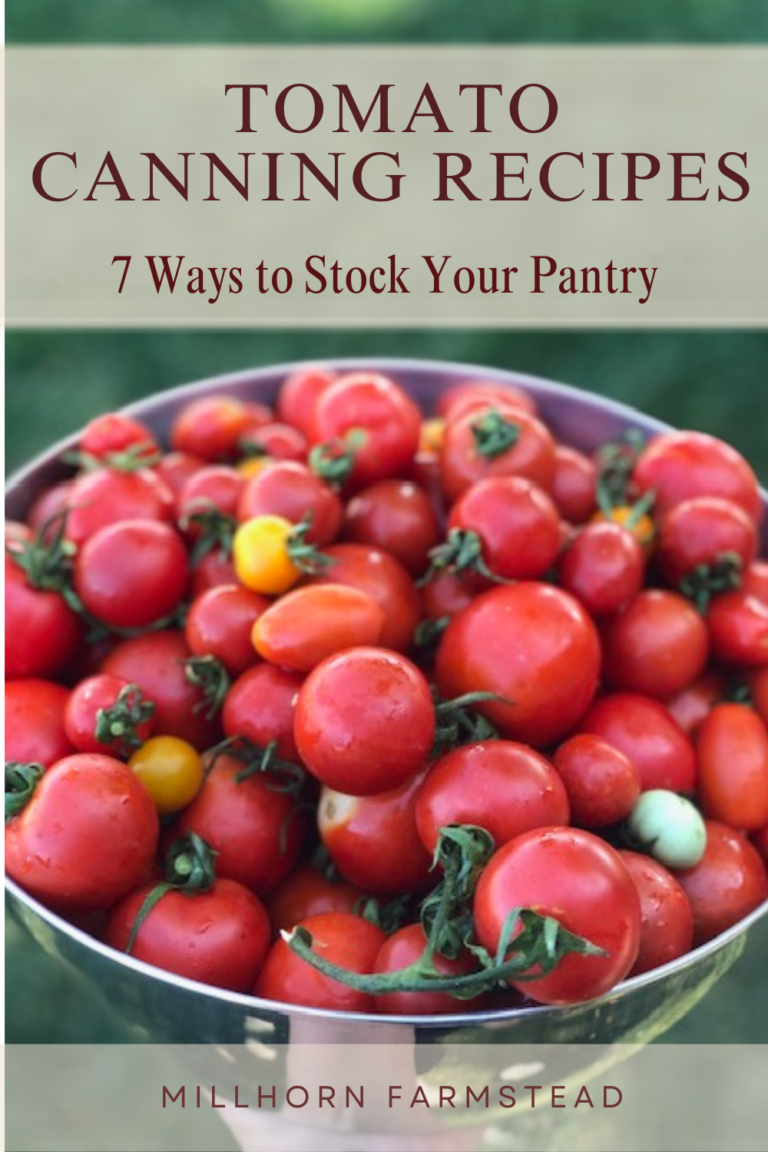
If your garden is producing faster than you can keep up with it, you may also want my Tomato Canning Recipes collection for more ways to put up the harvest.
Do You Have to Peel Tomatoes for Marinara Sauce?
For this recipe, yes.
You can blanch and peel each tomato individually, but when I’m dealing with 30 pounds of tomatoes, I’d rather let a food mill do the work.
Wash and quarter the tomatoes, removing the cores. Cook them until they’re soft, then run everything through a food mill or sieve.
The mill removes the skins and seeds while leaving you with the tomato pulp you want for sauce.
It is one of those pieces of canning equipment that earns its storage space if you put up a lot of tomatoes.
How Thick Should Marinara Sauce Be Before Canning?
This is where patience comes in.
Once the tomato pulp and remaining ingredients are combined, the sauce needs to simmer uncovered until it reaches a good serving consistency. For this tested formula, you’re looking for the original volume to reduce by approximately half.
Don’t try to rush it with a pile of tomato paste or another thickener that isn’t included in the recipe.
A wide, heavy-bottomed pot helps because the larger surface area allows water to evaporate more quickly.
And stir it.
There are few things more irritating during canning season than spending half the day processing tomatoes only to scorch an enormous pot of sauce on the bottom.
Canning Marinara Sauce at High Altitude
Altitude matters with pressure canning, but it works differently than it does with boiling-water canning.
You adjust the pressure rather than adding processing time.
For a dial-gauge pressure canner, NCHFP gives the following pressures for this recipe:
| Elevation | Pressure |
|---|---|
| 0–2,000 feet | 11 PSI |
| 2,001–4,000 feet | 12 PSI |
| 4,001–6,000 feet | 13 PSI |
| 6,001–8,000 feet | 14 PSI |
For a weighted-gauge pressure canner:
| Elevation | Pressure |
|---|---|
| 0–1,000 feet | 10 PSI |
| Above 1,000 feet | 15 PSI |
Processing time remains 20 minutes for pints and 25 minutes for quarts.
Make sure you know your own elevation before you start.
Can I Change the Marinara Seasonings?
Here’s where we need to separate flavor changes from ingredient changes.
Do not increase the amount of onions, peppers or mushrooms in this recipe. That’s an explicit caution in the tested formula.
I also wouldn’t start adding handfuls of fresh garlic or fresh basil simply because that’s how you normally make marinara for dinner.
If you want a stronger basil flavor, more garlic, cheese, meat, additional vegetables or a drizzle of good olive oil, add those ingredients when you open the jar.
Think of the canned marinara as your pantry base.
I actually prefer it that way because the same jar can become several different dinners depending on what I add to it.
How to Store Home-Canned Marinara
After processing, allow the jars to cool undisturbed.
Once they’re completely cool, check every seal. Remove the rings, wipe the jars clean, label them and move them to a cool, dark pantry.
Any jar that didn’t seal needs to be handled promptly rather than placed on the shelf with the others.
I like having marinara in both pints and quarts. Pints are useful when I only need a little sauce, while quarts make more sense when I’m feeding the whole family.
And that’s really why I preserve food in the first place.
More Canning Recipes for Your Pantry
Once the canner is out, you might as well make it count.
You can find more of my preserving recipes in Tomato Canning Recipes, or try my Garlic Dill Pickles when the cucumbers start piling up.
-
Canning Taco Soup: A Hearty Beef and Bean Meal in a Jar
There comes a point every canning season when I stop wanting to put individual ingredients on…
-
Canning Sloppy Joes: An Easy Meal in a Jar Recipe
Canning sloppy joes is one of my favorite ways to turn ground beef and tomatoes into…
-
Homemade Bloody Mary Mix | Canning Recipe
Have you ever tasted a Bloody Mary mix that actually tastes like real tomatoes? Not the…
-
Green Tomato Enchilada Verde Sauce for Canning
Canning Green Tomato Enchilada Sauce When fall frost is around the corner, I inevitably end up…
-
Canning Peaches in Honey
Canning peaches in honey is one of my favorite ways to preserve fresh peaches without using…
-
Dill Pickle Canning Recipe | Crisp Garlic Dill Pickles
There are a few things I make every summer without fail, and this dill pickle canning…



I notice you don’t have citric acid or lemon juice in this recipe, while most all others do, even for pressure canning. What makes this recipe work without it? I found this, btw, because I don’t want to add citric acid if I don’t have to.
Hi Eli!
Great question. This recipe is based on the USDA/National Center for Home Food Preservation’s tested Spaghetti Sauce Without Meat recipe. It does not require added lemon juice or citric acid because it uses a tested pressure-canning process with specific processing times. The important part is following the ingredient proportions, pressure and processing times as written. Thanks for asking!