
Canning Homemade Ketchup: An Old-Fashioned Tomato Ketchup Recipe
There comes a point every summer when the tomatoes start winning.
The kitchen counter is full, another basket is waiting in the garden, and you’ve already canned enough tomatoes and tomato sauce to get through winter. That’s usually when I start looking for something different to do with them.
Homemade ketchup is one of those recipes.
I’ll warn you right now: making ketchup from fresh tomatoes isn’t particularly fast. You’re going to peel tomatoes, simmer them down, run them through a food mill, and then simmer them some more.
But that’s also what makes it good.
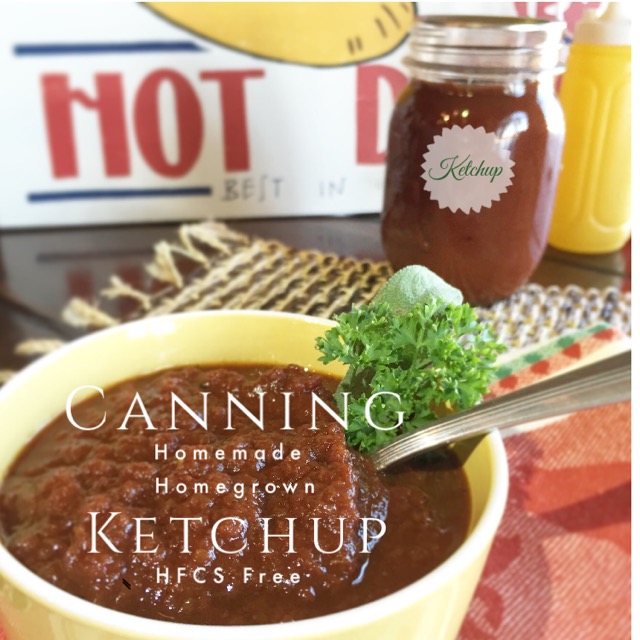
This is thick, old-fashioned tomato ketchup made from ripe tomatoes, onions, vinegar, sugar, and whole spices. It tastes like tomatoes instead of a bottle of corn syrup with a little tomato mixed in.
And when the garden is producing tomatoes faster than your family can eat them, ketchup is another way to put some of that harvest on the pantry shelf.
As an Amazon Associate, I earn from qualifying purchases at no additional cost to you.
A Note About This Ketchup Recipe
My original homemade ketchup recipe was written years ago as a lower-sugar alternative to store-bought ketchup.
I’ve since changed the recipe.
Canning isn’t the place where I want to guess. Tomatoes sit close enough to the line between high- and low-acid foods that the proportions of tomatoes, vegetables, and acid matter when you’re processing them in a water bath canner.
This version follows the tested National Center for Home Food Preservation Tomato Ketchup recipe for the ingredient proportions and canning process.
That means I’m not reducing the vinegar, adding extra onions, or removing the sugar to create my own shelf-stable version.
You can find the original tested recipe through the National Center for Home Food Preservation.
What Makes Homemade Ketchup Different?
If you’re expecting homemade ketchup to taste exactly like the bottle you buy at the grocery store, it won’t.
And I think that’s a good thing.
Homemade ketchup has a deeper tomato flavor. The cider vinegar gives it some tang, while cinnamon, cloves, allspice, celery seed, and cayenne give it that familiar ketchup flavor without making it taste overly spiced.
The other big difference is texture.
Commercial ketchup is engineered to be perfectly smooth and identical from bottle to bottle. Homemade ketchup has a little more character. Running it through a food mill gives you a beautifully smooth sauce, but it still tastes like something that came out of your garden.
What Are the Best Tomatoes for Homemade Ketchup?
Use fully ripe, good-quality tomatoes without signs of spoilage.
If I have plenty of paste tomatoes, such as Roma or San Marzano types, I’ll reach for those first. They contain more flesh and less water, which means less time standing over the stove waiting for your ketchup to thicken.
That doesn’t mean you can’t use slicing tomatoes.
If your garden is overflowing with big slicers, use them. Just expect the ketchup to take longer to cook down because you’re starting with more water.
This is also a good recipe for using a mixture of tomato varieties from the garden.
What I wouldn’t use are tomatoes that are moldy, rotten, frost-damaged, or well past their prime. Canning is not a way to rescue spoiled produce.
Ingredients
Equipment
Method
- Wash the tomatoes thoroughly.
- Bring a large pot of water to a boil and prepare a bowl or sink of cold water.
- Lower the tomatoes into boiling water for about 30 to 60 seconds, or just until the skins begin to split. Transfer them immediately to the cold water.
- The skins should slip off easily.
- Remove the cores, peel the tomatoes, and cut them into quarters.
- Place the prepared tomatoes in a large stockpot.
- Add the chopped onions and cayenne pepper.
- Bring everything to a boil, then simmer uncovered for 20 minutes.
- Cover the pot, turn off the heat, and allow the mixture to stand for another 20 minutes.
- While the tomatoes are resting, place the cloves, crushed cinnamon sticks, allspice, and celery seeds into a spice bag or tie them securely in cheesecloth.
- Pour the 5% apple cider vinegar into a saucepan and add the spice bag.
- Bring the vinegar to a boil.
- Remove the spice bag and discard the spices.
- Now you have all that warm spice flavor infused into the vinegar without little pieces of clove and celery seed floating around in your ketchup.
- Pour the seasoned vinegar into the tomato mixture.
- Bring it back to a boil and cook for approximately 30 minutes.
- At this point, the tomatoes should be very soft.
- Run the hot tomato mixture through a food mill or fine sieve.
- This removes seeds and any remaining bits of skin while creating the smooth texture we want in ketchup.
- Return the tomato mixture to your stockpot.
- Stir in the sugar and salt.
- Bring the ketchup to a gentle boil and continue cooking, stirring frequently, until the volume has reduced by approximately half.
- Don’t rush this part.
- As the ketchup gets thicker, it can scorch surprisingly quickly. Turn the heat down if necessary and stir more often toward the end.
- Prepare your water bath canner and clean pint jars according to current safe home-canning practices.
- Ladle the hot ketchup into hot pint jars, leaving 1/8 inch headspace.
- Remove any trapped air bubbles and adjust the headspace if necessary.
- Wipe the jar rims clean, center the lids, and apply the bands until fingertip tight.
- Place the jars into the boiling water bath canner and process according to your elevation.
Notes
How Do You Know When Homemade Ketchup Is Thick Enough?
This is probably the part of ketchup making that requires the most patience. You’re looking for a thick sauce that mounds or rounds up slightly on a spoon without watery liquid separating from the tomato mixture. Depending on the tomatoes you started with, reducing the ketchup can take a while. Watery slicing tomatoes will naturally take longer than meaty paste tomatoes. Don’t try to shortcut the process by adding flour, cornstarch, or another thickener. Let evaporation do the work.Homemade Ketchup Canning at a Glance
| Question | Answer |
| Tomatoes | 24 pounds |
| Vinegar | 3 cups apple cider vinegar, 5% acidity |
| Jar size | Pints |
| Headspace | 1/8 inch |
| Canning method | Boiling water bath |
| Processing time | 15–25 minutes, depending on altitude |
| Yield | Approximately 6–7 pints |
Is Making Ketchup Worth It?
I’m not going to pretend homemade ketchup is the quickest way to preserve 24 pounds of tomatoes.
It isn’t.
If efficiency is your only goal, can tomato sauce.
But there’s something satisfying about opening the pantry in January and finding jars of condiments you made from tomatoes that came out of your own garden.
We use ketchup all year long. Burgers, meatloaf, fried potatoes, scrambled eggs, barbecue sauce and plenty of other recipes eventually have us reaching for a bottle.
Making it yourself turns one more grocery-store staple into something you can put away during harvest season.
And that is really why I can in the first place.
I’m not trying to recreate the grocery store in my kitchen.
I’m trying to make good use of what we grow while it’s abundant.
FAQ
One Last Canning Note

Home canning recommendations change as research improves, so I always recommend checking a current research-based source before beginning.

For this recipe, the safety-critical ingredient proportions, headspace, jar size, and processing times come from the National Center for Home Food Preservation's tested Tomato Ketchup recipe, which was adapted from USDA home-canning guidance.

There's plenty of room for creativity in a homestead kitchen.

The canner isn't where I use it.
Jar Storage
Once your jars are completely cool and you’ve checked the seals, remove the rings, label each jar, and move it to a cool, dark pantry. I like using stackable canning jar storage boxes to keep my canned goods organized and protected. The dividers keep the jars from knocking together, and the boxes make it much easier to move jars around when the pantry starts filling up during canning season.
-
15 minute Strawberry Jam
Yippee… Its strawberry season here in the Pacific Northwest!. While my strawberry patch isn’t quite big enough…
-
Canning Applesauce Without Sugar
Every fall, I end up with boxes of apples waiting for me in the kitchen. This…
-
Canning Bone Broth: How to Pressure Can Homemade Bone Broth
Canning Nutritious Bone Broth Canning bone broth is one of my favorite ways to make good…
-
Canning Homemade Lemonade Concentrate
There is something awfully handy about having jars of homemade lemonade concentrate sitting on the pantry…
-
Canning Minestrone Soup With Garden Vegetables
By the end of summer, there is always a point when the garden starts producing unreasonable…
-
Canning Peaches in Honey
Canning peaches in honey is one of my favorite ways to preserve fresh peaches without using…




This recipe sounds delicious! Could you recommend a headspace measurement and water bath time if I wanted to can this in half-pint jars? We don’t use that much ketchup and I’m afraid a pint would go bad before we could use it all.
Thank you!
Hi Kendra, Thank you for your Question. I would reduce the water bath time to 20 minutes for 1/2 pint jars, leaving a headspace of 1/4 inch.
I’m missing something here… 267 calories a serving? Like how much is a serving- a jar? A tablespoon? That just seems so high.
The serving size and calories is automatically calculated by a app. The app doesn’t consider that the ingredients are homegrown and sugar/preservative free. Honestly I pay little to no attention to its automated “data”. I will look into how to turn it off.
Hi could the honey be left out or substituted possibly with dates/date syrup or would this compromise it’s shelf life?
Thanks!
I am planning on canning tomorrow but would like to use Himalayan Pink Salt instead of canning salt. Is this possible? Do you have the weight of your canning salt requirement instead of tablespoon measurement?
Thanks
Hi there.
Himalayan salt is so minerals rich it may change the color or flavor of your canned goods.
Can I use stevia instead of honey?