
I started with one milk cow and eventually had more dairy cows than I could count from memory. What I know about dairy cows was earned in the barn, one milking and one hard lesson at a time. Over the years, I have fed, bred, calved, milked, doctored, bought, sold, and worried over a whole lot of cows.
After all those years, I still believe a good family milk cow can be one of the most valuable animals on a homestead. She can also become an expensive, demanding problem if you bring her home before you are ready.
So this is not a list of ten reasons everybody needs a cow. Not everybody does. These are ten reasons a family milk cow may be worth the work, along with the part nobody should leave out when telling you how wonderful she is.
If you are seriously considering one, begin with my complete family milk cow guide and download the free before-you-buy checklist before you start answering cow-for-sale ads.
This article contains affiliate links. If you purchase through one of these links, I may earn a small commission at no additional cost to you. I only recommend products I would use in my own barn or home.
Is a Family Milk Cow Worth It?
A family milk cow can be worth it when your household will use the milk, you can afford her care, and you are willing to build your daily routine around her. She gives much more than milk, but she requires dependable feed, water, fencing, breeding, health care, and someone who will show up to milk her on schedule.
Here is the short version.
| What a family milk cow can provide | What she requires from you |
|---|---|
| Fresh milk, cream, butter, yogurt, and cheese | Regular milking, clean equipment, and rapid cooling |
| Calves and a possible source of home-raised beef | Breeding, calving preparation, and calf care |
| Manure for compost and soil building | Manure management, bedding, and pasture care |
| Greater control over how your dairy is produced | Careful decisions about feed, minerals, health, and sanitation |
| Useful work and livestock skills for the family | Adult supervision, consistency, and respect for a large animal |
| Companionship and a strong farm community | A backup milker, a veterinarian, and people you can call for help |
1. One Cow Can Supply a Household With Real Dairy
The obvious reason to keep a family milk cow is the milk, but a gallon of fresh milk is only the beginning. It gives you cream for coffee, butter for the table, buttermilk, yogurt, kefir, soft cheese, hard cheese, ice cream, custards, and enough cooking possibilities to make the grocery-store dairy case look a little less important.
That abundance is also the first reality check. A cow producing two gallons a day gives you fourteen gallons a week. Four gallons a day becomes twenty-eight. The amount changes with the cow, breed, feed, health, stage of lactation, and milking schedule, but even a moderate producer can overwhelm a household that has no plan beyond drinking a glass with supper.
Before you shop for the highest-producing cow you can find, read how much milk a family milk cow produces. The best family cow is not necessarily the one with the fullest udder. She is the one whose production fits your kitchen, your refrigerator, and the number of people willing to wash cheesecloth.
2. You Know How Your Milk Was Produced
When the cow is standing in your barn, you make the decisions about her feed, minerals, pasture, health care, milking routine, and milk handling. You know whether the bucket was clean because you washed it. You know how quickly the milk was cooled because you carried it into the house.
That kind of responsibility is valuable, but it is not permission to become careless. Milk can be contaminated even when a cow looks healthy, so clean udders, clean hands, sanitized equipment, clean containers, and quick cooling all matter. Families make different decisions about consuming raw or pasteurized milk. If milk will be sold or distributed, state requirements also come into play, and they vary considerably. Federal law prohibits interstate sale of raw milk for human consumption, while individual states regulate what may happen within their borders.
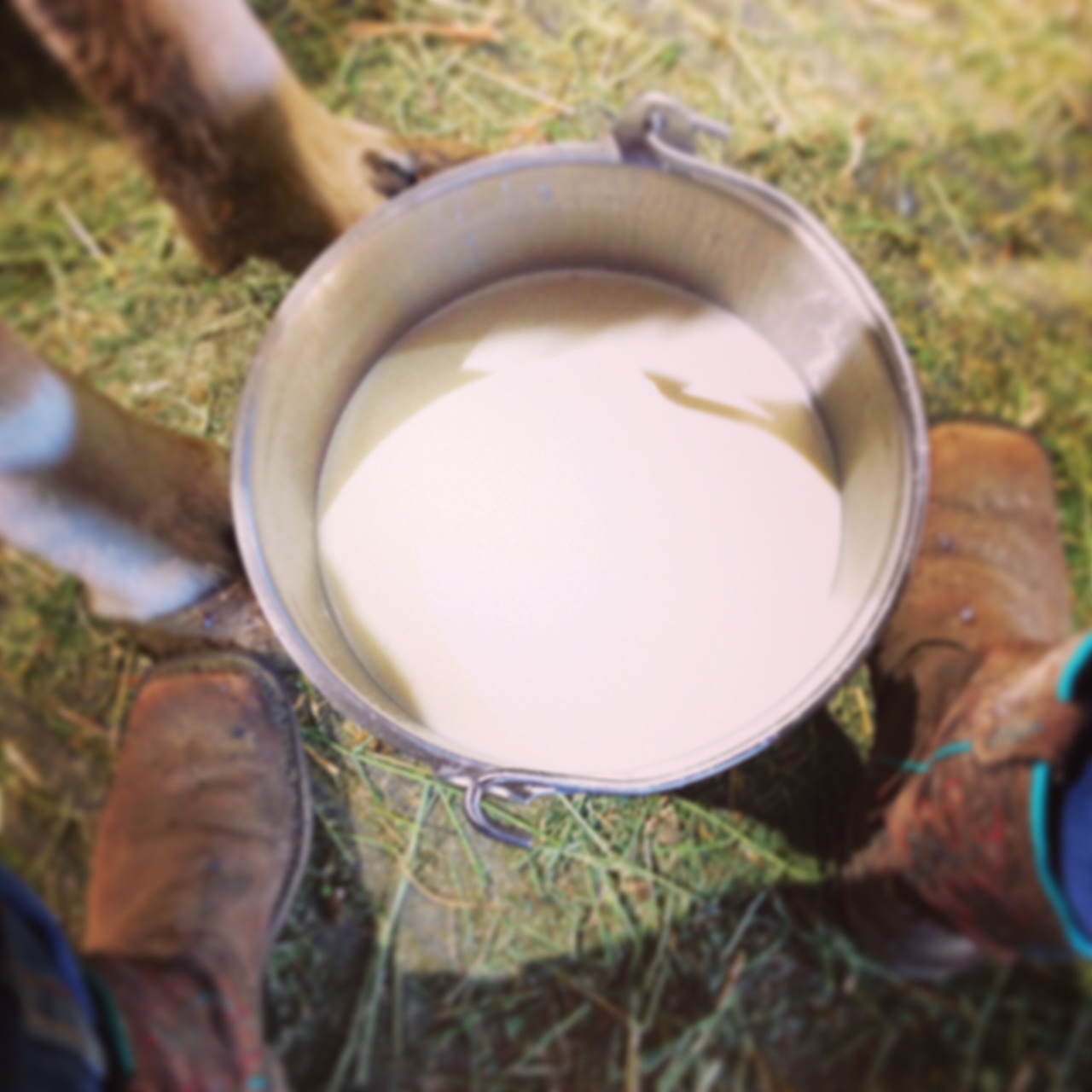
At a minimum, a hand-milking setup needs a seamless stainless steel milk pail, single-use milk filters, clean jars, and a reliable way to chill the milk promptly. A stainless steel strainer and glass milk jars with secure lids make the routine easier, but equipment only helps when it is cleaned correctly every single time.
3. A Cow Turns Milk Into an Entire Kitchen Skill Set
You learn quickly that owning the cow and using the milk are two different skills. Milking fills the refrigerator. Kitchen knowledge keeps it from taking over.
Separating cream, churning butter, culturing yogurt, making kefir, and learning a few dependable cheeses let you turn daily milk into foods your family will actually use. My homemade butter and cultured buttermilk and milk kefir guide are good places to begin.
A cream separator can be useful if you regularly process several gallons, although it creates one more machine to take apart and wash. Dairy ownership has a way of teaching you that anything advertised as saving time will probably arrive with fourteen tiny parts and its own cleaning brush.
4. Calves Can Put Beef in the Freezer
A cow does not begin producing milk because you bought a milk bucket. She produces milk after calving, which means breeding and calves are part of keeping her in milk.
Heifer calves may become future family cows, replacements, or animals you sell. Bull calves can be castrated and raised as steers for beef, sold to another farm, or managed another responsible way that fits your operation. Dairy and dairy-cross steers can supply useful meat, but raising one still requires feed, space, fencing, handling, and a realistic plan for harvest.
This part of dairy ownership asks for honesty. Calves are easy to become attached to, and not every calf can remain on the farm. Children can learn a great deal from participating in livestock care, including that responsible husbandry involves both tenderness and difficult decisions.
5. Manure Becomes a Resource Instead of a Waste Problem
A cow produces plenty of manure. If you have gardens, compost piles, or tired soil, that manure can become a valuable source of organic matter and plant nutrients after it is handled properly.
The phrase “free fertilizer” skips over the pitchfork, bedding, hauling, composting, and the fact that cows rarely leave it in the exact place you would have chosen. On a small property, manure management needs to be part of the setup before the cow arrives. Wet lots, runoff, flies, and a mountain of uncomposted manure are not soil-building systems.
Used well, though, manure and bedding can return fertility to gardens and fields rather than leaving the farm in a trash can.
6. A Milk Cow Teaches Useful Work
There is a kind of responsibility that cannot be taught with a chore chart alone. A cow needs feed when it is cold, water when the hose is frozen, and milking when everybody would rather sleep another hour.
Children can learn to notice appetite, posture, manure, cud chewing, body condition, udder changes, and the thousand small signs that tell you an animal is doing well or needs attention. They can help carry supplies, scrub equipment, fill water, bed a stall, and eventually learn to milk under close supervision.
The cow should never become a child’s responsibility alone. She is a large animal with real needs, and adults remain responsible for her care and for keeping children safe. Still, working beside your children in the barn teaches patience, steadiness, and respect for life in a way very little else can.
7. She Adds Food Security, but Not Independence From Everything
A family milk cow makes a household less dependent on store-bought dairy. She does not make the homestead independent of hay growers, seed dealers, veterinarians, semen technicians, fence suppliers, electricity, replacement parts, or weather.
That distinction matters. Preparedness is not pretending you will never need anyone. It is building useful skills, keeping reasonable supplies on hand, and forming relationships before there is an emergency.
In our North Idaho winters, stored hay, unfrozen water, bedding, shelter, and backup equipment matter every bit as much as pasture does in June. A cow can strengthen your food supply, but only when her own feed and care are secure first.
8. Cows Can Improve Pasture When They Are Managed Well
Cattle can turn forage humans cannot eat into milk, meat, and manure. With thoughtful rotation and adequate recovery time, grazing can be part of good pasture management.
But there is no universal “two acres per cow” rule. Acreage needs depend on soil, rainfall, irrigation, forage production, growing season, cow size, milk production, grazing management, and how much hay you are prepared to purchase. A small property may give a cow enough room to live while producing nowhere near enough forage to feed her.
My guide to how much land a cow needs explains the difference between land a cow can stand on and land that can actually feed her. It is an important distinction, especially after the first feed bill arrives.
You also need fencing that contains cattle, not fencing that expresses a gentle preference about where they ought to stay. A dependable low-impedance fence charger, electric-fence tester, and basic repair supplies are worth owning before a cow discovers your weakest corner post.
9. A Family Milk Cow May Produce Income
Depending on where you live and how your dairy is licensed, surplus milk or dairy products may help offset some of the cost of keeping a cow. Calves, breeding stock, manure, and value-added products may also have value.
That does not mean a cow automatically pays for herself. The old version of this article used milk prices and production numbers to make the income look simple. It was not simple then, and it certainly is not now.
Before counting a dollar of milk income, include the cow’s purchase price, winter hay, grain if used, minerals, breeding, testing, veterinary care, fencing, shelter, water systems, equipment, refrigeration, jars, licensing, insurance, labor, and the milk your own household uses. My family milk cow cost calculator will help you work through the numbers for your own farm.
Raw milk laws vary by state, and rules may differ for on-farm sales, retail sales, herd shares, delivery, labeling, testing, and the number of cows milked. Contact your state department of agriculture and local authorities before selling anything. Income should be a carefully researched possibility, not the reason you buy a cow and hope the paperwork sorts itself out later.
10. Cows Bring Companionship and Community
I have always loved the quiet of being around cows. A bad day can improve considerably after ten minutes scratching a cow in her favorite spot, although she may repay the kindness by planting a rough, wet tongue directly across your face.
The friendships built around dairy cattle have been just as valuable. Good cow people trade knowledge, watch for animals for sale, lend equipment, help during calving, cover milkings, and answer the phone when something looks wrong at an unreasonable hour.
Find those people before you need them. A veterinarian, an experienced dairy farmer, a dependable hay supplier, and somebody capable of milking your cow are not extras. They are part of a sound family-dairy plan.
Frequently Asked Questions About Family Milk Cows
How much milk does one family milk cow produce each day?
Production varies widely with breed, genetics, age, feed, health, stage of lactation, and milking schedule. A family cow may provide a few gallons per day, while a high-producing dairy cow can give considerably more. Choose a cow by the amount your household can manage, not by the largest number in the sale ad.
Do I have to milk a cow every day?
Yes, while she is lactating and you are taking responsibility for the milking. Many cows are milked twice daily. Some family-cow systems use once-a-day milking or calf sharing, but skipping milkings without a sound plan can cause discomfort, production changes, and udder-health problems.
Can I leave for a weekend if I own a milk cow?
Only if a trained, dependable person can feed, water, observe, and milk her according to your routine. A milk cow makes spontaneous travel difficult, which is why relief help should be arranged and trained well before you plan to leave.
How much land does a family milk cow need?
There is no single acreage figure that works everywhere. Productive pasture, dry rangeland, irrigated ground, and wooded acreage have very different carrying capacities. You can keep a cow on limited acreage if you purchase feed, but you must also manage manure, mud, exercise, and pasture damage.
What is the best breed for a family milk cow?
Jerseys, Guernseys, Dexters, Milking Shorthorns, Brown Swiss, and Holsteins can all work in the right home. Temperament, udder structure, health, production level, milking behavior, and the individual cow’s history matter more than choosing a breed by reputation alone. Buy the whole cow, not the color.
Do I need a bull to get milk from a cow?
The cow must calve to begin a lactation, but you do not need to own a bull. Artificial insemination and outside breeding services are common alternatives. Keeping a bull adds serious handling, fencing, and safety concerns and is rarely the simplest choice for a first-time family-cow owner.
What can I do with extra milk?
Extra milk can become butter, yogurt, kefir, cheese, ice cream, and other foods. Some homesteads feed appropriate surplus to pigs or poultry. Selling or distributing milk is regulated, so check state and local requirements before giving milk to customers or accepting payment.
What happens when a cow stops producing milk?
Production naturally declines as lactation progresses. Owners commonly stop milking for a planned dry period before the next calving. If production drops suddenly or the cow is unwell, investigate promptly rather than assuming she is simply drying off.



Amen, sister. Especially to number 10! I’d be lost without my cows.
Thank you! Great post! I’m thinking our next house we’ll have property and I’ve been researching potentially having a dairy cow.
I LOVE my cow! She is wonderful. Thanks for sharing. I MA need MORE cows for my cow habit. 😉
Wonderful article.
Thank You!
Okay, pregnant with #8 (possibly 9 too as I suspect twins ;). We live on 8 acres, LOTS of trees and a bit hilly. Drink lots of milk. I was considering getting a jersy with calf and raising it for beef or having her inciminated when she dries out (a bit too complicated though). A steer makes me nervous as our kids are 10 & under. It’s very hot/dry in the summer so we would need to supplement. What should I expect to pay for one dairy cow in feed? Any help/input would be greatly appreciated. Thanks so much for this post!
That is a difficult question to answer, as every cow and every rancher are different. It depends on if your planning on supplementing her with grain, silage, protein or hay. Or a little of all and what kinds. Hay and grain prices are based on the current market. I strongly encourage to buy by the ton if your able to and you will save. As a general role of thumb a dairy cow in milk, should eat about 100lbs per day, some more, some less. What you choose to feed will be the base of your feed bill.
As a dairy farmer, I appreciate this article. Sometimes I forget how lucky I am to have these lovely creatures to take care of every day. I just wish I got $8 per gallon for milk, right now with the low milk price we are getting less than $2 per gallon. Yes, we do use antibiotics and rBST but I feel those are both important tools for maintaining the health and productivity of my cows.
Wow. Less then $2.00! That’s terrible. Hopefully this year will bring you a higher market price.
I had a jersey cow loaned to me from a local farmer when I was a kid. I was the only one in Agriculture class who didn’t live on a farm or acreage. I loved that girl, her name was Scarlet. She was like a puppy, she’d moo when I’d leave, lick me when I was near her, she was a cuddlebug. Now I live on 5 acres in western WA state… it’s practically all old growth woods though, with lots of underbrush of ferns and blackberry bushes, no grass in sight. It never occurred to me that you could graze cows in woods… do my woods sound suitable?
Hi Jamie, we live on 3.8 acres in the foothills of Tiger Mountain 5 miles south of Issaquah, WA. It never occurred to me we could graze cows in the woods either. Having grown up in North Dakota I’m learning a whole new way of homesteading. My biggest worry is mountain lions and bears. I would love to connect with locals that are learning.
Cheers,
Kristina
Kristina, Check out Ann from A Farm Girl In The Makings blog. She is right in your neck of the woods.
Where I live it is not easy to buy raw milk. Thankfully I am blessed to be part of a milk co-op, we’re a group of families that travels to a nearby community about an hour away. So each week one goes and delivers to the rest. I like the idea of getting our own cow one day to milk – but for now at least we can buy it. I love how your daughter is learning so much. I enjoyed your list very much.
Where do you live that you can sell raw milk, and what did you have to do, legally, to sell it? I would love to have a cow, but with all the problems I’ve been reading about selling milk, I am very much on the fence about it. I’m thinking maybe milk goats produce less and maybe that would be the way to go for my little family if I would have issues selling surplus. Especially since goat milk could legally be sold for pet consumption. Any advice is welcome. 🙂
We live in Idaho. Each state is different on rules and regulations. Check out your local Dept of Ag website. Goat are a great option as well. I used to raise Nubian’s and two goats in milk was plenty for our family. Good luck.
Lost my beloved Maizie last year! Life on the farm is not the same without her. Rip Maizie girl!
Oh no, I’m so sorry. Maizie is a perfect name for a cow.
We are considering a milk cow for the future. I liked your list. In Alberta though it is illegal to sell milk if you don’t have quota. It’s really unfortunate. But, we can do it for personal consumption. So we are researching and considering all things now.
I loved reading this! I am wanting a mini dairy cow so bad! They are so adorable
What a lovely way to describe cow-love! I have wanted a cow all my life but I’m not sure I will be able to handle having one (financially, physically) on my nearly 2 acres. Living there alone now and with a bad back…well we shall see. Anyway, you have written such a nice list of reasons and I would love to see more (responsible, loving, capable) people take them on! You sound like my kind of folks! Happy life to you and your family and thanks again!