Keeping a Family Milk Cow During a Power Outage
If the power went out tonight, could you still milk your cow tomorrow morning?
Probably.
Family milk cows were around a long time before electric well pumps, refrigerators, freezers, heated stock tanks and milking machines. There are still Amish farms today where milk is carried in cans, cooled with water and handled with far less electricity than most of us are accustomed to.
I am certainly not suggesting we throw out every modern convenience and go back to hauling water and churning butter by hand every day. I like electricity, though I do love a quiet milking in the barn by lantern light.
But I also think there is something to be learned from the way dairy cows were kept before we became so dependent on it.
The cow herself doesn’t require electricity. She needs water, feed, shelter, regular milking and good care.
Once you look at it that way, keeping a family milk cow during a power outage becomes much simpler.
This post contains affiliate links. As an Amazon Associate, I earn from qualifying purchases at no additional cost to you.
Water Is Still the First Problem
If you’re on a well, this is where I would start.
When the power goes out, the water sitting underground hasn’t disappeared. You have simply lost the convenient way of getting it to the surface.
A lactating cow can drink a tremendous amount of water, depending on the weather, what she is eating and how much milk she is producing. For emergency planning, I would allow around 40 gallons of drinking water per lactating cow each day, then account for additional potable water for milking and cleaning.
| Number of Cows | 1 Day | 3 Days | 7 Days |
|---|---|---|---|
| 1 cow | 40 gallons | 120 gallons | 280 gallons |
| 2 cows | 80 gallons | 240 gallons | 560 gallons |
| 3 cows | 120 gallons | 360 gallons | 840 gallons |
Those are planning numbers, not exact consumption numbers. A cow may drink less in cool weather and considerably more during heat or heavy production.
The part I think we tend to overlook is moving it.
Forty gallons of water weighs more than 300 pounds.
A food-grade water storage tank is helpful, but only if you have a way to get that water to the cow. We use these bladders and keep them in the bed of a truck. A drinking-water-safe hose may be enough depending on where the tank is located. Gravity is even better when your property allows it.
Long before electric pumps, farms used springs, elevated tanks, windmills, hand pumps and gravity to move water. We don’t necessarily need to recreate those systems, but the principle is worth remembering.
Water doesn’t always need electricity to move downhill.
If your backup plan is a generator running the well, that’s fine too. Just make sure you have actually tried it before you need it and are prepared to store enough fuel to maintain it.
Learn to Milk the Cow by Hand
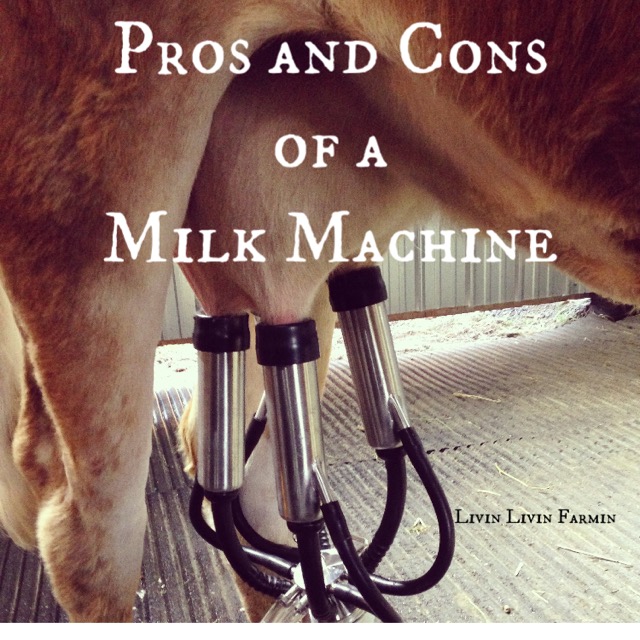
Milking machines are relatively new in the long history of keeping cows.
Hands work just fine.
Even if you normally use a machine, I think knowing how to hand milk is one of the most valuable backup skills a family milk cow owner can have.
A good seamless stainless steel milk pail and stainless steel milk strainer will handle the job without fuel or electricity.
There is another benefit to keeping things simple during an outage. A bucket and strainer are much easier to wash when water is limited than hoses, inflations and all the other pieces that come with a milking machine.
The cow still needs to be milked on her normal schedule. Her udder doesn’t know the power is out.
How much milk you’re dealing with will depend heavily on where she is in her lactation. A fresh cow at peak production presents a much different problem than a cow you’re preparing to dry off. My Family Milk Cow Lactation Curve explains how production normally rises and falls throughout lactation.
If you are already milking your family cow once a day, you may have a simpler routine to maintain. I wouldn’t suddenly change a cow’s established milking schedule simply because the electricity is out.
Work with the cow you have and the routine she already knows.
Cooling Milk the Old-Fashioned Way
This is where things get interesting.
Before refrigerators, farms still had to cool milk.
One of the oldest solutions was cold water.
Spring houses were once common on farms fortunate enough to have a good spring. Cold water flowed through the building and into troughs where crocks, jars or cans of milk could be set down into the water.
You don’t necessarily need a stone spring house to borrow the idea.
Depending on the time of year and where you live, a cold spring or creek may give you a way to cool fresh milk surprisingly quickly. Place the milk in tightly sealed containers and set them into cold, clean, flowing water in a shaded location.
The important part is temperature.
A creek that feels chilly when you stick your hand in it isn’t necessarily cold enough to safely store milk. Use a waterproof digital thermometer and actually check.
In cold weather, however, you may discover that nature has already provided a pretty effective milk cooler.
Snow and ice can also become useful rather than inconvenient. Earlier farm families harvested winter ice and stored it in heavily insulated ice houses so they could use it well into warmer months. Some Amish communities still use ice houses and iceboxes for cooling food.
But a large insulated cooler packed with ice or snow is essentially the same idea on a much smaller scale. I have chilled milk multiple times in the snow.
Sometimes the old solution is still a pretty good one.
Let the Cream Rise
There is another reason cooling the milk matters.
If you want the cream, you need to give it time to rise.
A mechanical cream separator can separate warm milk immediately, but cream separators are also relatively modern equipment. Farm families made butter long before they had them.
Farm families made butter long before mechanical cream separators. They let the milk sit in a cool place and gave the cream time to rise before skimming it.
Make Butter Without Electricity
Once you have cream, butter is one of the simplest ways to use it.
I normally make my homemade raw butter and cultured buttermilk with modern kitchen equipment because it’s fast and easy.
But a food processor didn’t invent butter.
A hand-crank butter churn works without electricity and is something I think is genuinely useful for a home dairy that wants an old-fashioned backup.
You can go even simpler than that. Cream can be churned in a jar if necessary. It takes longer and your arms may have a few things to say about it, but it works and gives the bored kids something to do.
Once the butter separates from the buttermilk, drain it and work the butter properly. Save the buttermilk and use it in biscuits, pancakes and breads.
One bucket of milk has suddenly become several different foods.
That was normal in an old farm kitchen.
Use the Milk Instead of Trying to Save Every Gallon
This may be the biggest difference between keeping a cow today and keeping one generations ago.
We tend to think the goal is to get every gallon into the refrigerator.
They thought about how to use it.
If the cow is producing more milk than you can keep properly cold, start cooking.
Fresh cheese is one option. Put the milk into gravy, biscuits, breads or whatever else is already on the menu. And breakfast cooked over a campfire never gets old.
Milk can also be reduced over heat. My homemade sweetened condensed milk is a good example of taking an abundant ingredient and turning it into something entirely different. If you have a fire rolling to keep the house warm, add a pot of milk and take advantage of the heat.
Cultured foods are another old dairy skill worth learning. Milk kefir is one of the simplest cultured dairy foods to make.
That doesn’t mean every dairy product suddenly becomes shelf stable because it has been cultured, churned or turned into cheese. Safe storage still matters.
Make Friends With Ice
Our great-grandparents didn’t have bags of ice sitting beside the gas station register.
They had to think much further ahead.
In colder parts of the country, ice was cut during winter and stored in insulated ice houses under materials that slowed melting. Some Amish communities still put up ice this way.
I find that fascinating because it changes the way you look at winter.
Instead of ice being something you purchase when the electricity goes out, it becomes something you harvest when it is abundant.
Most of us probably aren’t going to start cutting blocks from the farm pond.
But the principle is still useful.
If you live where winters are cold, think about the cold you already have available. If an outage happens in January, the outdoors may be colder than your refrigerator.
Keep Cleaning Simple
Old-fashioned doesn’t mean dirty.
Whatever method you use, clean milk still begins with a clean cow, clean hands and clean equipment.
This is another reason I like simple equipment as a backup.
A stainless bucket, strainer, jars and a long-handled dairy brush don’t require an elaborate washing system.
Use potable water for anything involved in milking and milk handling.
If water is limited, this is also the time when having fewer pieces of equipment to wash becomes especially valuable.
Think About Fencing Before You Need It
Electric fencing is another modern convenience I appreciate.
But if your cow is contained entirely by an electric fence powered from the grid, know what happens when that power disappears.
That may mean having a secure physical perimeter fence, a smaller area where the cow can be kept temporarily, or a solar fence charger that doesn’t depend on grid power.
You don’t need to rebuild every fence on the farm.
You just need somewhere safe for the cow.
A milk cow wandering down the county road is one old-fashioned farming experience I am happy to not repeat.
Winter Changes the Chores
Winter adds another problem because water not only has to reach the cow, it has to remain liquid.
If your stock tank normally depends on an electric heater, you need another plan when temperatures drop.
Sometimes that plan is as simple and old-fashioned as breaking ice and watering more often.
It is more work.
That’s the part we sometimes leave out when talking about how our grandparents managed without electricity. They did it, but they also worked a whole lot harder.
There is no shame in using the stock-tank heater when the electricity is working. The value in knowing the old way is that you aren’t helpless when it isn’t.
I think this is where we can make preparedness far more complicated than it needs to be.
If the electricity goes out, my goal isn’t necessarily to make the farm operate exactly as it did when the power was on.
Once you stop trying to recreate modern convenience, the problem gets a lot smaller.
Practice the Old Skills Before You Need Them
There is a reason I keep coming back to skills.
A hand-crank butter churn isn’t particularly useful if you’ve never made butter.
A milk pail doesn’t help much if you’ve never hand milked.
A spring running through the property isn’t much of a backup if you’ve never checked its temperature or figured out how you would safely use it.
You don’t need to wait for a power outage.
Hand milk your cow once in a while.
Make butter without plugging anything in.
Pay attention to how much water your cow actually drinks.
Look at your property and figure out where you could keep milk cold during different seasons.
Teach someone else in your family how to do the milking.
These are small things.
But put together, they make a family dairy considerably less dependent on everything working perfectly.
The Family Milk Cow Was Made for This Kind of Life
One of the reasons I love the family milk cow is because she fits so naturally into an old-fashioned, resilient homestead.
She takes grass and hay and gives us milk.
From that milk we can make butter, cheese, cultured dairy, desserts, breads and an incredible number of foods for the family.
We can do all of that with electricity.
And we can do a surprising amount of it without electricity.
The old ways weren’t necessarily better simply because they were old. Some of them were hard, inefficient and time consuming, and I am quite happy to leave those parts in the past.
But they were simple.
More importantly, they worked.
There is value in knowing how to milk a cow with your hands, cool milk with cold water, skim cream from a crock and churn butter without plugging anything into the wall.
Not because I expect the power to disappear forever.
Because knowledge gives us options.
Farmers have always prepared for the seasons ahead. We put up hay before winter, preserve food while it is abundant and keep supplies ready before a cow calves.
Knowing how to care for a milk cow when the electricity goes out isn’t fear.
It is simply another part of caring well for what God has entrusted to us.
If the cow herself is the part you’re still learning, my Family Milk Cow Problem-Solver Bundle brings together the practical resources I want a cow owner to have before she is standing in the barn trying to figure out what went wrong.
Frequently Asked Questions
Can you keep a family milk cow without electricity?
Yes. Dairy cows were kept successfully long before farms had electricity, and some traditional and Amish farms continue to use systems that are far less dependent on grid power. You still need reliable water, feed, shelter, milking, sanitation and safe milk handling.
How did farmers keep milk cold before refrigerators?
Cold spring water, spring houses, milk houses, ice and ice houses were all used. Milk containers were often placed into troughs of cold running water. The important difference today is that we can measure temperature rather than guessing whether milk is cold enough.
Can I put fresh milk in a cold creek or spring?
Cold running water can help cool sealed containers of fresh milk, particularly during colder parts of the year. Protect the container from contamination and check the actual water and milk temperature. A creek that feels cold isn’t automatically cold enough for safe long-term milk storage.
How did people separate cream before cream separators?
They let gravity do it. Milk was placed in containers and allowed to stand in a cool place until the cream rose to the surface. The cream could then be skimmed and used for butter and other foods.
Can you make butter without electricity?
Yes. Butter was made for centuries before electric appliances. Cream can be churned with a hand-operated churn or even shaken in a jar. My homemade butter recipe explains the basic process.
Should I switch to once-a-day milking during an outage?
I wouldn’t suddenly change an established milking routine simply because the power is out. Once-a-day milking can work very well for a family cow, but it should be a management decision based on the cow, her production, stage of lactation and your overall routine. You can read more in my once-a-day milking guide.
What should I prepare first for a dairy cow?
Water. Before worrying about butter churns or milk storage, know how you will provide enough clean drinking water to the cow if your normal water system stops working.