A family milk cow does not produce the same amount of milk every day from the time she calves until you dry her off. Her production rises, reaches a peak, and then gradually declines throughout the rest of her lactation.
This pattern is called the dairy cow lactation curve.
Understanding that curve gives you a much better idea of what to expect after calving. It can also help you recognize the difference between a normal decline in milk production and a sudden change that deserves your attention.
For those of us keeping a family milk cow, there is another piece to consider. Calf sharing, once-a-day milking, breed, feed quality, season, and the individual cow can all change the shape of her lactation curve.
What Is a Dairy Cow Lactation Curve?
The dairy cow lactation curve describes how milk production changes throughout the entire lactation period.
A typical cow lactation cycle follows four general stages:
| Stage of Lactation | Approximate Timing | What Is Happening |
|---|---|---|
| Colostrum and transition milk | Days 1–5 | Colostrum gradually changes to mature milk |
| Early lactation | Weeks 1–8 | Milk production increases rapidly |
| Peak lactation | Roughly weeks 4–10 | Cow reaches her highest daily milk yield |
| Mid to late lactation | After peak until dry-off | Milk production gradually declines |
| Dry period | Usually 6–8 weeks before calving | Milking stops in preparation for the next calf |
Commercial dairy production often uses a standardized 305-day lactation when comparing dairy cows. A family milk cow does not have to fit perfectly into that model.
Some cows reach a very high peak milk yield and then decline relatively quickly. Others peak lower but maintain steady production for much longer.
For a homestead, that second cow can sometimes be far more useful.
The First Few Days After Calving
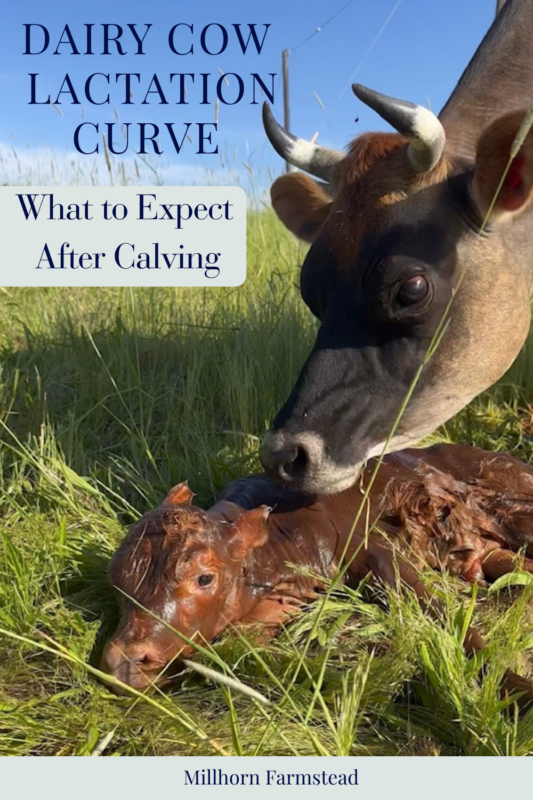
Immediately after calving, a fresh cow produces colostrum.
Colostrum is specifically designed for the newborn calf. It contains high concentrations of antibodies, protein, fat, vitamins, and minerals, and the calf needs adequate colostrum as soon as possible after birth.
Over the next several milkings, colostrum gradually transitions toward normal milk.
During these first few days, I am much more concerned with the cow and calf than I am with how many gallons are coming into the house.
I want to see a calf nursing well and a cow that is eating, drinking, passing manure normally, and acting like herself. I also check her udder and individual quarters and watch closely for anything that doesn’t look right.
Early Lactation and Rising Milk Production
After the colostrum period, milk production begins climbing quickly.
First-time milk cow owners sometimes expect the cow to produce her maximum amount of milk immediately after calving, but peak production usually comes later.
Early lactation is one of the most nutritionally demanding periods for a dairy cow. Her milk production is increasing at the same time she is recovering from calving.
Her energy requirements can be greater than what she is able to consume, particularly in a high-producing cow.
This makes feed intake and dry matter intake especially important.
Dry matter intake is essentially the amount of feed a cow consumes after the water in that feed is removed from the equation. A cow may have hay in front of her all day, but that doesn’t automatically mean she is consuming enough high-quality forage to meet the energy demands of lactation.
High-quality forage should remain the foundation of the diet, with additional feed and minerals provided according to the needs of the individual cow.
And don’t overlook water. A lactating cow needs access to plenty of clean, fresh water.
Body Condition During Early Lactation
I also watch body condition closely during early lactation.
Some loss of body condition can occur as a cow moves toward peak milk production because her nutrient and energy intake may temporarily lag behind the demands of producing milk.
But there is a difference between a cow naturally using some body reserves and a cow getting too thin.
This is where knowing your individual cow matters.
Milk in the bucket is only one measurement. I also want to see a cow maintaining appropriate body condition, eating well, moving normally, and remaining healthy.
Chasing maximum milk production at the expense of the cow is never the goal.
When Do Dairy Cows Reach Peak Milk Production?
Dairy cows generally reach peak milk production during early lactation, often somewhere around four to ten weeks after calving.
This is the highest point on the lactation curve.
The time of year your cow calves can affect what peak lactation looks like on the homestead, too. A spring-calving cow may reach peak production while good pasture is coming on, while a fall-calving cow may reach peak production when you’re relying much more heavily on stored hay and purchased feed.
If your family milk cow is going to produce five gallons per day at her highest production, for example, this is approximately when you would expect to see those numbers.
But family cow owners need to remember something important:
Milk production is not necessarily the same as milk in your bucket.
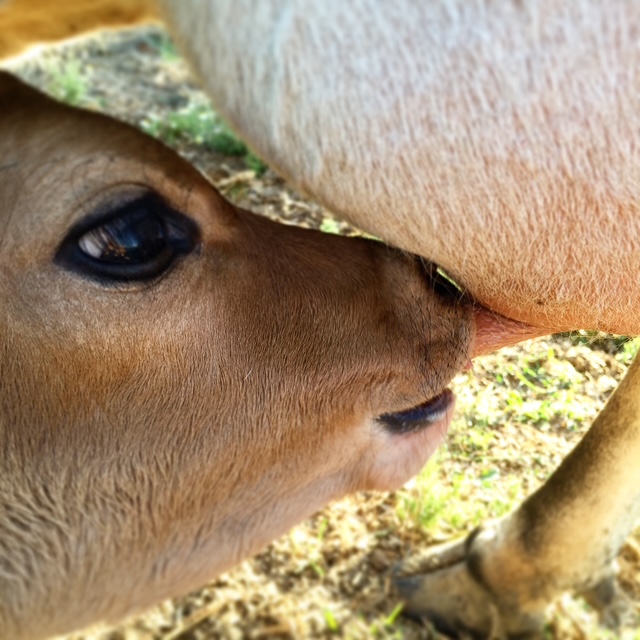
If you are calf sharing, the calf may be drinking a substantial portion of your cow’s total production.
Your milking schedule matters too.
A cow milked twice a day with no calf nursing will generally put a different amount of milk in your refrigerator than the same cow being milked once a day while raising her calf.
When someone tells you how many gallons their cow gives, always consider how that cow is being managed.
What Determines Peak Milk Yield?
Breed matters, but it is only part of the equation.
Potential milk production is influenced by:
- Breed and genetics
- Age and number of previous lactations
- Body condition
- Forage quality
- Feed and nutrient intake
- Energy intake
- Mineral availability
- Water consumption
- Health
- Milking frequency
- Calf sharing
- Stress and environmental conditions
A mature Jersey with several lactations behind her may produce considerably more than a first-calf Jersey heifer.
Two cows of the same breed can also have surprisingly different production.
This is why I would never choose a family milk cow based on breed averages alone. The individual cow matters.
First-Calf Heifers May Produce Less Milk
If your cow has just had her first calf, keep that in mind when evaluating her production.
First-calf heifers are still growing themselves while supporting lactation. They frequently have a lower peak yield than mature cows and may produce considerably more during their second or third lactation.
Her first lactation gives you useful information, but it doesn’t necessarily show you her lifetime potential.
Look at the whole cow, not just the number in the milk pail.
What Is Lactation Persistency?
After peak production, milk yield normally begins to decline.
The rate of decline is an important part of the shape of the lactation curve.
A cow that maintains milk production well after her peak is said to have good lactation persistency. With high persistency, her lactation curve stays flatter because production declines more slowly. In contrast, low persistency means she may reach an impressive peak but lose production more rapidly afterward.
For a family milk cow, high persistency can be incredibly valuable.
I would much rather have a cow giving my family a manageable and fairly consistent amount of milk than one that overwhelms me at peak lactation and then drops dramatically.
More milk is not automatically better.
The best family milk cow produces an amount your family can actually use while maintaining her own health and body condition.
What a Family Milk Cow Lactation Curve May Look Like
Imagine your cow calves in March.
Her production begins increasing during March and may reach peak lactation sometime in April or May.
As she moves through summer, production will usually begin its gradual decline. By fall and winter, her average daily milk yield may be noticeably lower than it was during peak production.
Eventually she reaches the end of lactation and is dried off before her next calf.
That gradual decline is normal.
What concerns me more is a sudden drop in production.
If a cow has consistently been giving three gallons and suddenly gives one, I don’t simply blame the lactation curve.
Something changed.
What Causes a Sudden Drop in Milk Production?
A normal lactation curve declines gradually.
A sharp decrease deserves attention.
Things I would investigate include:
- Reduced feed intake
- Poor-quality hay or changing pasture conditions
- Inadequate water
- Heat stress
- Illness
- Mastitis
- Injury or pain
- Mineral imbalance
- Estrus (“heat cycle”)
- Stress
- A change in milking schedule
- A calf nursing more than usual
If you’re unsure whether your cow’s production is actually low, start with how much milk a family milk cow should produce per day to see what you can reasonably expect based on breed, stage of lactation, and management.
Sometimes the explanation is simple. Other times, reduced production is one of the first clues that your cow needs closer attention.
Knowing her normal production makes those changes much easier to recognize.
How Once-a-Day Milking Affects the Lactation Curve
Once-a-day milking can be a wonderful option for a family milk cow, but you should expect it to affect production.
When milk is removed less frequently, the udder remains fuller for longer periods. This eventually signals the cow’s body to reduce milk production.
For many homesteaders, that reduction is perfectly acceptable.
You may not need maximum production.
If your cow still provides enough milk for drinking, butter, yogurt, kefir, and cheesemaking without tying you to the barn twice every day, slightly lower production may be a worthwhile trade.
If you’re considering changing your schedule, my complete guide to once-a-day milking a family milk cow explains when to make the switch, what to expect from production, and how to make it work on the homestead.
Calf Sharing Changes What You See in the Milk Pail
Calf sharing makes measuring average daily milk yield more complicated.
Unless you separate the calf long enough to measure a complete milking, you probably don’t know exactly how much milk your cow is producing.
And for most family milk cow owners, that’s okay.
What matters is whether the calf is thriving, the cow is maintaining appropriate body condition, her udder remains healthy, and your family is getting the amount of milk you need.
Remember that the calf’s milk intake changes as it grows. A four-month-old calf may consume considerably more than a very young calf.
Your bucket can therefore change even when the cow’s actual production hasn’t changed nearly as much.
Milk Composition Changes During Lactation Too
Milk volume isn’t the only thing that changes throughout lactation.
The composition of your cow’s milk can also change based on her stage of lactation, breed, diet, season, health, and genetics.
You may notice changes in:
- Cream line
- Butter yield
- Cheese yield
- Milk flavor
- Texture
- Total milk volume
This is one of the reasons keeping a family milk cow teaches you to pay attention to much more than gallons.
The milk itself can tell you a great deal about the cow producing it.
Changes in butterfat become especially noticeable when you’re making homemade butter, since the amount of cream your cow produces directly affects how much butter you can make.
Late Lactation and the Dry Period
As a cow moves into late lactation, milk production continues to decline.
If she is bred, you also need to start thinking about her dry period rather than simply milking until she doesn’t produce enough to make it worthwhile.
The dry period gives the mammary gland time to prepare for the next lactation and allows more of the cow’s nutritional resources to go toward late pregnancy and her developing calf.
A commonly used target is approximately six to eight weeks dry before calving.
Work backward from her expected calving date and make dry-off part of your management plan.
As her next calving date gets closer, use my family milk cow calving supplies checklist to make sure you have everything on hand before labor begins.
Keep Records on Your Own Cow
One of the best things you can do is keep simple records.
You don’t need complicated dairy software. Write down:
- Calving date
- Peak milk production
- Major feed changes
- Milking schedule
- Breeding date
- Pregnancy confirmation
- Significant production changes
- Health problems
- Planned dry-off date
After a few lactation’s, those records become incredibly valuable.
You begin to understand the normal lactation curve for your cow instead of constantly comparing her to someone else’s cow on the internet.
Keep the Milk Pail Full
Get practical dairy cow advice, troubleshooting help, and new homestead resources delivered straight to your inbox.
Frequently Asked Questions About the Dairy Cow Lactation Curve
How soon after calving does a dairy cow reach peak milk production?
Most dairy cows reach peak milk production within the first several weeks after calving, commonly around four to ten weeks. The exact timing varies according to the individual cow, breed, age, nutrition, health, and management.
Is it normal for milk production to decrease after a few months?
Yes. Milk production naturally declines after peak lactation. A gradual decline is expected. A sudden or significant drop should be investigated.
What is lactation persistency?
Lactation persistency describes how well a cow maintains milk production after reaching peak yield. A cow with high persistency declines more slowly, while a cow with low persistency loses production more rapidly.
Does once-a-day milking reduce milk production?
Generally, yes. Less frequent milk removal typically reduces total production. For many family milk cow owners, the convenience of once-a-day milking is worth the decrease.
How does calf sharing affect milk production?
Calf sharing changes how much milk you collect because the calf consumes part of the cow’s production. The amount in your bucket does not necessarily represent the cow’s total daily milk production.
How long should a dairy cow be dry before calving?
A dry period of approximately six to eight weeks before the next calving is commonly used. The appropriate timing should also consider the individual cow’s health, body condition, milk production, and veterinary guidance.
Understanding Your Cow Matters More Than Chasing Peak Production
It is easy to become obsessed with gallons when you first bring home a family milk cow.
But maximum production isn’t necessarily the goal.
A family milk cow needs to produce enough milk for your household while maintaining her own health, body condition, fertility, and longevity.
Learn what her normal lactation curve looks like. Pay attention to when she reaches peak production, how quickly her production declines, and how well she maintains body condition throughout the entire lactation.
Once you understand those patterns, the changing amount of milk in your bucket becomes much less mysterious.
Instead of wondering whether your cow should be producing more milk, you can start recognizing what is normal for the cow standing in your barn.
-
Best Breed for a Family Milk Cow: Choosing the Right Cow for Your Homestead
When you start looking for a family milk cow, it doesn’t take long to find someone…
-
Mastitis in Milk Cows: Signs, Treatment & Prevention
Finding clumps in the milk bucket has a way of rearranging your morning. Whatever you planned…
-
Calf Sharing With a Family Milk Cow: What Actually Works
Calf sharing sounds simple when someone explains it in a sentence. You leave the calf with…
-
Keeping a Family Milk Cow During a Power Outage
Keeping a Family Milk Cow During a Power Outage If the power went out tonight, could…
-
How Much Land Does a Cow Need? A Practical Acreage Guide
One of the first questions people ask before bringing cattle home is, how much land does…
-
How Much Does a Family Milk Cow Cost? + Monthly Cost Calculator
Owning a family milk cow is one of the most rewarding investments we’ve made for our…