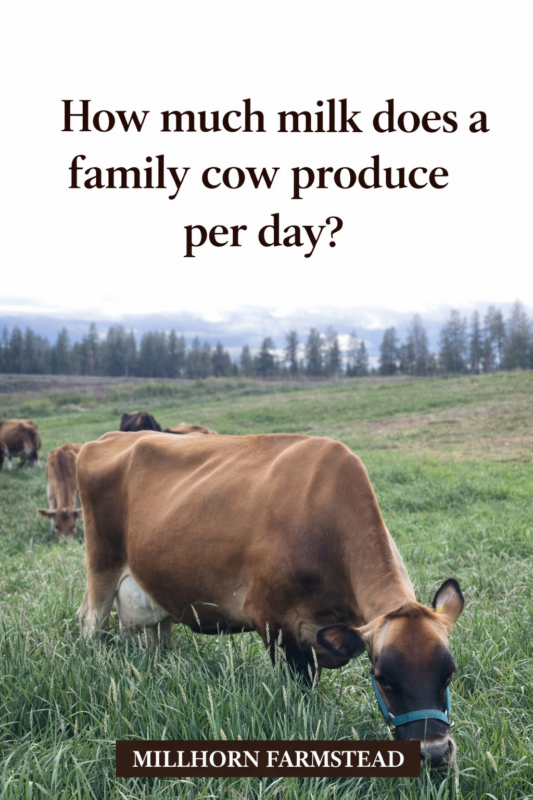
One of the first questions people ask before bringing home a family milk cow is simple:
“How much milk will she actually give?”
It sounds like it should have a straightforward answer. It doesn’t.
Average Milk Production for a Family Cow
Most family milk cows produce between 2–6 gallons of milk per day.
However, many homesteaders find that 1.5–3 gallons per day is a more realistic and manageable amount for a household.
For most families, more milk isn’t always better, it’s about what you can realistically use.
Could it be more? Yes.
Should it be more? Not always.
Real-Life Milk Production on a Homestead
Somewhere between Pinterest expectations and commercial dairy production numbers is real life and real life looks a little different when you’re standing in rubber boots with a bucket in your hand.
I’ve milked full-sized Jerseys that produced 2 gallons per milking, and a mini-Jersey that gave 4.
Production on paper and production on a homestead are rarely the same thing.
A family milk cow can produce anywhere from a modest household amount to more milk than you know what to do with. And the difference usually comes down to how that cow is bred, fed, and managed, not just what breed she is.
Let’s break it down in a way that actually helps you plan for your own kitchen and daily rhythm.
A few key factors make the biggest difference in how much milk you’ll actually get:
What Affects Milk Production?
- Breed
- Feed quality and consistency
- Stage of lactation
- Milking frequency
- Season and weather
Here’s a quick comparison of common family milk cow breeds:
| Breed | Daily Milk Production |
|---|---|
| Jersey | 2–4 gallons |
| Holstein | 4–6+ gallons |
| Dexter | 1–2 gallons |
*
How These Factors Impact Daily Milk Production
Milk production isn’t a fixed number. It shifts based on genetics, nutrition, environment, and daily management—and small changes can make a noticeable difference.
Genetics
Two cows of the same breed can produce very different amounts.
Milking Routine
Once-a-day milking vs. twice-a-day can significantly change yield.
Weather
Weather plays a bigger role than most people realize. Extreme heat, in particular, can drop milk production quickly as cows eat less and focus on staying cool instead of producing milk. Extreme heat, in particular, can cause a noticeable drop in production, sometimes by 10–20% during hot periods.
Breed
Some cows are simply built to produce more milk than others.
Stage of Lactation
A fresh cow ramps up to peak production, then gradually tapers off over time.
Feed Quality
Good hay, pasture, and proper nutrition make a noticeable difference.
Health
Even small issues can impact production quickly.
Calf Sharing
If a calf is nursing, you are not getting the full volume in your bucket.
On a homestead, consistency often matters more than maximum production.
Breed Matters More Than Most Beginners Realize
Not all milk cows are created equal when it comes to volume. In fact, breed alone can determine whether you’re dealing with a manageable daily supply or more milk than your family can realistically use.
Jersey
- Moderate milk volume
- Higher butterfat (ideal for cream, homemade butter, and cheese)
- Easier for a family to manage daily
Holstein
- High milk volume
- Lower butterfat
- Can easily exceed what a household can use
Crossbred Family Cow
- Often a practical middle ground
- More balanced production
- Well-suited for most homesteads
If your goal is a manageable milk supply, not a full-time dairy job, breed choice matters.
Why Your Cow Won’t Give the Same Amount Every Day
This is one of the biggest surprises for beginners.
Milk production is not steady.
After calving, a cow:
- increases to peak production
- holds for a period
- then gradually declines
Add in weather, feed changes, pregnancy, or stress… and daily output can shift more than you expect.
That’s normal.
How Much Milk Does a Family Actually Need?
This is the question people should ask first.
Because “how much she gives” matters less than “how much you can use.”
Here’s a rough idea:
- Drinking milk only → lower need
- Milk + cream → moderate
- Butter, yogurt, cheese, kefir → higher
- Feeding pigs, chickens, or dogs → much higher
A single cow can easily produce more than a small family needs unless you have a plan for the extra.
And trust me…
pouring milk down the drain will make you question your life choices real quick.
Is One Cow Too Much for One Family?
Sometimes… yes.
A high-producing cow can feel like too much, especially for beginners. A lower-producing cow, or a setup that includes calf sharing, is often far more practical for a household rhythm.
The goal is not maximum milk.
The goal is right-sized milk.
For most families, that often means somewhere between 1–3 gallons per day, depending on how you use and manage your milk.
How Calf Sharing Changes Everything
Calf sharing is one of the simplest ways to balance milk production on a homestead.
Instead of taking all the milk, you:
- allow the calf to nurse part-time
- take only what your family needs
- let the calf take the rest
This reduces the amount of milk you have to handle while still providing a steady supply for your home. It also takes pressure off strict milking schedules.
For many homesteads, this is what makes a milk cow sustainable long-term.
Once-a-Day vs. Twice-a-Day Milking
Milking frequency directly affects production.
- Twice a day → higher output
- Once a day → lower output, simpler routine
For many families, once-a-day milking is enough to meet their needs without taking over their schedule.
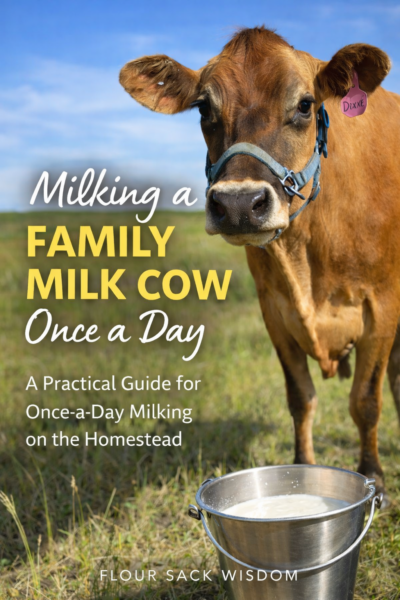
If you’re considering this approach, you can read more here: Milking a Family Milk Cow Once a Day
Milking frequency is one of the biggest factors in how much milk your cow produces each day—and one of the easiest ways to adjust production to fit your lifestyle.
How to Choose the Right Cow for Your Homestead
Before you focus on gallons per day, ask yourself:
- How many people are we feeding?
- Do we want butter and cheese or just milk?
- Are we willing to milk twice a day?
- Will we calf share?
- Do we have animals that can use extra milk?
- Do we have freezer or storage space?
Those answers matter more than any production number.
Because the right family milk cow isn’t about output—it’s about fit.
Final Thoughts
The best family milk cow isn’t the one that gives the most milk, it’s the one that fits your home.
A cow that produces more than you can use quickly becomes a burden.
A cow that fits your daily rhythm becomes part of it.
Somewhere between too little and too much is the sweet spot—and that’s where a family milk cow really shines.
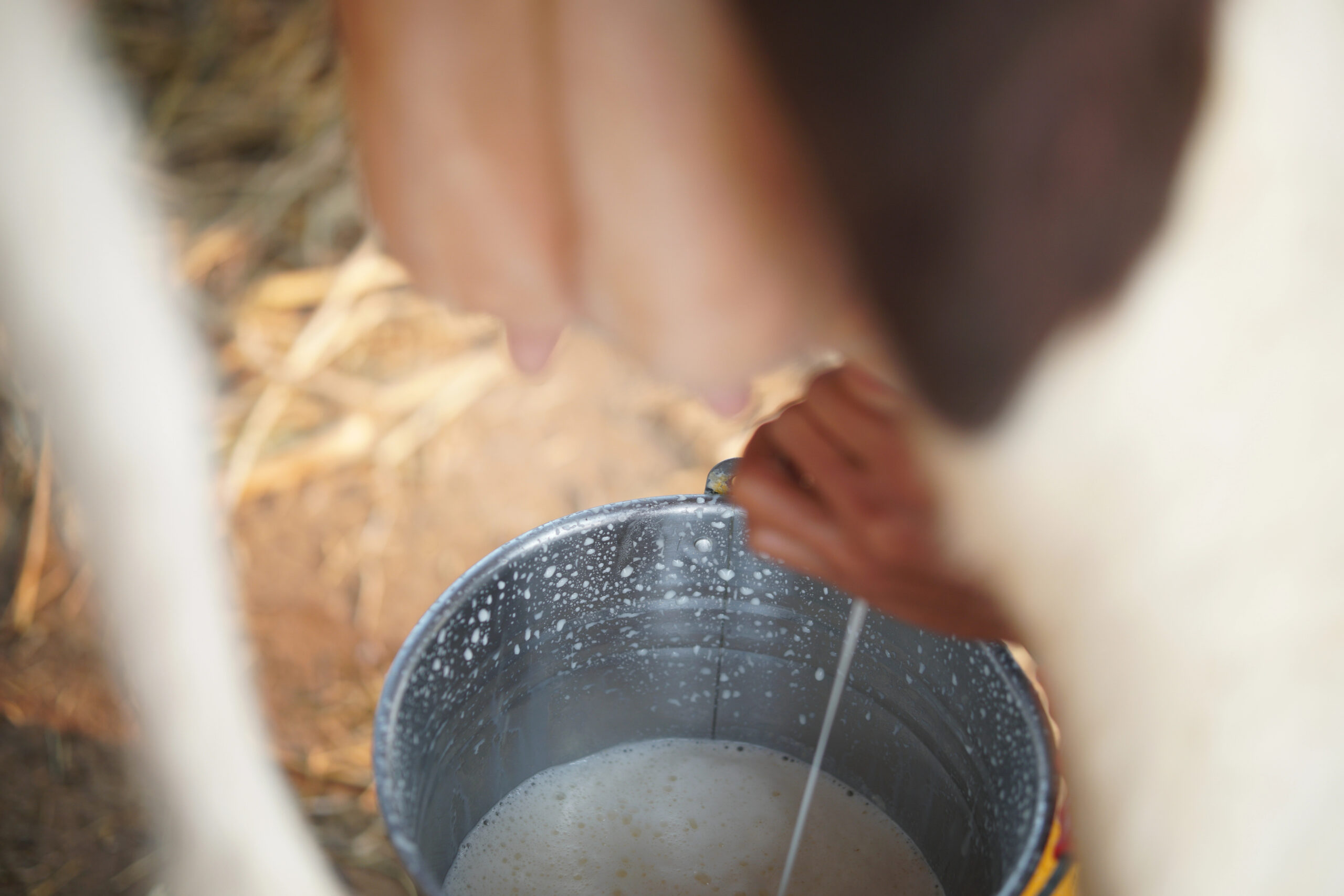
Join the Homestead Kitchen & Barn
Practical dairy cow guidance, real-life homesteading, and from-scratch kitchen wisdom, straight from our farm.
FAQ
-
Why Does My Cow’s Milk Taste Salty?
Common causes of salty milk in cows, including mastitis, somatic cell counts, and changes during lactation. This post…