If you’re considering bringing home your first family milk cow, you probably have a long list of questions. How much milk will she produce? How much land does she need? Does she need grain? Can you keep just one cow?
These are some of the questions I’m asked most often by families visiting our farm and readers considering their first dairy cow. I’ve answered the basics here and linked to my more detailed guides when a question deserves a deeper explanation.
If you’re just beginning to research family milk cows, this is a good place to start.
Frequently Asked Questions About a Family Milk Cow
We host a lot of farm tours here on the old Farmstead. Families come through the gate with all different levels of farming experience. Some grew up around livestock. Others have only ever seen a dairy cow on television or in a children’s book.
But no matter their background, the questions tend to be the same.
And I get a lot of questions.
Many come from families who dream of having a milk cow of their own someday. Others simply want to understand what it actually takes to care for one.
After answering the same questions year after year, I decided it was time to write them down.
How Much Milk Does a Dairy Cow Produce?
This is probably the number one question I get on farm tours.
Most folks are trying to picture just how much milk a cow actually produces. They’ve seen the gallon jugs in the grocery store, but it’s hard to imagine how that translates to a real animal standing in the pasture.
The honest answer is: it depends on the cow.
If you’re trying to decide how much milk your family actually needs, I break down production by breed, stage of lactation, calf sharing, and milking schedule in my guide to how much milk a family milk cow produces per day.
Milk Production Changes Throughout Lactation
Milk production isn’t constant throughout the year. A cow generally produces the most milk early in lactation, then production gradually declines as she moves toward dry-off.
For most homesteads, even a modest-producing dairy cow can provide more milk than one family can drink. That’s when the extra milk starts becoming butter, yogurt, cheese, ice cream, or even feed for other animals.
What Determines How Much Milk a Cow Gives?
Breed, feed, stage of lactation, overall health, and milking frequency all affect production. Some high-production dairy cows can produce several gallons of milk per day, especially in commercial dairies.
A typical family milk cow, however, may produce somewhere between 2 and 6 gallons of milk per day at her peak. Jerseys and other smaller dairy breeds often produce less volume than larger breeds like Holsteins, but their milk is generally higher in butterfat.
How Often Do You Have to Milk a Dairy Cow?
This is usually the second question people ask once they learn how much milk a cow can produce.
Traditionally, dairy cows are milked twice a day, roughly twelve hours apart. For a family milk cow, however, your routine can be more flexible.
Some families milk once a day, particularly when calf sharing. The calf can help manage the remaining milk while giving you considerably more freedom in your milking schedule.
Production also changes throughout lactation. As a cow produces less milk, you may adjust your routine again as you prepare to dry her off before her next calf.
The important thing is consistency. Whether you’re milking once or twice a day, your cow should have a predictable routine.
Thinking about once-a-day milking? I explain how we manage it, when it works, and what to consider in my guide to Milking a Family Milk Cow Once a Day.
Do Dairy Cows Have to Have a Calf to Produce Milk?
Yes. A dairy cow must have a calf before she begins producing milk.
Like other mammals, cows begin lactation after giving birth. Milk production is usually highest early in lactation and gradually decreases as the months pass.
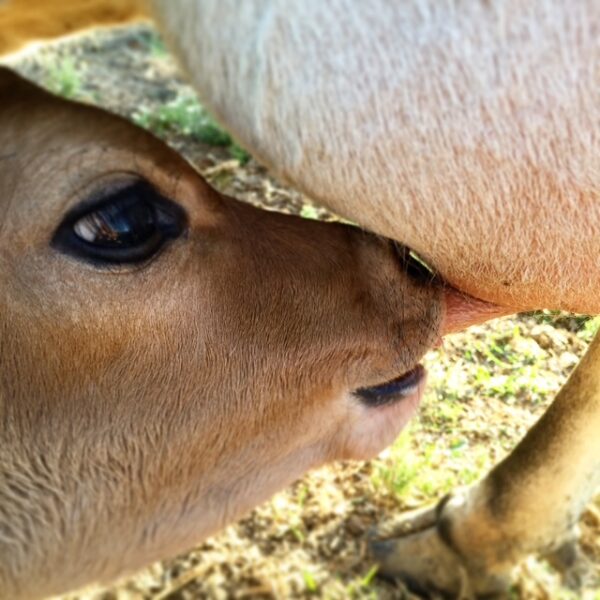
On many homesteads, the calf is raised alongside the cow. Some families allow the calf to nurse freely, while others separate the calf for part of the day so they can collect milk for the house. (if you are preparing for a first time calf, make sure have the necessary supplies for calving)
A cow can continue producing milk for many months after calving. How long depends on the individual cow, her genetics, nutrition, health, and how consistently she is milked.
Eventually, production slows and the cow is given a rest period before her next calf arrives.
Understanding this natural cycle is important when you’re considering a family milk cow. She isn’t simply producing milk year-round. Her milk production begins with calving and changes throughout each stage of lactation.
How Much Land Do You Need for a Dairy Cow?
One of the first things people researching owning a family milk cow ask is how much land they actually need.
The honest answer is that the amount of land needed depends on a few things, including pasture quality, rainfall, and whether you plan to supplement with hay. In areas with rich pasture, a cow may be able to graze comfortably on fewer acres. In drier regions, more land may be needed to support the same animal.
Many homesteaders aim for one to two acres of good pasture per cow as a general guideline. However, even with pasture available, most dairy cows will still need hay during the winter months or during times when grass is not growing well.
Pasture Quality Matters More Than Acreage
Good fencing, access to clean water, and a dry place to rest are just as important as the amount of land itself. A smaller, well-managed pasture can often support a cow better than a large pasture that is poorly maintained.
It’s also worth remembering that cows are herd animals. Even a gentle family milk cow will usually be happier with some type of companion nearby, whether that’s another cow, a steer, or sometimes even another livestock animal.
For most small farms and homesteads, the goal isn’t maximum production. It’s creating a comfortable setup where your cow has enough room to graze, rest, and stay healthy while providing milk for your family.
Learn the Art of the Family Milk Cow
What Do Dairy Cows Eat?
Forage Is the Foundation of a Dairy Cow’s Diet
Cows are ruminants, which means their digestive system is designed to process large amounts of forage. The primary food for most dairy cows is grass and hay.
During the growing season, many dairy cows spend their days grazing pasture. Fresh grass provides a large portion of the nutrients they need, and cows are excellent at turning that forage into milk.
When pasture is not available, especially during the winter months, hay becomes the main feed source. On our farmstead, that typically means feeding good quality grass hay so the cows continue receiving the fiber and nutrients their rumen needs to function properly.
What About Grain and Minerals?
Some homesteads choose to feed grain to support milk production, while others rely mostly on pasture and hay. Every farm is a little different, but forage will always be the backbone of a healthy dairy cow diet.
In addition to forage, dairy cows need access to clean water and a quality mineral supplement. Minerals help support everything from milk production to overall health.
At the end of the day, a dairy cow’s diet is surprisingly straightforward: plenty of forage, fresh water, and the right minerals to keep her healthy and producing milk. Feeding a family milk cow doesn’t have to be complicated, but understanding the basics of forage and nutrition makes a big difference in milk production and overall health.
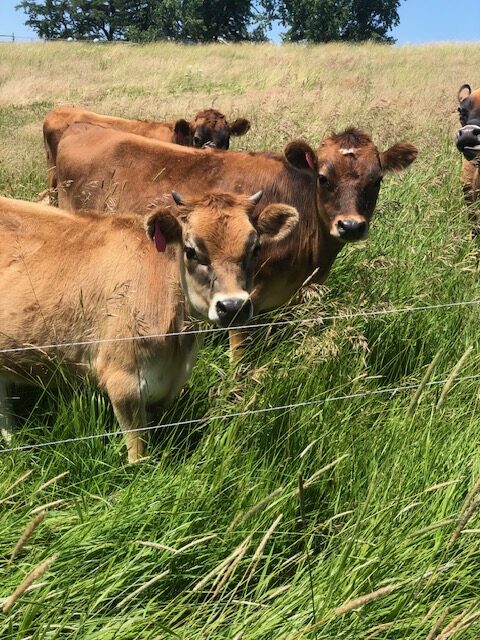
Do Dairy Cows Have Horns?
This question usually comes from the kids on farm tours, often while they are standing safely on the other side of the fence trying to decide if the cow is friendly.
The short answer is yes, dairy cows can have horns.
Both male and female cattle naturally grow horns. It’s a common misconception that only bulls have horns. In reality, many breeds of dairy cows will grow horns unless they are bred or managed differently.
Why Some Dairy Cows Don’t Have Horns
However, on many farms the horns are removed when calves are young in a process called disbudding. This is typically done when the calf is only a few weeks old, before the horn has fully developed. Removing horns early helps reduce the risk of injury to other animals and to the people working around them.
What Does Polled Mean in Cattle?
Some cattle breeds are also naturally polled, which means they are genetically hornless and never grow horns at all.
For many families visiting the farm, this is one of those questions that sparks a bigger conversation about how cattle are raised and cared for. Once people learn that both cows and bulls can have horns, it tends to surprise them.
How Much Does a Dairy Cow Cost?
This is usually the question people ask once they start seriously thinking about having a milk cow of their own.
The price of a dairy cow can vary quite a bit depending on several factors, including the breed, age, training, and whether the cow is currently producing milk.
What Affects the Price of a Dairy Cow?
A young calf will typically cost far less than a mature cow that is already trained to be milked. A family milk cow that is already in milk, meaning she has calved and is producing milk—will usually be more valuable because much of the work of raising and training her has already been done.
Breed can also influence the price. Jerseys and other smaller dairy breeds that are popular on homesteads are often in high demand because they produce rich milk with high butterfat and are easier for many families to manage.
Location plays a role as well. In areas where small farms and homesteads are common, trained milk cows can sometimes command higher prices simply because more people are looking for them.
Don’t Forget the Ongoing Cost of a Milk Cow
Beyond the purchase price, it’s important to remember that the cost of keeping a dairy cow includes feed, minerals, fencing, and general care. A well-managed cow can provide a steady supply of milk for the household, but like any livestock, she requires daily care and attention.
For families researching their first family milk cow, the purchase price is only the beginning. Feed, hay, minerals, veterinary care, breeding, and equipment all become part of the yearly budget. I break those expenses down in my Family Milk Cow Cost Calculator, where you can estimate what owning a milk cow may actually cost for your homestead.
Learn the Art of the Family Milk Cow
How Long Do Dairy Cows Live?
This question usually comes up after people have spent a few minutes watching the cows in the pasture. Once they start imagining what it might be like to have one of their own, they naturally wonder how long that commitment might last.
Dairy cows can live surprisingly long lives. With good care, a cow may live 15 to 20 years, although many have shorter lifespans.
However, the number of years a cow produces milk is usually shorter than her full lifespan. A cow’s productive years are usually shorter than her full lifespan. Milk production, fertility, health, and management all influence how many lactations she will have during her lifetime.
On many homesteads, cows are valued for far more than just their milk production. A gentle, well-handled cow often becomes part of the daily rhythm of the farm. Over time, her personality becomes just as familiar as the chores themselves.
For families raising a milk cow, this is one reason the decision shouldn’t be made lightly. A family milk cow can be part of a farm for many years, and caring for her well means committing to consistent daily care throughout those seasons of life.
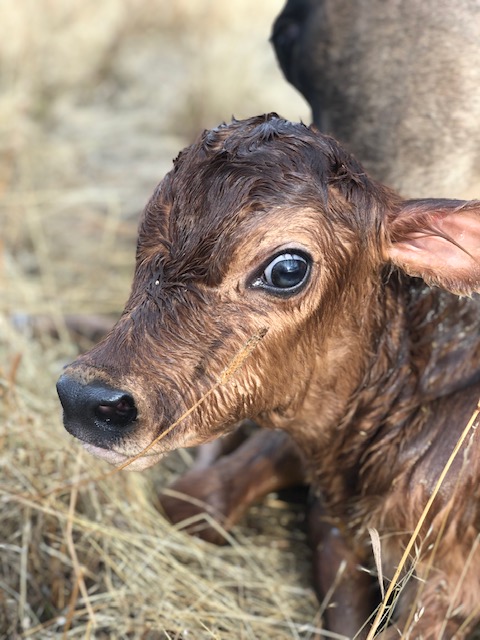
Are Dairy Cows Friendly?
This is one of the questions I hear most often from kids during farm tours.
After a few minutes of watching the cows in the pasture, someone will eventually ask, “Are they nice?” Usually while standing very cautiously behind the fence.
Many dairy cows are calm and gentle, especially when they have been handled regularly from a young age. Temperament varies by breed and, more importantly, by the individual cow.
Like any animal, though, personality can vary. Some cows are curious and will walk right up to visitors hoping for a scratch or a treat of fresh grass. Others prefer to keep a little distance and go about their day grazing.
A well-handled dairy cow on a small farm often becomes very accustomed to daily routines. Feeding time, milking time, and pasture rotation quickly become part of her rhythm, and she learns to recognize the people caring for her.
That said, cows are still large animals and should always be treated with respect. Even the gentlest dairy cow weighs well over a thousand pounds, so calm handling and good livestock habits are important.
For many families who keep a family milk cow, the cow becomes a familiar part of daily life on the homestead — not just a source of milk, but an animal with a personality of her own.
Can You Drink Milk Straight From Your Cow?
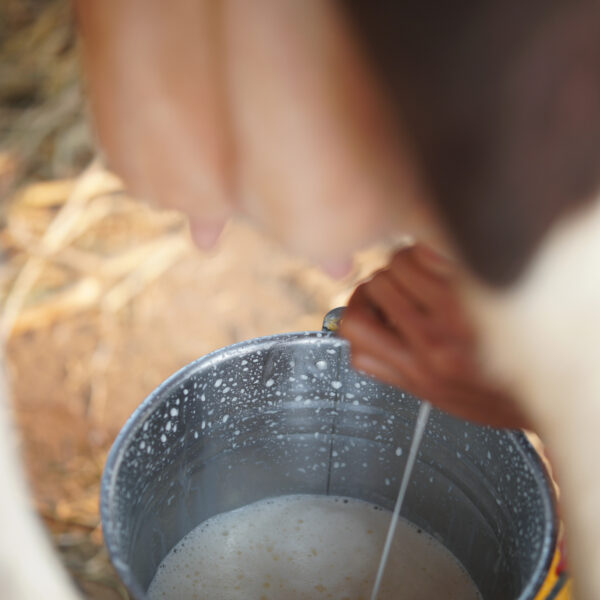
This is another question that comes up frequently during farm tours, especially once visitors see milk going straight from the cow into the bucket.
Yes, some farm families choose to drink milk from their own cows without pasteurizing it. This is commonly referred to as raw milk.
Raw milk is not risk-free, however. Harmful bacteria can sometimes be present even when a cow appears healthy, which is why careful milking practices, clean equipment, proper handling, and rapid cooling are so important.
On our farmstead, milk is strained after milking and cooled quickly. Keeping everything clean and chilling fresh milk promptly helps protect its quality and freshness.
Some families choose to pasteurize their milk, while others choose to drink it raw. Raw milk laws also vary by state, particularly when milk is sold or distributed beyond your own household.
For many homesteaders, fresh milk from their own cow is one of the most rewarding parts of keeping a dairy animal. Cream rises naturally to the top, the flavor is rich, and it connects people directly to the food they produce.
Fresh milk can also change in flavor throughout a cow’s lactation. If you’ve ever poured a glass and noticed an unexpectedly salty taste, I explain the most common causes in my guide to what causes salty milk in dairy cows.
Can you drink colostrum.
Around here, that first milk belongs to the calf. Colostrum is different from the milk we’ll eventually bring into the house. It’s the first milk a cow produces after calving and is especially rich in antibodies and nutrients her newborn calf needs.
Humans can consume bovine colostrum, but on our farm, the calf gets first priority. We make sure the calf has received plenty before we’d ever consider using any extra.
Colostrum is thicker and richer than regular milk, and some families use surplus colostrum in cooking or baking. For us, though, its most important job is exactly what the cow produced it for: getting that new calf off to a strong start.
Can You Have Just One Dairy Cow?
This is a question that comes up fairly often when families start thinking about getting their first milk cow.
Cattle are naturally herd animals, which means they are most comfortable with other cattle nearby. On a large dairy, that companionship comes from the herd, but on a small farm or homestead, things can look a little different.
While it is possible to keep just one dairy cow, I wouldn’t plan for her to live completely alone. A calf, steer, dry cow, or second family cow can provide the companionship cattle naturally seek.
Many homesteaders start with one milk cow and keep another bovine as her pasture companion. You certainly don’t need two cows in milk just to give your family cow company.
A calm herd environment can also make daily handling easier. When you’re planning for your first family milk cow, think beyond fencing, feed, and a milking setup. Think about what her daily life will look like, too.