If you have been looking for a family milk cow, you have probably seen the term A2A2 milk.
It shows up in dairy cow ads, breeding programs, raw milk discussions, and increasingly on milk cartons at the grocery store. For families looking specifically for a milk cow, A2A2 genetics can even affect the price of the cow.
But what does A2A2 actually mean?
After decades of raising and milking family dairy cows, I think this is one of those subjects that has become much more complicated than it needs to be.
A2A2 does not mean raw or organic milk, nor does it tell you whether a cow is grass-fed, healthy, gentle, or a good producer.
Instead, A2A2 tells us something very specific about the beta-casein protein in her milk.
And if you are considering bringing home your first cow, understanding that distinction can help you make a much better buying decision.
If you are just beginning your dairy journey, start with my complete family milk cow guide and then come back here to dig into the genetics.
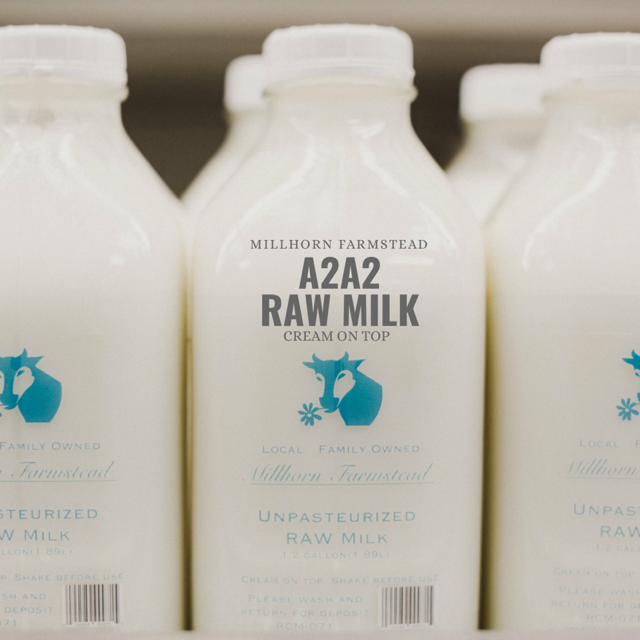
What Is A2A2 Milk?
A2A2 milk comes from a cow that has two copies of the A2 variant of the beta-casein gene, one inherited from her dam and one from her sire.
Beta-casein is one of the major proteins found in cow’s milk. There are several genetic variants of beta-casein, but A1 and A2 are the two you will hear about most often when talking about family dairy cows.
An A2A2 cow produces A2 beta-casein rather than A1 beta-casein.
That’s it.
The designation is genetic.
It isn’t created by the way the cow is fed or the way her milk is processed.
A1 vs. A2 Milk: What’s the Difference?
A1 and A2 are variants of beta-casein.
The difference between them is remarkably small. Their protein chains differ at a single amino acid position. But that small difference changes how the proteins can be broken down during digestion.
Digestion of A1 beta-casein can release a peptide called beta-casomorphin-7, usually shortened to BCM-7. That difference has been one focus of research into whether people digest milk containing A1 beta-casein differently from milk containing only A2 beta-casein.
This is where the A1 versus A2 conversation can get carried away.
You will find claims online connecting A1 milk with an enormous list of diseases and health problems. The human evidence does not justify making many of those claims.
A systematic review of human research found moderate-certainty evidence concerning digestive symptoms, but low or very low certainty for the other health outcomes examined.
So I wouldn’t buy an A2A2 cow because someone on the internet told me A1 milk causes every chronic illness known to man.
There is, however, enough research around digestive comfort to make the A1 versus A2 question worth understanding.
Is A2A2 Milk Easier to Digest?
For some people, possibly.
Several human trials have found differences in gastrointestinal symptoms after people consumed milk containing only A2 beta-casein compared with conventional milk containing A1 and A2 beta-casein. Some participants reported less abdominal discomfort, bloating, urgency, or other digestive symptoms with A2 milk.
But the research isn’t completely one-sided.
A 2024 trial found mixed results, with A2 milk performing better for some digestive symptoms and worse for others. A newer study also found that lactose remained an important factor in milk-sensitive individuals and concluded there is not yet a clear explanation for all milk-related digestive symptoms.
That is a much more realistic way to look at A2A2 milk.
Some people genuinely report tolerating it better.
That does not mean everyone will.
A2A2 Milk Is Not Lactose-Free
This distinction is important.
A2A2 milk still contains lactose.
Lactose is the naturally occurring sugar in milk. Beta-casein is a milk protein.
They are two entirely different things.
If you are lactose intolerant, your body has difficulty digesting lactose because of insufficient lactase activity. Changing the beta-casein genetics of the cow does not remove the lactose from her milk.
Interestingly, clinical studies have found that some people who identify as lactose intolerant experience fewer digestive symptoms with A2-only milk, which is part of why researchers continue studying the relationship. But that does not make A2 milk lactose-free or turn it into a treatment for lactose intolerance.
And a true milk allergy is another matter entirely.
A milk allergy involves an immune response to milk proteins. A2A2 milk is still cow’s milk and still contains milk proteins.
A1A1 vs. A1A2 vs. A2A2 Cows
Every cow receives one beta-casein allele from each parent.
That gives us three combinations you will commonly encounter when shopping for a family milk cow:
| Genotype | What the Cow Inherited | Beta-Casein in Her Milk |
|---|---|---|
| A1A1 | A1 from both parents | A1 |
| A1A2 | One A1 and one A2 | A1 and A2 |
| A2A2 | A2 from both parents | A2 |
This is one reason I want people to understand what they are actually buying.
An A1A2 cow is not an A2A2 cow.
If A2A2 genetics are important to your family, ask for the genetic test rather than relying on how an animal is advertised.
The same principle applies to the rest of the cow. Genetics are only one piece of choosing an animal. Production, temperament, udder structure, health, age, breeding history and management all matter.
Before buying, I recommend reading my Family Milk Cow FAQ and using the Family Milk Cow Cost Calculator so you know what you’re getting into beyond the purchase price.
Can an A1A2 Cow Have an A2A2 Calf?
Yes.
This is basic genetics.
An A1A2 cow can contribute either A1 or A2 to her calf. If she is bred to an A2A2 bull, the bull will contribute A2.
That means each calf has:
- 50% chance of being A1A2
- 50% chance of being A2A2
Breed an A2A2 cow to an A2A2 bull and the offspring will inherit A2 from both parents.
For a homestead wanting to establish A2A2 genetics, that makes breeding decisions fairly straightforward.
Is Raw Milk Automatically A2A2?
No.
I see these terms mixed together frequently, and they shouldn’t be.
Raw describes how the milk has been handled.
A2A2 describes the genetics of the cow producing it.
A raw milk cow can be A1A1, A1A2 or A2A2.
Likewise, milk from an A2A2 cow can be sold raw or pasteurized. Pasteurization does not turn an A1 cow into an A2 cow.
That distinction matters especially when buying milk directly from a farm. If a farm advertises its milk specifically as A2A2, ask whether all the cows contributing to that milk have been genetically tested.
Are Jersey Cows A2A2?
Some are.
But please don’t buy a Jersey simply because someone tells you Jerseys are A2.
Breed is not a genetic test.
Individual Jerseys can have different beta-casein genotypes. The same is true when looking at Guernseys and other dairy breeds.
If A2A2 is important enough that you are willing to pay more for the cow, it is important enough to ask for documentation.
I would much rather see the actual test result than make an expensive assumption based on breed.
And A2 status should never be the only thing you consider.
How much milk does she produce? What is her temperament? Has she been hand milked or machine milked? How does her udder look? What has her previous lactation been like? Does she maintain condition?
My guide on how much milk a family milk cow produces per day will give you a better idea of what production you actually need. More milk isn’t always better for a family cow.
How Do You Test a Cow for A2A2?
You test her genetics.
Depending on the testing service, genetic testing may use hair, blood or tissue samples. The resulting beta-casein genotype tells you whether the animal is A1A1, A1A2 or A2A2.
A cow doesn’t become A2A2 because she is grass-fed, because she has been fed a certain mineral program, or because you switched her feed.
She either has the genetics or she doesn’t.
And those genetics don’t change over the course of her life.
If you’re purchasing a cow advertised as A2A2, ask the seller:
Has she actually been tested?
Can I see her results?
What are the beta-casein genetics of her sire and dam?
If she’s bred, what is the genotype of the bull?
Those are perfectly reasonable questions when you’re making a significant investment in a dairy animal.
Should You Buy an A2A2 Family Milk Cow?
If I had two equally good cows standing in front of me and one was confirmed A2A2, I would choose the A2A2 cow.
But notice the words equally good.
I would not choose a poorly built, difficult, unhealthy or unsuitable cow simply because a piece of paper says A2A2.
That is where I think people can get distracted.
A family milk cow has to live in your pasture and stand in your stanchion every day.
She needs to fit your acreage. If you aren’t sure how much pasture you need, read how much land a cow needs.
She needs to produce an amount of milk your family can realistically use.
She needs a temperament you can safely handle.
And she needs to fit the way you want to manage your dairy.
For many families, milking once a day makes keeping a cow much more sustainable. If you’re deciding between hand milking and buying equipment, I also have a complete breakdown of the pros and cons of a milking machine.
A2A2 is one box on a much longer checklist.
Does A2A2 Milk Taste Different?
I wouldn’t choose A2A2 genetics for flavor.
There are too many other things affecting the milk in your glass.
Breed, butterfat, feed, pasture, stage of lactation, milk handling and how quickly the milk is cooled can all affect the final product.
Milk also changes throughout lactation. If you’re new to dairy cows, understanding the family milk cow lactation curve will help you understand why production and milk characteristics aren’t exactly the same throughout the year.
And if milk that normally tastes sweet suddenly becomes salty, don’t blame A1 or A2 genetics. That’s a completely different issue. Read why a cow’s milk tastes salty and investigate what has changed.
What Can You Make With A2A2 Milk?
Anything you normally make with fresh cow’s milk.
Once you have a family cow, the question quickly changes from “What will I do with fresh milk?” to “What am I going to do with all this milk?”
That’s a good problem to have.
Fresh cream can become homemade raw butter and cultured buttermilk, while extra milk can go into yogurt, kefir, cheese, baking and scratch cooking.
That’s one of the things I love most about keeping a family milk cow. The value isn’t simply the glass of milk on the table. One cow gives you the raw ingredients for an entire dairy kitchen.
Frequently Asked Questions About A2A2 Milk
Is A2A2 milk better for you?
There is evidence that milk containing only A2 beta-casein may cause fewer gastrointestinal symptoms for some people compared with milk containing A1 and A2 beta-casein. The evidence is considerably weaker for broader health claims, so I would be cautious of anyone presenting A2A2 milk as a cure-all.
Is A2 milk lactose-free?
No. A2 milk contains lactose. A2 refers to beta-casein protein, while lactose is milk sugar.
Is raw milk automatically A2?
No. Raw milk describes milk that has not been pasteurized. A1 and A2 refer to beta-casein variants determined by the cow’s genetics.
How do I know if my cow is A2A2?
Have her genetically tested or obtain documented genetic results from the breeder.
Can Jersey cows be A1?
Yes. Do not assume an individual cow’s beta-casein genotype from breed alone. If A2A2 genetics matter to you, test the animal.
Can an A1A2 cow have an A2A2 calf?
Yes. When an A1A2 cow is bred to an A2A2 bull, each calf has a 50% chance of receiving her A2 allele and therefore being A2A2.
Does A2A2 milk taste different?
Not necessarily. Feed, breed, butterfat, stage of lactation and milk handling have much more obvious effects on the milk you bring into the kitchen.
Should I buy an A2A2 family milk cow?
I consider A2A2 a desirable trait, but not the most important trait. Buy the whole cow, not one genetic result. Temperament, health, udder structure, production, fertility and suitability for your homestead matter enormously.
Is A2A2 Worth It?
For our family dairy, I like knowing what genetics I’m working with. If I can select for A2A2 without sacrificing the qualities that make a genuinely good family milk cow, I see very little reason not to.
But A2A2 is only one piece of the puzzle. A calm, healthy cow with a sound udder, manageable production, and a temperament you trust is worth far more than a genetic test alone.
If you’re still deciding whether keeping a cow is right for your family, head to my Family Milk Cow Guide. From choosing your first cow to milk production, pasture, milking schedules, and troubleshooting, that’s where I’d start.
Lets Stay Connected
Related Dairy Articles
-
Family Milk Cow Lactation Curve: What to Expect After Calving
A family milk cow does not produce the same amount of milk every day from the…
-
How Much Land Does a Cow Need? A Practical Acreage Guide
One of the first questions people ask before bringing cattle home is, how much land does…
-
How Much Does a Family Milk Cow Cost? + Monthly Cost Calculator
Owning a family milk cow is one of the most rewarding investments we’ve made for our…
-
How Much Milk Does a Family Milk Cow Produce Per Day?
How much milk does a family milk cow produce? After years of keeping and milking our…
-
Why Does My Cow’s Milk Taste Salty?
Common causes of salty milk in cows, including mastitis, somatic cell counts, and changes during lactation….
-
Family Milk Cow FAQ for Beginners
If you’re considering bringing home your first family milk cow, you probably have a long list…