
One of the questions I’ve been asked over the years is whether I prefer hand milking or using a milking machine with a family milk cow.
The answer is both.
There is something about hand milking that I have always loved. You are right there beside your cow, twice a day, and you quickly learn what is normal for her. You notice changes in her udder, her appetite, her attitude and her milk before you might notice them otherwise.
I genuinely enjoyed that quiet time in the barn.
But there is another side to keeping a family milk cow. Milking has to happen whether the garden needs picked, dinner needs made, children need you, or there are a dozen other farm chores waiting.
That is where a milking machine earned its place on our farm.
I have milked cows both ways, and I don’t think everyone who owns a dairy cow needs to run out and buy a machine. For one cow, especially a moderate producer, hand milking can be the simplest and least expensive option.
Once you add another cow, a high producer, limited time or tired hands, the equation starts to change.
If you’re trying to decide between hand milking vs machine milking, these are the real milking machine pros and cons I would consider.
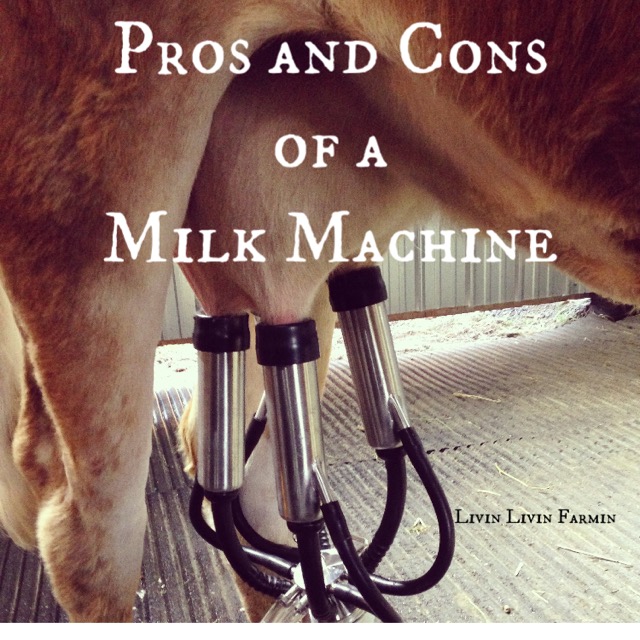
Pros and Cons of Purchasing a Milking Machine
Before getting into the details, there is one thing I think every family cow owner should understand.
A milking machine doesn’t eliminate the work of milking.
It changes the work.
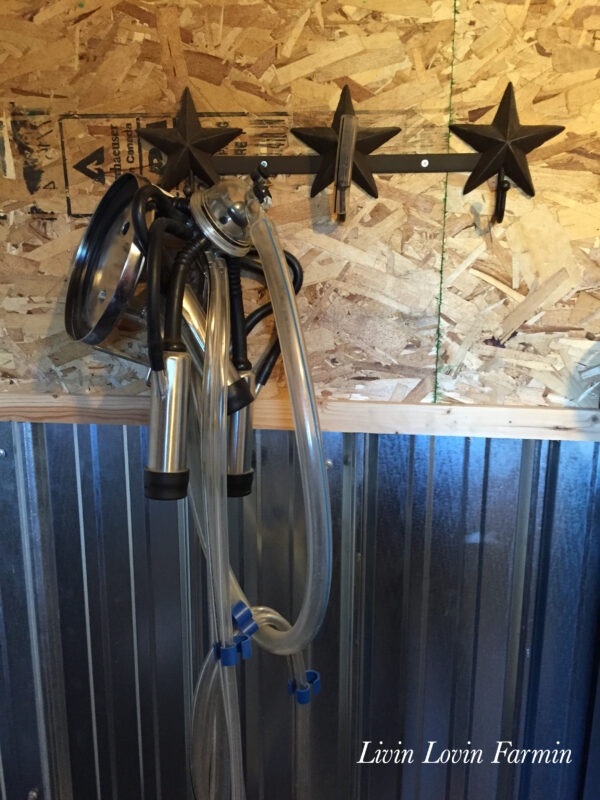
Instead of spending most of your time physically removing the milk, some of that time shifts to setting up, sanitizing, washing hoses and teat cups, maintaining the vacuum pump and keeping the entire milking unit clean.
For some families, that trade is absolutely worth it.
For others, a stainless-steel bucket and two good hands are all they really need.
PROS
TIME EFFICIENCY
This was always my favorite advantage of using a milk machine.
When you’re hand milking, you can only milk two quarters at a time, and sometimes only one if Mama has decided she isn’t particularly interested in cooperating that morning.
A milking machine handles all four quarters at once.
With my machine, the actual machine milking portion took about five minutes per cow once everything was set up and I had good suction. During those few minutes, I wasn’t sitting idle.
I could feed the pigs, clean a stall, lock up chickens or prepare the next cow for milking.
That mattered during the busiest parts of the year.
Once I became proficient at hand milking, I could generally milk a cow in about 20 minutes. Multiply that by two cows, twice a day, and suddenly a milk machine starts looking considerably more useful.
Of course, actual milking time is only part of the equation. We’ll get to cleaning later because that is where some of those saved minutes come right back.
Your cow’s production matters, too. A cow doesn’t produce the same amount throughout her entire lactation. If you’re new to dairy cows, understanding the family milk cow lactation curve will give you a much better idea of how production changes after calving.
And before buying equipment based on how much milk you think you’ll be bringing into the house, read how much milk a family milk cow actually produces.
CLEANER MILK
This was another big advantage for me.
Anyone who has hand milked into an open milk bucket knows exactly what I mean.
You can prepare your cow beautifully and keep a clean milking area, and somehow a piece of hay or cow hair will still find its way toward that bucket.
And then there are flies.
A bucket milking machine creates a much more enclosed path between the cow and the milk bucket. Milk travels from the teat cups, through the milk hose and directly into the covered bucket rather than falling through the open barn air.
That can greatly reduce the amount of hair, hay, dust and other barn debris finding its way into the milk.
But a milking machine does not automatically mean clean milk.
Your teat preparation matters. Your milk bucket, claw, inflations and hoses need to be properly cleaned and sanitized. Milk also needs to be handled and chilled correctly.
The machine is only as clean as the person maintaining it.
If the flavor of your milk changes unexpectedly, don’t automatically blame the equipment. There are several reasons this can happen. I have a separate guide on why a cow’s milk tastes salty that walks through one of the more common changes family cow owners notice.
NO SORE HANDS OR ARMS
If you have never hand milked a cow before, this is the part nobody can adequately explain until you’ve done it.
Those muscles have to develop.
When I first started hand milking, it took me an hour and a half to milk 1½ gallons.
I cried.
My cow mooed.
It was raining, and the barn roof was leaking on me.
I was fairly certain I had made a terrible mistake.
But every milking got a little easier. My hands became stronger, my technique improved, and eventually I could milk a cow in about 20 minutes.
I still firmly believe that if you own a family milk cow, you should know how to hand milk her. Machines break. Power goes out. Hoses crack. Pulsators quit working. There will eventually be a morning when something doesn’t cooperate.
But knowing how to hand milk doesn’t mean you need to prove your commitment to homesteading by doing it twice a day for the rest of your life.
A milking machine can take an enormous amount of repetitive work off your hands, wrists and forearms.
EASIER TO HIRE A FARM SITTER
Finding someone who says they can milk a cow is fairly easy.
Finding someone who can actually milk a cow is another story.
I’ve had plenty of people confidently tell me they thought they could do it, only to discover that getting milk out of a dairy cow efficiently takes more skill and hand strength than they expected.
A portable milking machine still requires training, but once someone understands your cow and your particular machine, the actual milking process is much easier to repeat consistently.
They need to know how to prepare the cow, operate the vacuum pump, attach the teat cups correctly, watch milk flow, recognize when she is finished, remove the unit properly, handle the milk and clean everything afterward.
I would still have a farm sitter practice several times before leaving them responsible for the milking.
But I would much rather teach a competent person to operate a good milking unit than hope they develop hand-milking muscles while I’m out of town.
A MILKING MACHINE MAKES MORE SENSE WITH MULTIPLE COWS
This is where my recommendation really changes.
If you have one family cow giving a manageable amount of milk, I would not tell you that a milk machine is necessary.
If you have two or more cows, I would seriously consider one.
The labor savings become much more noticeable as herd size increases. You’re also more likely to have cows at different stages of lactation and producing different amounts of milk.
A high-producing Jersey cow can put plenty of milk in the bucket. A heavier-producing dairy cow can turn hand milking into a significant portion of your morning.
If you’re still deciding whether a dairy cow fits your property, start with how much land a cow needs.
You should also understand the larger financial picture before buying the cow and the equipment. My family milk cow cost calculator can help you work through those numbers.
QUICKER COOLING OF THE MILK
Fresh milk needs to be cooled quickly.
One advantage of faster actual milking is simply getting the milk out of the barn and chilled sooner.
When I hand milked, that milk was sitting in an open bucket for the entire milking. With the machine, I could finish the cow, strain the milk and get it cooling much sooner.
That becomes even more important when you’re bringing several gallons into the house.
CONS
A milking machine has some wonderful advantages, but this is where I think people need the full story.
There are mornings when hand milking one cow is genuinely simpler.
EXPENSIVE
A good family cow milking machine is an investment.
The machine I purchased years ago cost nearly $1,900, before accounting for all the cleaning supplies and other expenses that came with it. My second machine was upward of $5000.00. Prices and available machines have changed considerably since then, so I wouldn’t use those purchases prices as a shopping guide today.
And the initial machine isn’t your only expense.
A typical bucket milker has several basic components:
- Vacuum pump
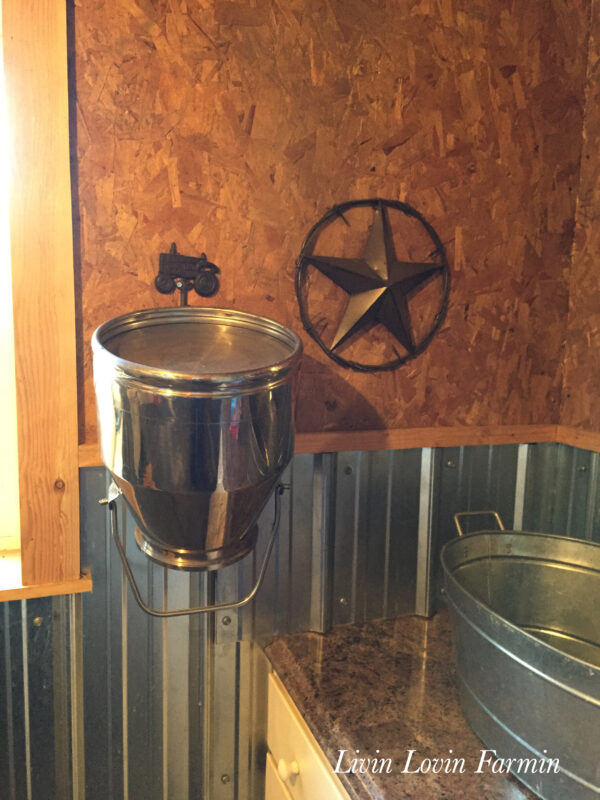
- Milk bucket
- Pulsator
- Claw
- Teat cups and inflations
- Milk and vacuum hoses
- Gaskets and seals
Those parts wear.
Inflations need replacing. Hoses eventually age or crack. Gaskets wear out. A pulsator may need attention. The vacuum pump needs proper care.
If you’re shopping for a portable milking machine, I would care almost as much about parts availability as the purchase price.
A cheap machine isn’t cheap when you can’t find the replacement part that keeps it running.
For someone just beginning with a family milk cow, this is one reason I wouldn’t buy every piece of equipment before bringing the cow home. Start by understanding what your particular cow and milking routine actually require.
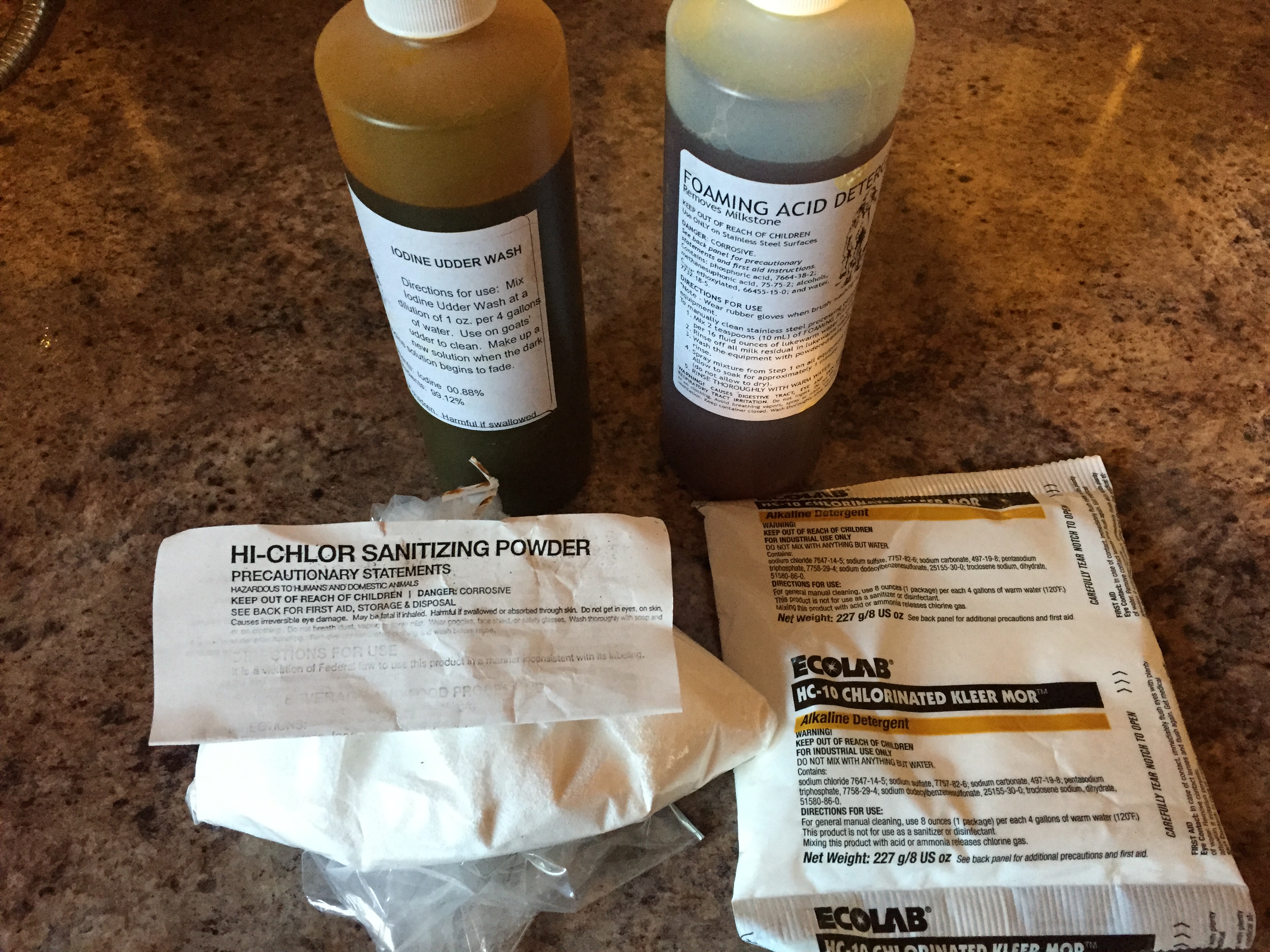
CLEANING SUPPLIES
Your milk is food.
Anything the milk touches needs to be treated accordingly.
One of the surprises when I bought my first machine was how much went into cleaning and sanitizing all of those parts.
With hand milking, cleanup is wonderfully simple. Wash and sanitize the bucket and your other equipment, and you’re essentially finished.
A milk machine adds hoses, inflations, teat cups, the claw and the interior of the milk bucket.
There is simply more to clean.

A MILKING MACHINE IS A PAIN TO CLEAN
Here is the part I wish more people talked about when comparing hand milking vs machine milking.
Milking the cow may take five minutes. Cleaning the machine can take considerably longer.
With my machine, a thorough cleaning took me around 25 minutes.
That doesn’t mean a milk machine isn’t saving you time. If you’re milking several cows, it absolutely can.
But if you’re milking one moderate-producing family cow, you need to count the entire chore, not just the few minutes the machine is attached to the cow.
The equipment needs to be rinsed, washed, sanitized and allowed to dry properly. Milk residue left inside a hose or inflation is exactly what you don’t want.
And this isn’t a chore where I would cut corners to save five minutes.
This is also one reason milking a family milk cow once a day can change the equation. If your cow is a good candidate for once-a-day milking, you’re cleaning all of that equipment once instead of twice.
YOU ARE DEPENDENT ON EQUIPMENT
Machines fail.
That’s farm life.
A vacuum pump can quit. A hose can crack. A pulsator can malfunction. A gasket can disappear at exactly the wrong time.
And, of course, the power can go out.
Your cow doesn’t care.
She still needs to be milked.
This is why I will always recommend learning to hand milk even if you intend to use a machine every day.
Hand milking is your backup plan.
It also keeps you comfortable working directly with your cow’s udder and lets you recognize what feels normal for her.
THE MACHINE HAS TO FIT YOUR COW AND YOUR FARM
Don’t buy a machine simply because someone online says it is the “best milking machine.”
The right milking machine depends on the cow you’re milking and how you’re using it.
For a small farm or homestead, I would look for a straightforward bucket milker with a good-quality vacuum pump and readily available replacement parts.
Bucket capacity matters more than you might think.
If your cow can produce several gallons in a single milking, buying a tiny milk bucket because the machine was cheaper isn’t much of a bargain.
Consider:
- How many cows will you milk?
- How much milk can your highest producer give at one milking?
- Is the machine portable?
- Are replacement inflations readily available?
- Can you easily get hoses, seals and pulsator parts?
- Is the milk bucket large enough?
- Can you clean every milk-contact surface thoroughly?
- Is the machine more complicated than your little family dairy actually needs?
Most family cow owners do not need a commercial dairy setup.
Simple and repairable wins a lot of points with me.
HAND MILKING VS MACHINE MILKING: WHICH IS BETTER?
Neither one wins across the board.
If I were milking one moderate-producing family cow, especially once a day, I would seriously consider hand milking.
It is quiet. Equipment is minimal. Cleanup is fast. There is very little to break, and it costs next to nothing compared with buying a machine.
If I were milking two or more cows, dealing with a particularly high producer, struggling physically with hand milking, or needed someone else to handle the milking occasionally, I would choose the machine.
Your milking schedule matters as well.
A fresh cow near peak production is very different from the same cow later in lactation. If you don’t understand where your cow is in that cycle, read my family milk cow lactation curve before deciding what your long-term milking routine should look like.
And don’t assume maximum production should always be the goal. Many family cow owners eventually discover they don’t actually need every gallon their cow is capable of producing. My guide to once-a-day milking explains why reducing milking frequency can sometimes make keeping a dairy cow much more manageable.
DO YOU NEED A MILKING MACHINE FOR ONE COW?
Usually, no.
That doesn’t mean you won’t want one.
There is a difference.
If you have one cow, healthy hands and enough time to milk her, hand milking is perfectly practical. You may find you genuinely enjoy it.
If that one cow is producing heavily, you’re milking twice a day, you have hand or wrist problems, or you’re trying to fit morning milking into an already full farm day, the machine may be worth every penny.
I wouldn’t base the decision on the number of cows alone.
Look at production, milking frequency, your available time and how long you intend to keep a family cow.
SHOULD YOU BUY A NEW OR USED MILKING MACHINE?
I wouldn’t be afraid of good used dairy equipment, but I would be picky.
A stainless-steel milk bucket can last a very long time. The parts I would inspect more closely are the ones that wear, crack or come into direct contact with milk.
Before buying a used milking machine, make sure replacement parts are still available for that model.
I would plan on replacing questionable rubber components rather than trusting old hoses or inflations simply because they look clean.
You should also know what size milk bucket you’re buying.
One of the reasons I chose the machine I originally purchased was its five-gallon bucket capacity. Many of the other small bucket milkers I looked at held only three gallons, and I wanted the extra capacity.
That decision was based on the cows I was actually milking, not which machine had the prettiest sales page.
EVERY FAMILY COW OWNER SHOULD KNOW HOW TO HAND MILK
Even if you buy the machine.
Learn.
There will eventually be a reason you need the skill.
Maybe the power is out. Maybe the vacuum pump won’t start. Maybe you’re dealing with one quarter individually. Maybe something broke and the replacement part won’t arrive for three days.
You don’t want your first attempt at hand milking to happen during an emergency with a painfully full cow standing in front of you.
It is also part of learning your cow.
Family milk cows are individuals. Production changes throughout lactation, and so do their needs. If you’re new to keeping one, my Family Milk Cow FAQ is a good place to work through many of those first questions.
And if you’re still in the planning stages, spend some time learning what normal milk production actually looks like. How much milk a family milk cow produces per day will give you a much more realistic picture than choosing equipment based solely on breed averages.
Practical Family Milk Cow Advice, Straight to Your Inbox
MY CONCLUSION AND RECOMMENDATION
After doing it both ways, I still love hand milking.
There is something wonderfully simple about sitting down beside a cow with nothing more than a stainless-steel bucket. Those quiet mornings in the barn are some of my favorite memories of keeping dairy cows.
But simplicity isn’t always measured by how little equipment you own.
Sometimes the thing that makes a family milk cow sustainable is the tool that gives you some of your time back.
For one moderate-producing cow, hand milking makes a lot of sense.
For multiple cows, a high-producing cow, a difficult milker, physical limitations or a farm where someone else needs to take over chores occasionally, I think a good milking machine can be worth the investment.
Just remember that the five-minute milking time isn’t the whole story.
You still have to set it up, clean it, maintain it and eventually replace parts.
Choose a machine because it solves a real problem on your farm, not because you think owning a dairy cow requires one.
And no matter which method you choose, learn how to hand milk.
That is one piece of equipment you’ll always have with you.
Frequently Asked Questions About Milking Machines
Is a milking machine worth it for one cow?
It can be, but it isn’t necessary for most family cow owners. If you have one moderate-producing cow and don’t mind hand milking, the simplicity and minimal cleanup of hand milking are hard to beat. A machine becomes more appealing with a high-producing cow, twice-a-day milking, physical limitations or a particularly tight schedule.
How long does it take to milk a cow with a machine?
With the machine I used, the actual milking took around five minutes once the cow and machine were ready. Your total chore time will be longer because you also need to prepare the cow, set up the machine, handle and chill the milk, and thoroughly clean the equipment.
Is hand milking faster than using a milking machine?
For one cow, it can be when you count machine setup and cleaning. For multiple cows or a high-producing cow, machine milking can save considerable physical work and time.
Do milking machines hurt cows?
A properly functioning milking machine needs to be set up and used correctly. Vacuum level, pulsation, inflation fit, attachment and knowing when to remove the teat cups all matter. A machine should never be treated as something you simply attach and forget.
Is it hard to clean a milking machine?
It is not necessarily difficult, but it takes time and needs to be done correctly. Every surface that contacts milk needs proper attention. Cleaning was one of the biggest disadvantages of machine milking for me.
Can I use a portable milking machine for one family cow?
Yes. Small bucket milkers and portable milking machines are much more appropriate for most family cow owners than equipment designed for commercial dairy operations. Choose one based on your cow’s production, bucket capacity, ease of cleaning and availability of replacement parts.
What size milk bucket do I need?
Choose a bucket that can comfortably hold the amount your highest-producing cow gives at a single milking. I preferred a five-gallon bucket because I didn’t want to risk outgrowing a smaller three-gallon setup.
Should I still learn to hand milk if I own a machine?
Absolutely. Equipment breaks and power goes out. Every family cow owner should be capable of completely hand milking their cow when necessary.
More Family Milk Cow Guides
If you’re building your own family dairy, these guides will help you understand the cow behind the milk bucket:
Milking a Family Milk Cow Once a Day
Family Milk Cow Lactation Curve: What to Expect After Calving
How Much Milk Does a Family Milk Cow Produce Per Day?
How Much Land Does a Cow Need?
Family Milk Cow Cost Calculator
Why Does My Cow’s Milk Taste Salty?
Family Milk Cow FAQ for Beginners
-
Family Milk Cow Lactation Curve: What to Expect After Calving
A family milk cow does not produce the same amount of milk every day from the…
-
How Much Land Does a Cow Need? A Practical Acreage Guide
One of the first questions people ask before bringing cattle home is, how much land does…
-
How Much Does a Family Milk Cow Cost? + Monthly Cost Calculator
Owning a family milk cow is one of the most rewarding investments we’ve made for our…
-
How Much Milk Does a Family Milk Cow Produce Per Day?
How much milk does a family milk cow produce? After years of keeping and milking our…
-
Why Does My Cow’s Milk Taste Salty?
Common causes of salty milk in cows, including mastitis, somatic cell counts, and changes during lactation….
-
Family Milk Cow FAQ for Beginners
If you’re considering bringing home your first family milk cow, you probably have a long list…










Great article! I have goats, not a cow (yet!) and we have not started milking them yet, they are still young. I like the clean milk aspects of the milking machine. Have you heard of the Udderly EZ milkers? I’m just wondering if they are as good as they seem. Or if it’s one o those things that’s too good to be true. Why did you choose the milking machine you choose? Sorry to throw questions back at you! Your’s is the first post I’ve read on milking machines.
Great questions! No, I haven’t heard of the EZ Milker. I chose the Hoegger Cow Milker because of its 5 gallon tank capacity, the majority of the surge milkers I found only held 3 gallons. I also really like that Hoeggers is a family company and I try to support them whenever possible. Congrats on your goats. I used to have Nubians and loved their feisty personality.
Great article… and great information. Even though we have dairy goats, and I can totally relate to much of what you said. Thus far we have only milked by hand, but have been looking into getting a machine… mainly for our “farm sitter” when we are away. You also provided some great information regarding the “cons.” Thanks a bunch for sharing!!
Hello, great article. I am looking into a milking machine for sheep, but I do not want to use harsh chemicals for cleaning. Can you tell us what you use for cleaning in detail?
Thanks again!
Wonderful article! Thank you for sharing your thoughts. SlavicBeauty milking machines are affordable and available to be delivered in 3-4 days. Please see the milkers here https://www.slavicbeauty.net/milking-machine-systems/mini-milkers Thank you!
The milking machinery balances in terms of both positive features and negative feedbacks. The equipment requires strict cleaning procedures and a continual supply of power to gain maximum production. But, if a proper policy is put in place, switching to an automatic milking can be the best investment a dairy farm to meet the highest standards in terms of quality and performance. Good share.
There are cheaper milking machines and with automatic cleaning also.