
Published January 29, 2014 • Updated March 2026
Most homemade chicken feed recipes quietly wreck egg production.
They look “clean.” They feel wholesome.
But they’re often unbalanced, low in protein, and missing key nutrients your birds actually need.
And when that happens, you’ll see it fast:
- Fewer eggs
- Thin shells
- Birds that just don’t thrive
We learned this the hard way.
After years of raising poultry on our farm, we stopped guessing and built a feed that actually works, simple, soy-free, and consistent enough to support strong laying and healthy birds.
This is the exact mix we use today.
But before you jump to the recipe… there’s one thing most people miss that matters more than the ingredients themselves.
If your chickens aren’t laying like they should, read this first. Start Here
This post may contain affiliate links. If you purchase through them, I may earn a small commission at no additional cost to you.
What Is the Best Homemade Chicken Feed Recipe?
When it comes to feeding my animals, I’ll be honest, I like to know exactly what’s going into it. Especially when it comes to the food we raise and rely on every day.
That’s what led me to start mixing my own chicken feed. Finding a truly soy-free, non-GMO option isn’t as simple as it sounds. Even many organic feeds still rely heavily on soy byproducts.
This homemade chicken feed recipe is one we’ve used right here on our farm. It’s practical, flexible, and built for real-life feeding—not perfection.
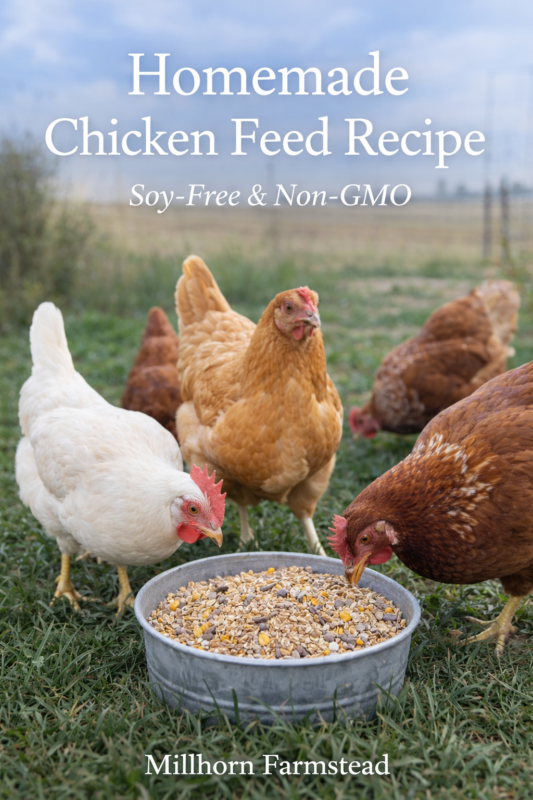
Before you mix this feed…
Before you scoop a single grain, there are a few things worth understanding, especially if your goal is to actually save money and keep your hens laying well.
Homemade feed isn’t just about throwing ingredients together. The balance matters.
- Some mixes can quietly drop egg production
- Others cost more than store feed without you realizing it
- And protein balance can make or break your flock’s health
I’ll walk you through how we approach it on our farm, but if you’re feeding multiple animals, you might also find this helpful → Raising Pigs in the Winter (Without Losing Your Mind)
Now let’s get into the mix.
Homemade Chicken Feed Recipe (Soy-Free & Non-GMO)
This is the base mix we use for our chickens and turkeys. It’s simple, flexible, and designed to support healthy, productive birds without relying on soy or unnecessary fillers.
Ingredients (Makes ~100+ lbs)
Based on the ingredients and protein percentages, this feed mix comes out to roughly 17.5–18% protein. That has worked well for our free-ranging heritage chickens and turkeys for years.
Homemade Chicken Feed Recipe (Soy-Free, Non-GMO)
Ingredients
Notes
- Combine all grains and seeds in a large bin or feed container.
- Mix thoroughly to distribute protein sources evenly.
- Add cayenne pepper, DE, and salt, and stir again.
- Offer eggshells or calcium source free-choice.
- Store in a dry, rodent-proof container.
- This mix makes a little over 100 pounds of feed.
- We feed both chickens and turkeys the same blend since they are heritage breeds with similar protein needs.
- Because our birds free-range heavily, this feed is only part of their overall diet.
- In winter, we may slightly increase corn for additional energy.
- Our birds free-range daily, so this feed is only part of their overall diet.
- We skip barley and peas because our chickens won’t eat them.
- Raw milk or whey is great source of protein and calcium if there any extra to share.
What does this actually cost?
One of the biggest reasons people start mixing their own feed is to save money, but the truth is, it depends on your ingredients and where you source them.
On our farm, we buy in bulk whenever we can, which makes a big difference in cost.
Here’s a rough breakdown based on average bulk pricing:
- Whole grains (wheat, oats, barley): ~$0.20–$0.35 per pound
- Peas or protein source: ~$0.30–$0.50 per pound
- Minerals/supplements: small cost per batch
Average cost per batch:
Typically comes out to about $0.25–$0.40 per pound
For comparison, many quality soy-free, non-GMO feeds from the store run:
$0.45–$0.70 per pound (or more)
What does that mean per chicken?
A laying hen will eat roughly ¼ pound of feed per day.
So your cost per hen per day looks like:
- Homemade feed: $0.06–$0.10 per day
- Store feed: $0.11–$0.18 per day
That might not sound like much, but across a flock, it adds up quickly.
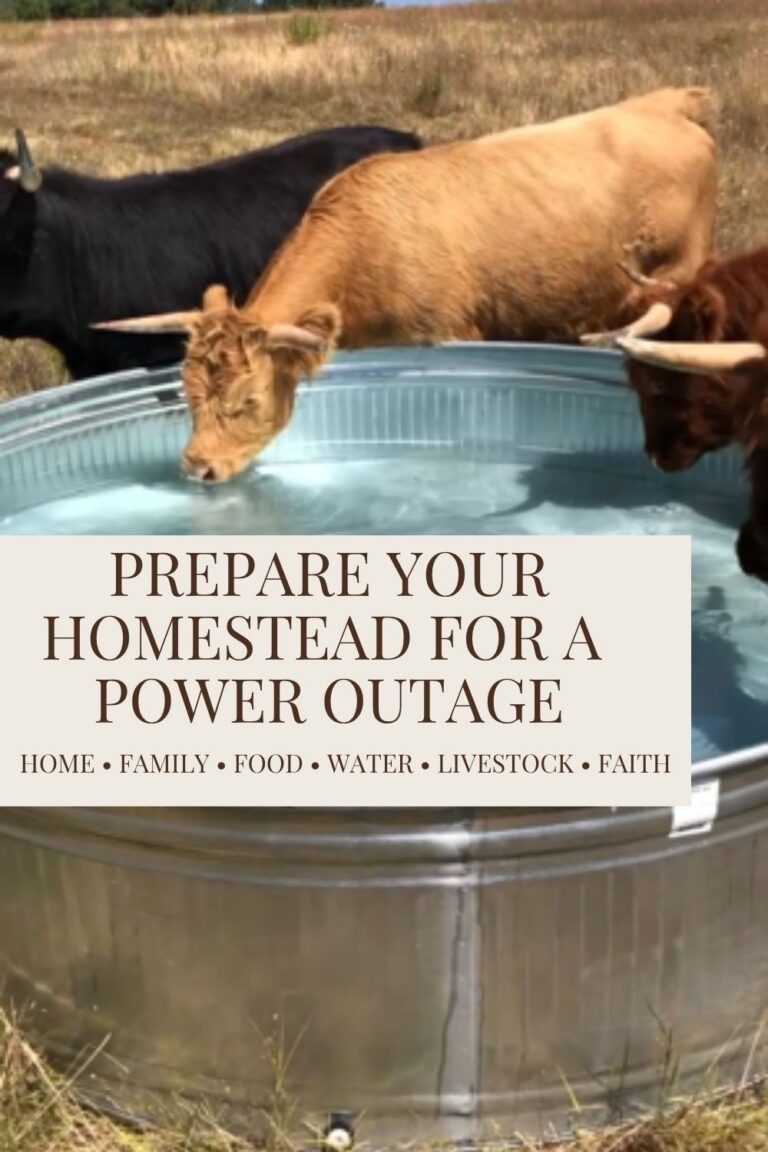
How to Adjust Homemade Chicken Feed for Your Climate & Flock
When you’re mixing your own chicken feed, there’s no one-size-fits-all formula. What works on one farm may need adjusting on another.
Here in the Pacific Northwest, where winter temperatures can drop into the single digits—and sometimes below zero—I increase the amount of corn during colder months. Those extra carbohydrates help provide energy and support body heat when the weather turns harsh.
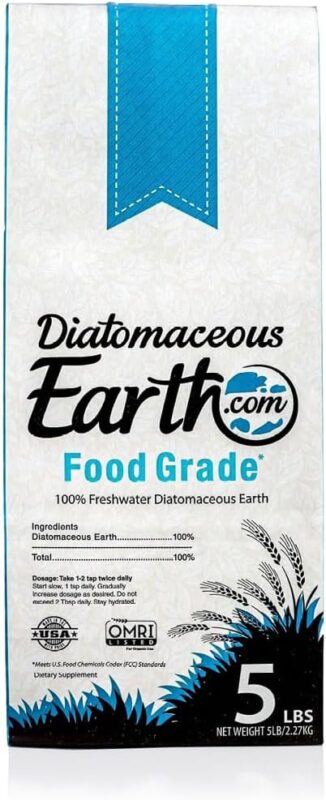
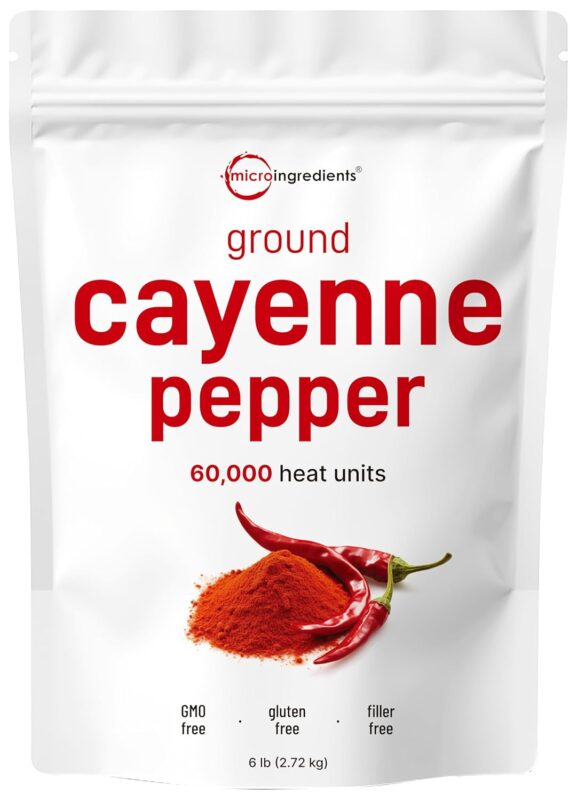
I also add a small amount of cayenne pepper and diatomaceous earth (DE) to our feed. Cayenne is commonly used to support circulation, especially in winter, and chickens don’t experience “heat” from it the way we do. The diatomaceous earth is often included by homesteaders as part of a natural approach to parasite management.
Over time, I’ve adjusted this recipe based on what my birds will actually eat. My flock refuses barley and peas, so I leave those out entirely. And because they free-range throughout the day, I don’t rely on unnecessary fillers—they’re already supplementing their diet naturally.
This homemade chicken feed recipe is meant to be a starting point. From there, you can adjust based on your climate, your flock, and what works best on your own farm.
Why I Use Whole Grains in Homemade Chicken Feed
Chickens are natural foragers. In a pasture setting, they aren’t seeking out compressed pellets, they’re scratching for seeds, grains, insects, and green forage.
Because of that, many small-scale and pasture-based systems rely on whole grains as a practical and effective feed base, especially when birds have consistent access to forage. Whole grains also encourage natural scratching behavior, which supports activity and gut health.
Choosing a Protein Source
Protein is one of the most important components of a balanced poultry diet. Most laying hens require roughly 16–18% protein, while growing or mixed flocks may need closer to 18–21%, depending on age and production.
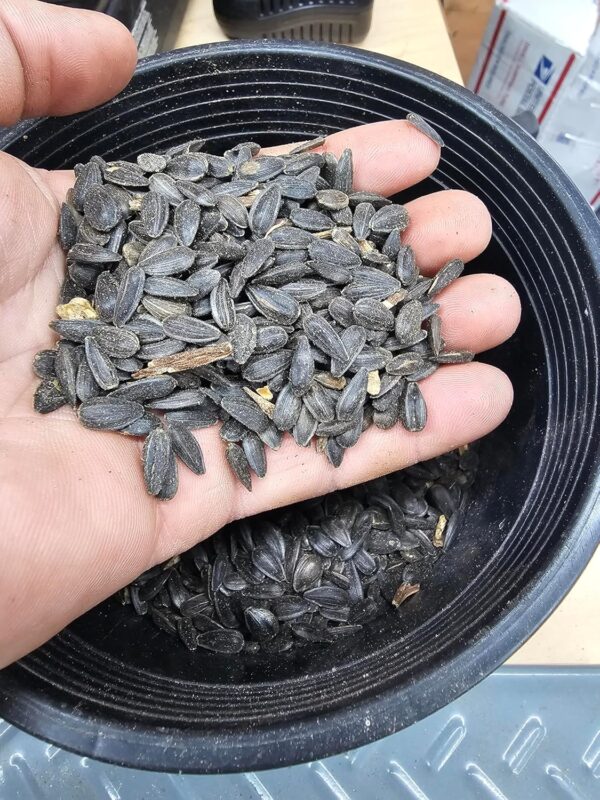
Black oil sunflower seeds (BOSS) are often included in homemade feed mixes because they provide both protein and beneficial fats. The oil content can help support feather condition and provide additional energy, particularly in colder months.
That said, sunflower seeds are typically used as part of a balanced mix, not as a complete protein source on their own.
What We Feed on Our Farm
This approach allows us to keep feed simple, reduce waste, and maintain a system that is both practical and economical.
On our farm, we currently have 13 chickens and 3 turkeys. All of our birds free-range throughout the day and are locked up at night for protection. Because we raise heritage breeds with similar nutritional needs, we feed both chickens and turkeys the same mix.
With consistent access to pasture, insects, and natural forage, our birds are able to supplement a significant portion of their diet on their own. As a result, we go through only about 4 cups of feed per day, which keeps our feed costs low, typically under $2.00 per day.
Practical homesteading, family milk cow guides, and real-life farm kitchen recipes.
Let Them Free Range
Allowing poultry to free range changes how much feed they actually need—and what you need to include in your mix.
If my birds didn’t free range, I would adjust this homemade chicken feed recipe by adding an additional 25 pounds of wheat and 25 pounds of oats. This helps provide extra carbohydrates, protein, and overall bulk. I would also include about 3 cups of powdered milk to support calcium intake.
Because our poultry forage daily, they naturally supplement their diet with grass, seeds, and insects. Turkeys in particular can get up to 30% of their diet from pasture when given the opportunity to roam.
If your turkeys are not on ample grass or forage, you may need to increase their protein intake. One simple option is feeding a few hard-boiled eggs each day to help support growth and overall health.
This is the base recipe we’ve used for years on our farm. With this approach, we’ve consistently raised flavorful 10–12 pound chickens and collected rich, nutrient-dense eggs from our hens.
I prefer to make a large batches of up to 200 pounds at a time, that way I don’t run out during the winter and I’m not forced to buy commercial feed.
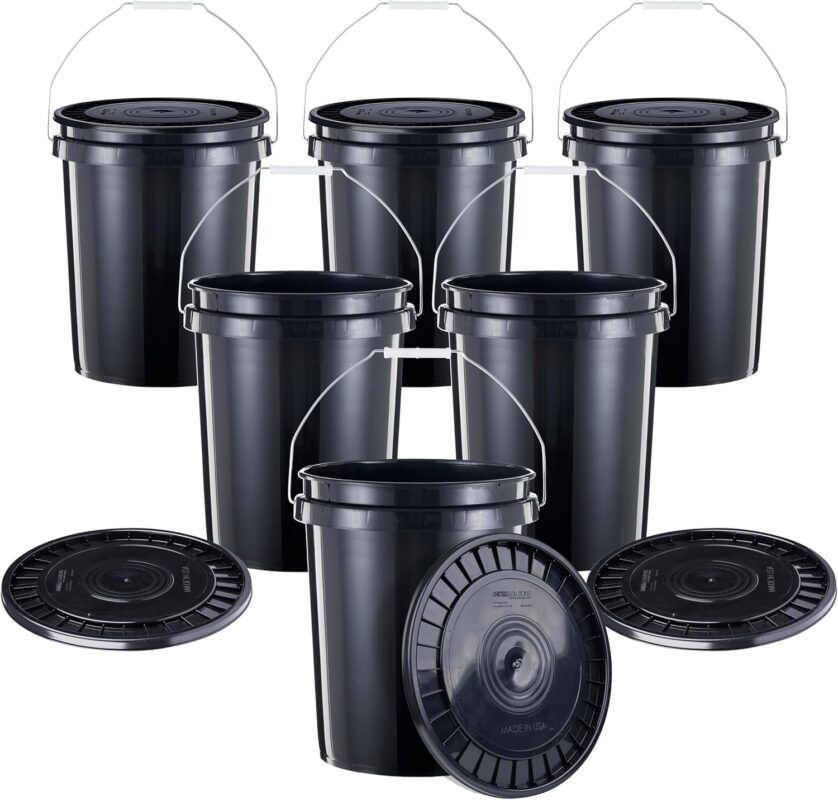
After I have a batch mixed up, I put it into 5 gallon buckets because it is easy for me to tote from the barn, up to the chicken coop while there is slippery cold snow on the ground.
When the weather is hot out, there is no need for the corn. Chickens, like cows, heat their bodies from the inside out.
Tools & Ingredients We Use on Our Farm
If you’re mixing your own feed, these are the tools and ingredients we reach for every day on our farm. Nothing fancy—just what works.
Is Homemade Chicken Feed Cheaper?
Homemade chicken feed can be cheaper, but it depends on your ingredients, your location, and how you source your grains.
If you’re buying everything in small quantities from a feed store, the cost can be similar or even slightly higher than commercial feed. However, if you’re able to buy in bulk, source locally, or grow some of your own grains, homemade feed often becomes more cost-effective over time.
For us, the biggest benefit isn’t just cost, it’s control. We know exactly what our chickens are eating, and we can adjust the mix based on the season, egg production, and overall flock health.
Is Homemade Chicken Feed Balanced?
A homemade chicken feed recipe can be well-balanced when you include a variety of grains, protein sources, and minerals. However, every flock is different, so it’s important to observe egg production, feather condition, and overall health—and adjust as needed.
If my Poultry did not free range I would add in another 25 pounds of wheat and 25 pounds of oats to give them extra filler, proteins, and carbohydrates. As well as, 3 cups of powdered milk for added calcium. Below is my basic recipe that I’ve been using on my Poultry for years. I have had no problem butchering out a tasty 10-12 pound chicken and getting daily omega rich eggs from my hens.
Also, if allowed to free range and forage, turkeys will get 30% of their diet from grass and bugs. If your turkeys are not on ample grass, I would add in a few hard boiled eggs each day to increase their protein levels.
According to research from the University of Minnesota Extension, balanced poultry diets should include a mix of grains, protein sources, and minerals to support overall health and egg production.
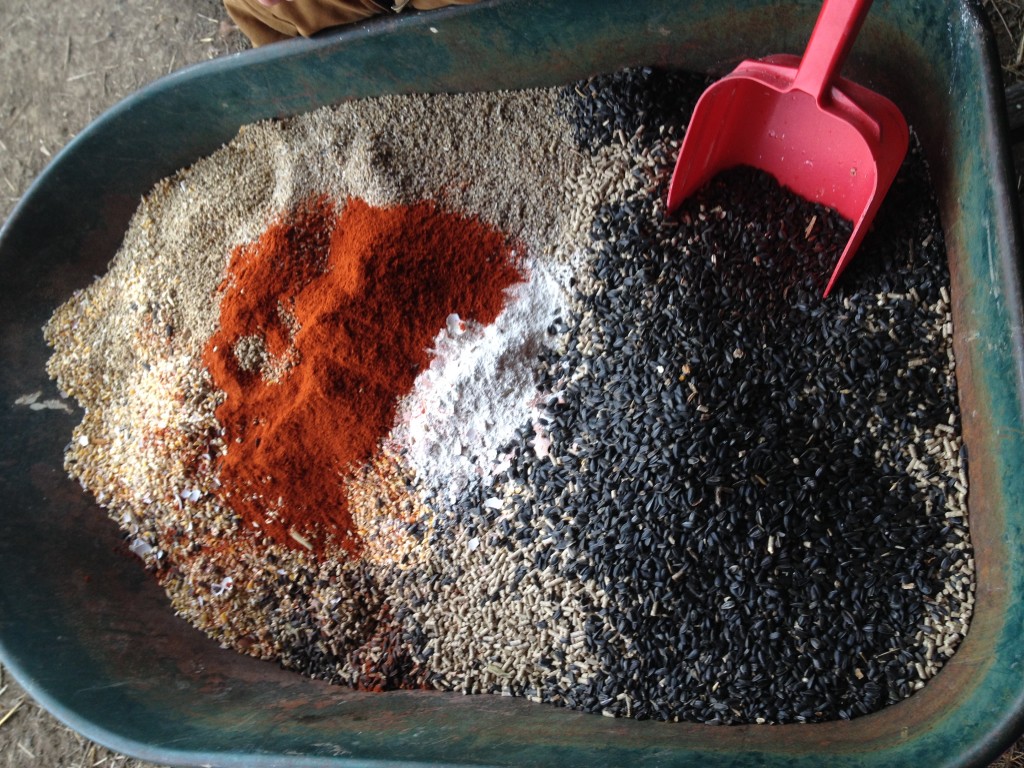
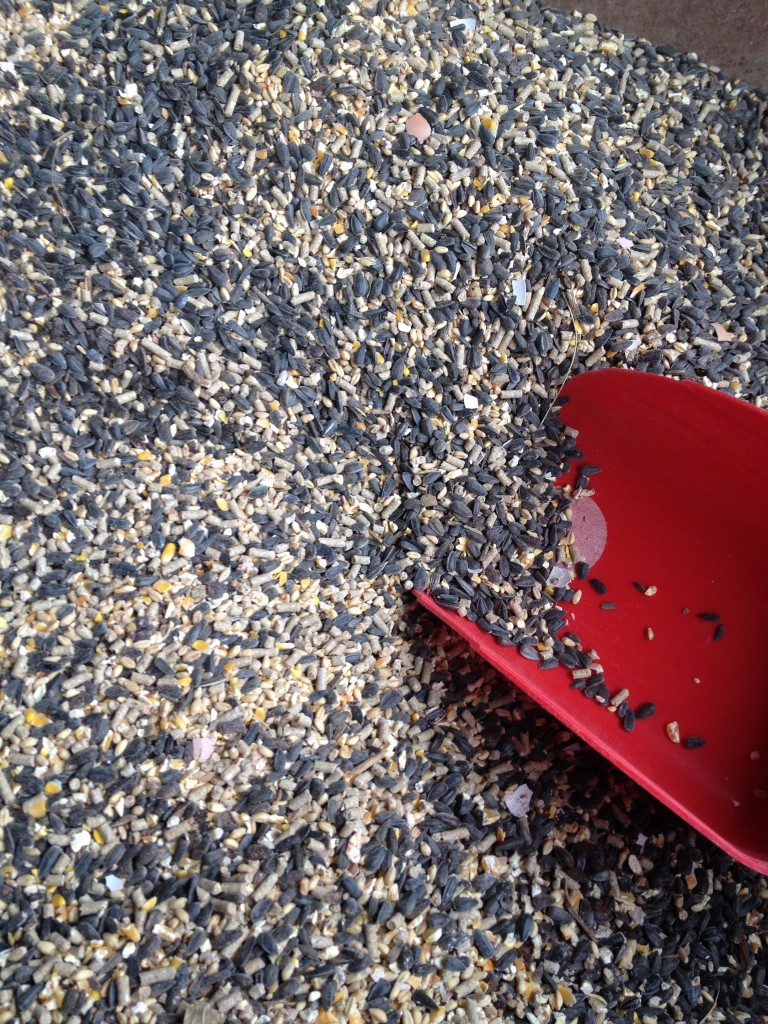
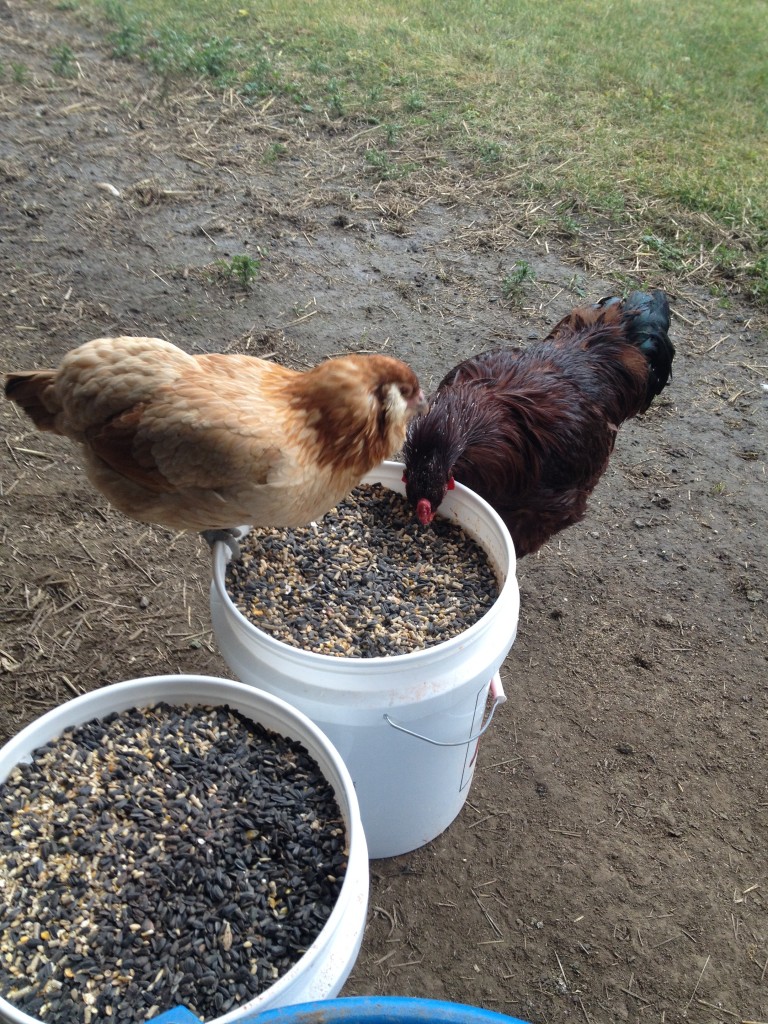
What Our Homemade Chicken Feed Mix Looks Like
Mixing and Storing Homemade Chicken Feed
I prefer to mix large batches, usually up to 200 pounds at a time. This helps ensure I don’t run out during the winter months and avoids having to rely on commercial feed when it’s least convenient.
Once the feed is mixed, I store it in 5-gallon buckets. They’re easy to carry from the barn to the chicken coop, especially when the ground is slick with snow and ice.
Season also plays a role in how I adjust this homemade chicken feed recipe. During colder months, I include corn for added energy, since chickens generate body heat from the inside out—similar to cattle. In the summer, when temperatures are higher, there’s no real need for the extra corn, so I often reduce or remove it from the mix.
Interesting recipe! I’ve ready a lot of do-it-yourself feed recipes and this one seems a lot more approachable. Thanks!
In the summertime, do you omit the Cayenne Pepper?
Great question! Yes, when the weather starts heating up (mid June) I will omit the Cayenne and then begin adding it back when the weather cools down, around October.
what is the cayenne do for the chickens in the winter?
Krista, Chickens lack heat receptors, so by adding cayenne it will act as natural de-wormer as well as warm their body internally without burning there mouth.
Thank you for this, I’m getting ready to order my first batch of Turkey pullets, heritage, and want to keep them gmo free. Your recipe is certainly very easy to obtain ingredients for! I’m excited for this new venture.
I’ve been looking for a homemade chicken feed recipe. We also live in the west where it gets cold so I love that this one has the cayenne in it to help warm them. Now i just have to figure out the best local place to get these ingredients and I can mix up a batch!
Wshat is the product that is hulled, Is This Sunflower Seeds also?
Yes The 25lb “BOSS” is BLACK OIL SUNFLOWER SEED and they are hulled.
I am confused by the BOSS. Is it 50 lbs of unhulled and 25 hulled? Also where do you get it hulled? I have never seen out like that.
Thanks for your question Wendy. I choose to feed both the BOSS in the whole and shelled form. The shell of the sunflower seed offers beneficial oils that is excellent for a healthy shiny plumage, while the seed (or nut) itself, is packed full of protein. You can find the hulled ones in the wild bird section of a farm or co-op type store.
Can you tell us your Rate of Lay? And how long it takes the birds to reach 10 – 12 lbs. (weeks)? Thank you.
My chickens lay about 5 days per week and slow down during the winter. I do not put a light on in their coop, as I’m a firm believer that they need a break and a natural cycle. Since I raise Buckeye chickens, which are a heritage breed, they do take longer then a Cornish or freedom ranger. I butcher them out around 18-22 weeks. The Buckeye chicken was created with the idea that the typical chicken is too small for the family table, yet a turkey is too big for a sitting, after breeding several breeds together, Nettie Metcalf got the Buckeye, A chicken that dresses out at high weight, yet still maintains its natural desire to forage during the day. The hens are good layers and still go broody.
Hi! When do you start your chicks on this recipe? How old? Thanks!
I start them on this when their ready to go outside, usually around 6 weeks old.
Do you have a recipe for chick starter too? I should be hatching my first batch of buckeyes in two weeks (fingers crossed!) But I don’t like anything the feed store carries (not a single bag without soy!!) Thanks for your time!
How many 50lbs bags does this recipe make when you order your grains in bulk?
Oh never mind I reread your post 🙂
This sounds like a really great recipe! It’s the first diy one i’ve looked at so far. I have a few questions though, what is the purpose of the Cheyenne pepper? And you allow them to free feed or give them a certain amount per day? I only have 7 hens, 2 are Silkies and the rest are various standards breeds. If I have to give them a certain amount, how much should it be?
My family is also paleo (going on 3 1/2 years 🙂 )and I’d love to try this feed! We have 24 chickens, 6 ducks, and 2 geese. Some chickens have just started laying, finally! Will this food be ok for all of them? Right now they are on a game bird feed, non gmo, no soy. I grind up egg shells and mix in food. They free range on 1.33 acre and put up at night. Thanks!
This is a high protein ration. It will be just fine for your mixed flock.
Love your website! This is a very basic question, I know, but why is it necessary to feed the chickens if they free range and seem to eat all day? I do feed my chickens because that seems to be necessary–and I’m not counting “snacks” I throw out for them, such as corn cobs in the summer or tomatoes, etc.–so I definitely want to try your mix to avoid the GMO stuff I get at the feed store. Sometimes books forget the start with the mini-baby stuff newbies need. 🙂 I’ve had chickens less than a year and I’m definitely not trying to artificially enhance their laying times. The more I can provide them a back-to-nature environment, the better, I feel. Thanks in advance.
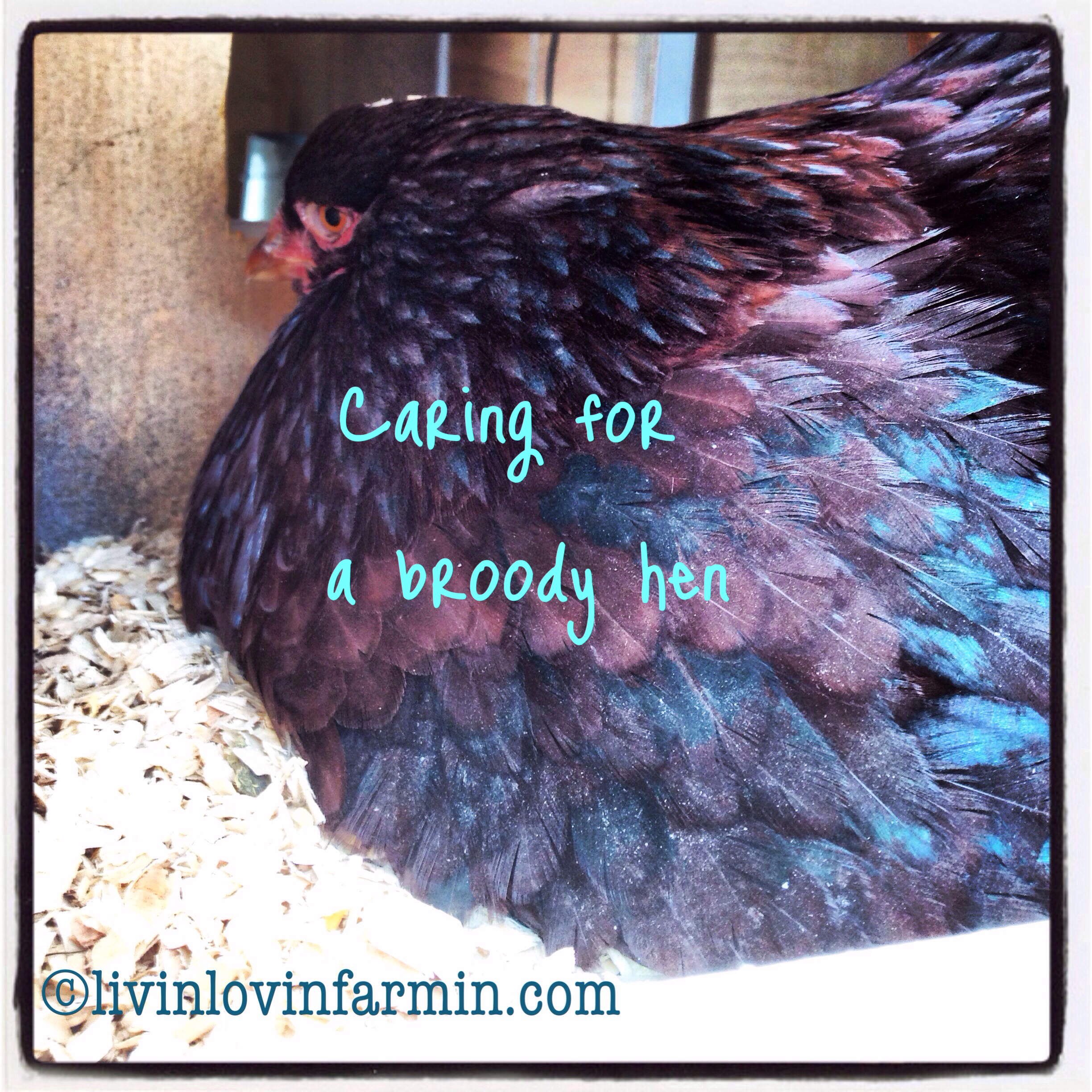
My chickens are excellent forager and really do not go through much feed, however I always offer it free choice. Its there IF they need it. I seem to ALWAYS have a hen broody, so if I have a feeder full of food, at least I know that the broody mama can quickly hop up, eat and return to her eggs. This is really for my own reassurance. Also during the winter, when there is heavy snow, the chickens cant scratch in the grass or dirt, so having feed avail to them to makes sure they still have proper nutrients.
Why the salt I thought salt was bad for chickens.
Chickens can suffer from sodium deficiency. Salt is added to the feed to aid growth and prevent developmental delays, this especially plays true in broilers and fast growing breeds.
Hi I was wondering if you knew of a substitute for the flax?
One could possibly sub it with a hemp seed. However, if you need to sub it based on an allergy issue, I would personally just omit it, as other nuts\seeds may have the same effect.
Great recipe! I started chickens a year ago. I dislike using pelleted food, but haven’t been able to find a recipe that isn’t corn heavy and has ingredients I can locally source. I am in S.W. Idaho and also appreciated your link to winterize-are you S.W. or up north? Do you source your feed ingredients at WinCo or another retailer (not sure that I’ve ever seen organic BOSS at WinCo, but it sure would be handy!) I like the idea of the buckeye as my girls are also harvested for eating after their second laying summer, is there an Idaho source for these birds? Thanks for all the help- I plan on enjoying this blog in the future!
I have personally never been to a Winco. I try and source mine from a local farmer, if not, then either North 40 or AmaZon. Regarding the Buckeyes, I have only found one other breeder in Idaho. You can PM me if you want more details and I will give you some sources for hatching eggs and chicks.
Thank You, for an informative article that was easy to access. I will “Pin” it, as we are about to start with some backyard chickens for eggs. Have printed your recipe for a chicken file. Much appreciation for willingness to share.
Hi, my chickens cannot free range entirely. Only occasionally in my huge yard. Is this recipe still good for an only food source or should I add other stuff?
Yes it is a complete food source. Just be sure to add in the oyster shell and grit.
This looks so doable. Does corn/wheat mean I could use either? Or does it mean to use 25 pounds of each?
Yes, either or. I like wheat because my husband is a wheat farmer and we are in Idaho, so getting non-gmo corn is quite expensive. 🙂
Gonna try this idea see if it works 🙂
Where do you purchase everything?
Hi Summer.
You should be able to click on the link and it will lead you to a product link.
Love the recipe, wondering where you purchase your large quantities of feed from? Online, brick and mortar store? Thanks for your help!