Pickled beets have had a place on our pantry shelves for as long as I can remember. If I’m growing beets, you can pretty well count on several batches ending up in jars before the garden is finished for the year.
And they actually get eaten.
We serve pickled beets alongside roast beef and pork, add them to salads, and eat plenty of them straight from the jar. They are one of those simple canned foods that earn their shelf space.
If you have a pile of fresh beets sitting on the kitchen counter, canning pickled beets is also considerably easier than it looks. The beets are cooked first, the skins slip right off, and the finished jars are processed in a boiling water canner.
This pickled beet recipe is adapted from the Ball Complete Book of Home Preserving, a canning book I have used in my own kitchen for years.
What Are the Best Beets for Pickling?
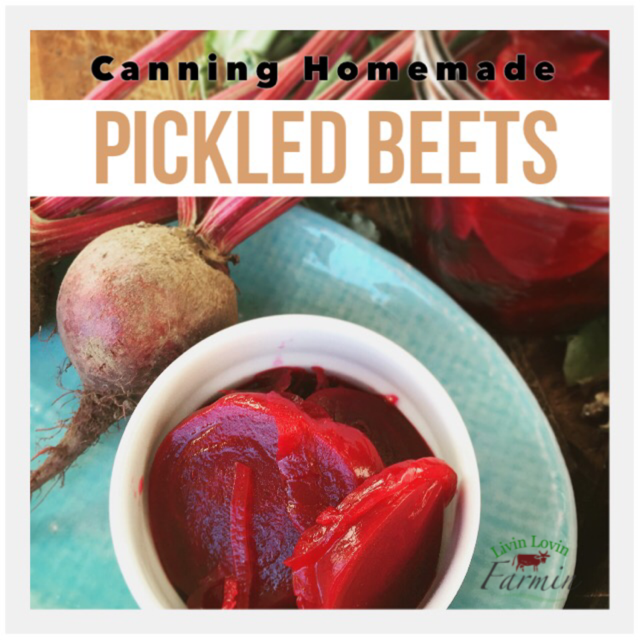
You don’t need a special beet variety to make homemade pickled beets, but I prefer small to medium-sized beets.
I’ve grown plenty of Detroit Dark Red beets over the years. They have the deep red color most of us picture when we think of pickled beets, and they hold up nicely after canning.
Don’t pass over the bigger beets from the garden, though. Slice or quarter them and put them in the jar.
Very small beets can be left whole.
If your garden is coming in faster than you can keep up with it, this is also a good time to make a batch of dilly beans or pickled asparagus. I tend to do most of my canning in big stretches when the garden decides everything needs harvested at once.
How to Prepare Fresh Beets for Pickling
Don’t peel your beets before cooking them.
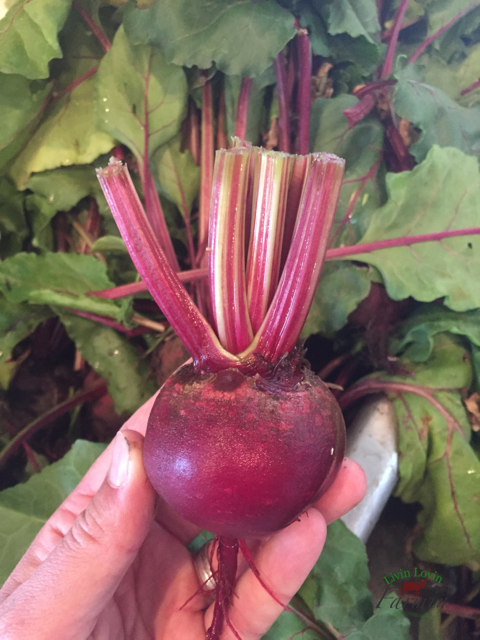
Scrub off the garden dirt, but leave the taproot attached and about 1 to 2 inches of the stems at the top. Keeping the beet intact while it cooks helps keep some of that beautiful red color where it belongs.
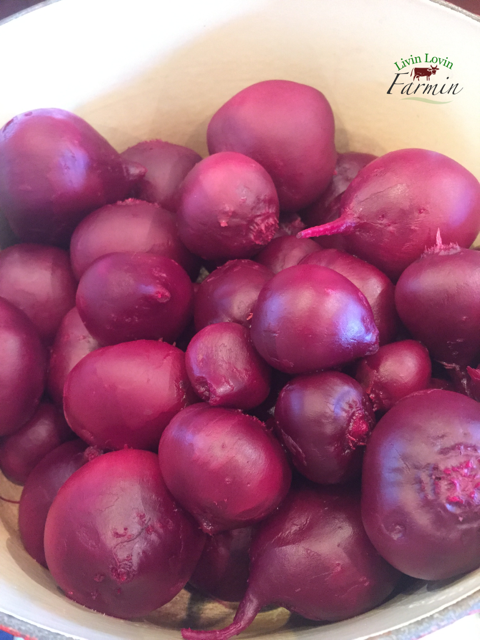
Place the beets in a large pot, cover them with water, and cook until tender. Depending on the size of your beets, this will usually take about 20 to 40 minutes.
Once they are tender, drain them and discard the cooking water.
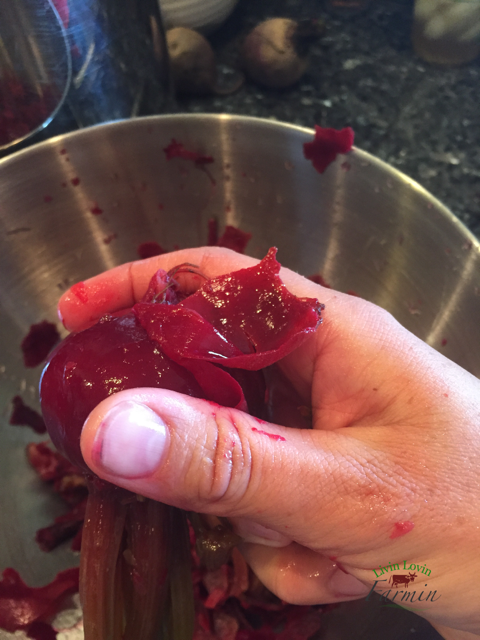
Let the beets cool just enough that you can handle them. Now comes the easy part. The skins should slip off with your fingers.
Trim the roots and remaining stems. Leave little baby beets whole and slice or quarter the larger ones.
This is one reason I like canning beets. There is no standing over the sink with a vegetable peeler trying to wrestle the skin off a raw beet.
Old-Fashioned Pickled Beets Recipe
Ingredients
Method
- Scrub the beets thoroughly, leaving the taproot and about 2 inches of stem attached.
- Sort the beets roughly by size and place them in a large pot. Cover with water and cook until tender, about 20 to 40 minutes depending on their size.
- Drain the beets and discard the cooking water. Cool until they can be comfortably handled.
- Slip off the skins and remove the stems and roots. Leave small baby beets whole. Slice or quarter larger beets.
- Prepare your boiling water canner, jars and lids.
- Place the pickling spice in a spice bag or tie it securely in cheesecloth.
- Combine the vinegar, 1 cup fresh water, sugar and spice bag in a large stainless-steel pot. Bring to a boil, stirring until the sugar dissolves.
- Reduce the heat and boil gently for 15 minutes.
- Remove and discard the spice bag. Add the prepared beets and return the mixture to a boil.
- Using a slotted spoon, pack the hot beets into hot pint jars, leaving 1/2 inch headspace.
- Ladle the hot pickling liquid over the beets, maintaining 1/2 inch headspace.
- Remove air bubbles. Check the headspace again and add additional hot brine if needed.
- Wipe the jar rims, center the lids and apply the bands fingertip-tight.
- Process pint jars in a boiling water canner for 30 minutes at elevations up to 1,000 feet. Adjust the processing time for higher elevations using the chart above.
- Allow the jars to cool undisturbed for 12 to 24 hours before checking the seals, labeling and moving them to the pantry.
Notes
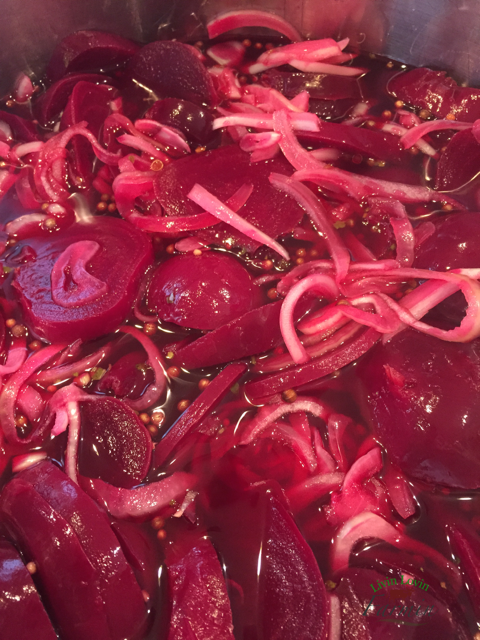
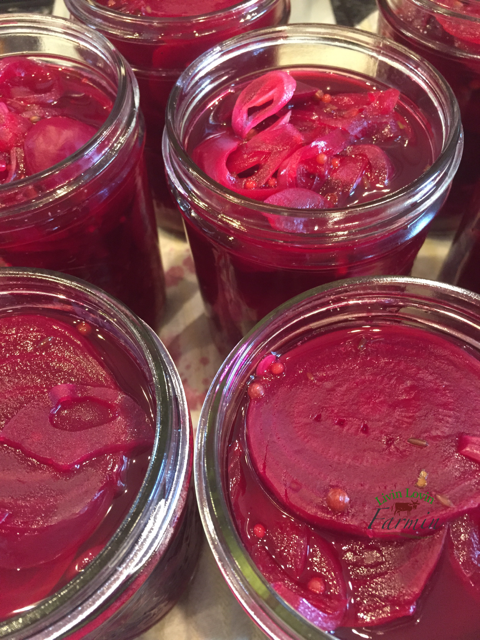
Making the Pickling Brine
Beets are naturally a low-acid vegetable. Plain canned beets need to be pressure canned. Pickled beets are different because a tested recipe contains enough vinegar to make them suitable for processing in a boiling water canner.
For that reason, don’t start tinkering with the vinegar and water amounts.
For this recipe you will use:
| Ingredient | Amount |
|---|---|
| Prepared beets | 10 cups |
| White vinegar | 2 1/2 cups |
| Fresh water | 1 cup |
| Granulated sugar | 1 cup |
| Pickling spice | 3 tablespoons |
Use commercially produced vinegar with 5% acidity.
The sugar gives traditional pickled beets their sweet-tart flavor. The vinegar is there for more than flavor, so don’t cut it back because you prefer a milder pickle.
The same rule applies when I’m making dill pickles or bread and butter pickles. Canning is not the place to eyeball acid levels.
How to Can Pickled Beets
Once your beets are cooked, peeled and cut, the rest moves pretty quickly.
Prepare your boiling water canner, jars and lids while you make the brine.
Combine the vinegar, fresh water, sugar and spice bag in a large stainless-steel pot. Bring the mixture to a boil, stirring until the sugar dissolves.
Reduce the heat and gently boil for 15 minutes.
Remove the spice bag, add the prepared beets and bring everything back to a boil.
Pack the hot beets into hot pint jars with a slotted spoon, leaving 1/2 inch headspace.
Ladle the hot pickling liquid over the beets, keeping that same 1/2 inch headspace.
Remove any trapped air bubbles. Check the headspace again and add more hot brine if necessary.
Wipe the jar rims, center the lids and apply the bands fingertip-tight.
Process the jars in a boiling water canner according to your elevation.
Processing Time for Pickled Beets
| Elevation | Processing Time |
|---|---|
| 0–1,000 feet | 30 minutes |
| 1,001–3,000 feet | 35 minutes |
| 3,001–6,000 feet | 40 minutes |
| Above 6,000 feet | 45 minutes |
Once the jars are finished processing, allow them to cool undisturbed for 12 to 24 hours before checking the seals.
Can I Add Onions to Pickled Beets?
Yes, but don’t simply throw a few onions into this recipe.
Ball provides a specific pickled beets and onions variation. For that version, use:
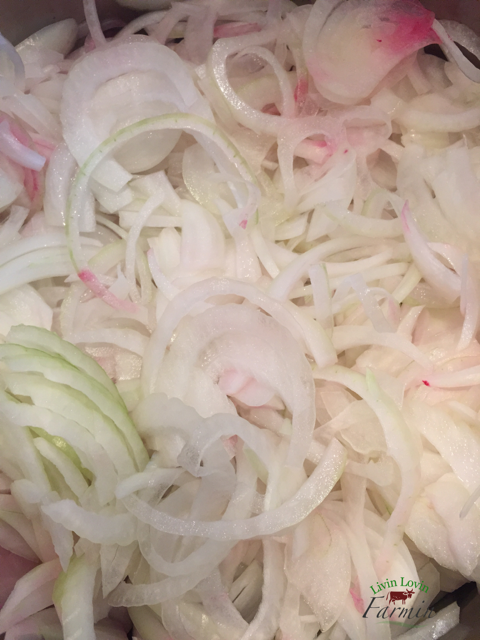
8 cups prepared beets + 3 cups sliced onions
The onions are added with the beets while keeping the remaining recipe proportions as directed.
If you’re looking for more ways to fill the pantry with garden produce, my tomato canning recipes are a good place to start. I also put up plenty of stewed tomatoes every year because they’re one of the jars I use constantly once garden season is over.
How Long Should Pickled Beets Sit Before Eating?
You can open the jars fairly soon, but I wouldn’t.
Give them a couple of weeks.
The beets need some time sitting in that sweet vinegar and spice brine before they taste like the pickled beets you’re expecting. I think they’re even better after they’ve been sitting on the pantry shelf for a month or so.
This works out rather well because by the time I’m tired of looking at fresh beets, I’m perfectly happy to forget about them for a while.
How to Store Home-Canned Pickled Beets
After the jars have cooled for 12 to 24 hours, check each seal.
Label your jars with the contents and year and move them to a cool, dark pantry.
I recommend using your home-canned food within a year for the best quality and continually rotating the pantry so the oldest jars get eaten first.
Once you open a jar of pickled beets, refrigerate it.
If you’re working on building a pantry that contains more than individual vegetables, canning Sloppy Joes is another way to put something on the shelf that can turn into an actual meal quickly. I also keep plenty of canned tomato soup concentrate because those are the jars that make a stocked pantry genuinely useful.
Ways to Eat Pickled Beets
There is no need to get fancy with them.
Most often, I open a jar and put them straight on the table. They’re especially good with a heavier supper because the vinegar cuts through rich meat nicely.
We also use them:
- alongside roast beef or pork
- with sandwiches
- chopped into green salads
- with goat cheese or feta
- beside eggs
- on a simple cheese and cracker plate
A pantry doesn’t need to contain hundreds of different things. I’d rather have jars of food my family actually eats. Pickled beets qualify.
Frequently Asked Questions About Pickled Beets
Can you water bath can pickled beets?
Yes, when you are using a tested pickled beet recipe with the proper amount of vinegar.
Don’t confuse pickled beets with plain canned beets. Plain beets are a low-acid vegetable and require pressure canning.
Do pickled beets have to be pressure canned?
No. Properly acidified pickled beets can be processed in a boiling water canner.
If you’re canning plain beets without the pickling brine, that’s a different process and requires a pressure canner.
Can I reduce the vinegar in pickled beets?
No.
The vinegar isn’t there simply because we want the beets to taste tart. The acidity is part of what makes this particular recipe suitable for boiling water canning.
If you want a different vinegar-to-water ratio, use another tested recipe rather than changing this one.
What kind of vinegar should I use for canning pickled beets?
Use commercially produced vinegar labeled 5% acidity.
For this recipe, I use white vinegar.
Can I use apple cider vinegar instead?
I would stick with the white vinegar called for in this particular recipe rather than making substitutions.
There are tested beet recipes specifically written for cider vinegar if that’s the flavor you prefer.
Why do you cook beets before peeling them?
Because once the beets are cooked, the skins practically fall off.
Cook them with the roots and a portion of the stems still attached. Once they’re tender enough, cool them until you can handle them and slip the skins off with your hands.
Can I leave small beets whole?
Yes. Small baby beets can be left whole.
Larger beets should be sliced or quartered so they pack well into the jars.
Why did my pickled beets lose some of their color?
Beets naturally lose some color during cooking and storage.
Leaving the root and a couple of inches of stem attached during the initial cooking helps reduce some of the bleeding. Keeping your finished jars in a cool, dark pantry also helps protect their quality.
How long do home-canned pickled beets last?
For the best quality, plan to rotate them through your pantry within about a year.
Always inspect a home-canned jar before opening it. If the seal has failed or you notice anything questionable about the jar, don’t taste it.
-
Canning Taco Soup: A Hearty Beef and Bean Meal in a Jar
There comes a point every canning season when I stop wanting to put individual ingredients on…
-
Canning Sloppy Joes: An Easy Meal in a Jar Recipe
Canning sloppy joes is one of my favorite ways to turn ground beef and tomatoes into…
-
Homemade Bloody Mary Mix | Canning Recipe
Have you ever tasted a Bloody Mary mix that actually tastes like real tomatoes? Not the…
-
Green Tomato Enchilada Verde Sauce for Canning
Canning Green Tomato Enchilada Sauce When fall frost is around the corner, I inevitably end up…
-
Canning Peaches in Honey
Canning peaches in honey is one of my favorite ways to preserve fresh peaches without using…
-
Dill Pickle Canning Recipe | Crisp Garlic Dill Pickles
There are a few things I make every summer without fail, and this dill pickle canning…