If the power went out tonight, would your homestead be ready for tomorrow morning?
I am not asking whether you own a generator or have enough rice to fill a closet. I am asking whether your animals would have water, whether your family could eat, whether you could get through the chores, and whether you would know where to turn when your plans stopped working.
On a homestead, power outage preparedness is about more than keeping the lights on. It is about the sources you depend on every day: water, food, physical ability, and the spiritual foundation of your home. If any one of those is weak, a stack of emergency supplies will only carry you so far.
I have seen what happens when there is no second way to do things, and I have also been grateful for the backup that kept one part of our farm going while the rest of the house sat in the dark. Both experiences changed the way I think about preparing.
This post contains affiliate links. As an Amazon Associate, I earn from qualifying purchases at no additional cost to you.
Start with the question: What does your homestead need every day?
Before buying more equipment, walk your property with a notebook and trace an ordinary day. Write down what happens between waking up and going to bed, including the work nobody notices until it cannot be done.
How does water get from the well to the house and the animals? How do you feed, contain, and care for livestock? Where is your food stored, and what needs refrigeration? Which jobs require a motor, battery, electric fence, heated waterer, or working phone? If the usual person cannot do the chores, who knows the routine well enough to step in?
Write down what you have, what depends on electricity, and what you would do if that part failed. If your answer is “we have a generator,” check what it actually runs, how it connects, and how much fuel you have. A backup you have never tested is still a question mark.
This exercise is the beginning of the plan, because the needs of a family with a garden and chickens are different from the needs of a farm with cattle, a milk cow, and freezers full of meat.
Prepare your water source first
On our homestead, water is the first thing I think about when the power goes out. We depend on a well, and once an electric pump stops, the water already in the pressure tank is limited. The livestock do not get to skip drinking until the utility repairs a line.
How much water does your homestead need?
Start by finding out how much water your household and animals use on a normal day. Look at your current cattle, poultry, pigs, and any other livestock, then pay attention to how demand changes with heat, lactation, feed, and winter conditions. My guide to how much land a cow needs explains why feed and pasture differ from one homestead to another; water planning needs that same attention to the animals and land you actually have.
Then ask two separate questions: How much water can we store, and how will we get more? A filled stock tank may buy time, but it is not an endless supply. Containers in the garage may be useful for the house, but not if no one can move enough of them to the far pasture. A five-gallon pail holds about 42 pounds of water before adding the weight of the pail, so the route from storage to the animals matters just as much as the number of gallons on paper.
Make sure your water plan works in winter
Make a written plan for drinking and cooking water, livestock water, and the safe water needed to wash hands and dairy equipment. Label containers used for drinking separately from water reserved for flushing or other chores. If you intend to power the well with a generator, have the pump and electrical setup assessed and test the arrangement before you rely on it. If you hope to use a hand pump, another well, a spring, stored tanks, or hauled water, confirm that the option works on your property and that the water is suitable for its intended use.
Winter changes everything. A tank full of ice does not solve your water problem, and an outside hose that cannot be used in freezing weather is not much of a backup. Work out where you will keep water liquid and how you will deliver it when the ground is slippery and daylight is short.
The question I want every homesteader to answer is simple: If the well stopped tonight, where would tomorrow’s water come from, and how would it reach every animal?
Prepare a food source that does not depend on one freezer
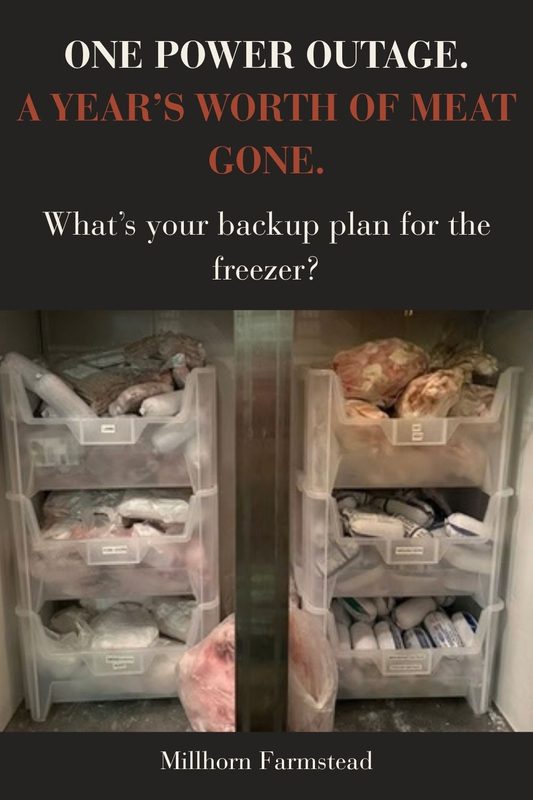
After Hurricane Helene, I met a family who had been without power for more than two weeks. By the second day, everything in their refrigerator had gone bad. By the fifth day, blood was running down the freezer door.
That freezer held a year’s worth of meat they had raised. By the time they understood how long the outage would last, the meat was rotting in the garage, and there was no backup plan or workable way to preserve it. One tropical storm had taken a year’s food and labor.
I have thought about that family many times since. Raising your own food is valuable, but storing every bit of it behind one electric door leaves all that work exposed to the same failure.
Know what is in the freezer and how you would protect it
You do not have to stop using a freezer. We use modern conveniences because they make farm life possible. You do need to know what is inside each freezer, which one you would power first, and whether your backup can keep it cold. Put a thermometer in each refrigerator and freezer, keep an inventory somewhere you can reach without opening the doors, and make a plan for a long outage rather than assuming the power will return by morning.
An unopened refrigerator usually gives you only a few hours of safe cold storage, while a closed full freezer can hold its temperature considerably longer, often about two days under favorable conditions. Those are planning windows, not guarantees; the actual food temperature and how long food has been warm determine what can be kept. Do not taste food to decide whether it is safe.
Keep food your family can eat without electricity
I also want part of our family’s food to be ready without needing a freezer at all. That means pantry staples we already eat, properly preserved foods, and meals we know how to cook with the equipment available to us. I keep pressure-canned bone broth because it can become soup or gravy straight from the shelf, and canned stewed tomatoes give me another familiar ingredient without asking the freezer for anything. Canned pumpkin is another example of preserving the harvest in a form that does not need power to remain stored.
A shelf full of food is only useful if the family will eat it and you have water, fuel, and a safe way to prepare it. Make a few meals with your backup cooking setup on an ordinary day. Find out how much fuel they require and what the cleanup is like when you cannot run the dishwasher. Cooking and pressure canning an entire thawing freezer during an outage should never be your only preservation plan; safe canning requires the right equipment, water, heat, tested methods, and time you may not have.
If you grow or raise much of what you eat, spread some of that food across methods of storage. The pantry, freezer, garden, and animals each offer something different, but none should be the single point on which every meal depends.
Prepare the animals and the work that cannot wait
Some household projects can be set aside for a week. Feeding animals, checking their water, and maintaining their care cannot.
Write a short morning and evening chore sheet that someone besides you can follow. Include where the feed is kept, what each group receives, which gates must stay closed and which fences rely on electricity. Keep headlamps, halters, buckets, and the ordinary tools for those chores where people can find them in the dark.
Walk your fence lines before an outage and identify any pen that depends entirely on a grid-powered charger. The Gallagher S6 solar electric fence charger is an option for a smaller enclosure, but check its capacity and test it on your actual fence. I would not assume a small charger can secure a large cattle perimeter.
The outage that made me choose between the barn and the house
Several years ago, we lost power in the middle of fall. Thankfully, harvest was over, so we had a service truck with a generator available to power my milking equipment in the barn. The dairy kept running, and I did not have to stop milking or lose the income it provided.
There was a catch: I had to choose between the barn and the house. The barn got the power, and my family sat in a dark house.
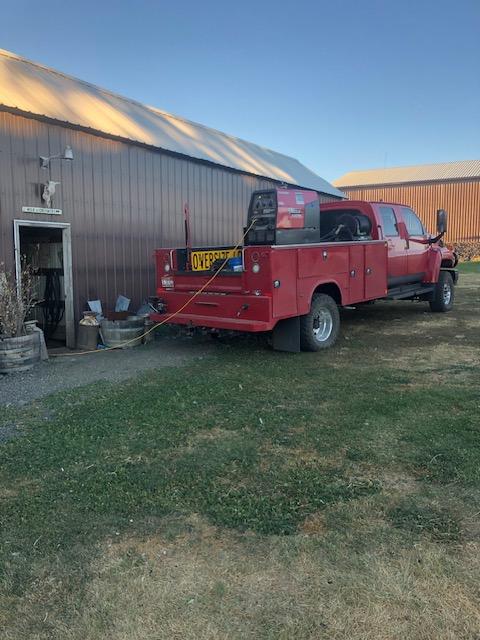
That outage taught me that keeping the business going is only half a plan if the people doing the work are left without what they need. Since then, we have changed our setup so the barn and the house can both have what they need. I would rather make those decisions now than stand outside with an extension cord and decide which matters more.
A family milk cow brings specific needs to that decision. She still needs water, her usual milking schedule, clean equipment, and a safe plan for the fresh milk. I cover the details in Keeping a Family Milk Cow During a Power Outage. If you are planning your first dairy setup, think about the daily commitment and backup costs as carefully as the purchase price; my family milk cow cost calculator can help you put those ordinary expenses on paper.
Do not assume a power outage is the moment to change a cow’s routine to once-a-day milking. That is a management decision to make based on her health, production, and stage of lactation, not a shortcut to improvise because a machine is unavailable. My once-a-day milking guide explains the considerations if that routine is something you want to plan ahead.
Prepare power for both the homestead and the home
Our barn-or-house choice is why I tell people to write down what their backup power is supposed to accomplish. A generator that can run the milking equipment may not also run the well, freezers, and house at the same time, and a small power station that charges phones is not a solution for a deep well pump.
List the equipment that is essential, find its actual power requirements, and remember that motors can draw more power when starting than while running. Decide what can operate in turns and what truly needs continuous power. Include any equipment needed for medical care before working down the list to freezers, communications, heat controls, and convenience.
Have a qualified electrician advise on a safe connection for your property. Never connect a portable generator through an improvised household outlet, and never operate one inside a house, garage, or barn, even if a door is open. Keep working carbon monoxide alarms in the home and place generators outside where exhaust cannot enter doors, windows, or vents.
Fuel needs a plan
Fuel needs its own plan. How much do you actually use when running the loads you intend to support? Can you start the generator after it has been sitting? Who knows the procedure when you are away? Test the setup, write down what worked, and keep the instructions with the equipment.
Remember the other parts of the household as well. If your heat comes from propane, check whether its ignition, fan, and controls work without electricity. Know how your toilet and any sewage pump function when the well is off. Keep phones charged, maintain a charged power bank and working flashlights, and put important phone numbers on paper rather than relying on a device with a dead battery.
A generator is not the only way to keep essential equipment running. The Jackery HomePower 3600 Plus with two 200W solar panels gives you a solar charging option for backup power at home. Jackery also makes smaller power stations for individual appliances, so you can choose a setup that fits what you want to keep running.
I also like having portable light that can move between the house and barn. The LuminAID Max 2-in-1 inflatable solar lantern and phone charger offers light and a backup way to give a phone some charge. Charge and test it before putting it with your outage supplies.
Prepare your home while you still have running water
Preparedness also includes the condition of your home when the power goes out.
If the power goes out with a sink full of dirty dishes, damp laundry in the washer, no clean work clothes, and garbage waiting by the door, the outage starts with a backlog. When water is limited, washing dishes may fall below livestock chores and drinking water, but food scraps will not politely wait for the power to return. By the time flies find them, the work has only grown.
I am not saying you need a spotless home. What I am saying is that maggots in the kitchen sink are the last thing you need while dealing with the stress of a power outage. Before a forecast storm, finish and dry the laundry, wash the dishes, empty the trash, fill suitable water containers, and set aside clean towels and work clothes. A full bathtub can flush a toilet for days. Keep soap, a basin, and a way to pour small amounts of safe water for handwashing and food-contact surfaces.
Pay special attention to milk equipment. A shortage of water does not make dirty dairy equipment acceptable. Nothing could be worse than no power, no toilet and family with diarrhea. Plan ahead for the water and method needed to clean what touches fresh milk. Check the toilet system, too, because a gravity-flush toilet and one dependent on a powered sewage pump present very different problems.
A clean house will not bring the power back, but it gives the family breathing room while you handle the things that truly cannot wait.
Prepare Your Body for the Work
I will be blunt: if your plan depends on carrying water, moving feed, walking fences, and doing chores by hand, your body has to be able to do that work. If you are currently out of shape and rely on modern machinery to do all the hard physical labor, once the power is out and fuel is scare, it will not matter how many pounds of rice are in your pantry if you are not fit enough to fend for yourself and tend to your livestock.
This is not about appearance or a number on a scale. Ask what your homestead demands when the machines stop, and be honest about what you can do today. Could you carry enough water for the animals, finish the barn chores by headlamp, or take over milking if the person who usually does it is sick or injured? Start building that strength and endurance now, while you can practice, rest, and change what is not working. People do not suddenly become stronger when the power goes out; heavy work, poor sleep, and worry wear them down, cloud their judgment, and make it harder to stay hopeful. Store water closer to where it is needed, use a cart when it helps, and teach more than one person the essential chores, because no one should have to carry the whole homestead alone.
Food production is physical, too. Knowing how much milk your cow produces helps you plan the water, labor, and cold storage her production requires. Measure the real work behind your own food supply before you promise yourself you can keep doing all of it without power.
Prepare Your Family Spiritually
I can put water in containers, preserve food, and test a generator, but none of those things can hold my family steady when we are tired and afraid. For that, I need to be in God’s Word now, while the house is quiet enough to listen.
Psalm 46 reminds me that God is our refuge and strength. Proverbs 21:31 speaks to the balance I want in our home: we prepare the horse for the day of battle, but the victory belongs to the Lord. Preparing the homestead is part of caring faithfully for what He has given us; trusting the equipment more than Him would leave us standing on something fragile.
Read the Bible with your family before an outage turns every conversation into a decision under pressure. Pray together. Talk honestly about what each person can do, who might need help, and how you will treat one another when the chores are harder and sleep is short. I want my children to know how to care for an animal and how to turn to Christ when we have done all we can and still need help.
Faith is not the last item to tuck into an emergency kit. It is the foundation underneath the rest of this work.
Try your plan before the lights go out
Choose a manageable day to practice without putting your food or anyone’s health at risk. Have someone else follow the written chore sheet. Set up barn lighting after dark. Move a realistic amount of water with the equipment you intend to use. Cook a meal with your safe backup setup, and run your generator through its properly installed connection with the loads you planned for it.
You will learn where the missing hose is, which gate is awkward in the dark, how quickly the water disappears, and which instructions make sense only to the person who wrote them. That is exactly why you practice before an outage.
Then make the changes you can afford and repeat the exercise. Water first. Food you can keep and cook. Animals whose care is understood by more than one person. A house that is not already behind. Build the strength to do the work, and put better systems in place so no one has to carry the whole load alone. Above all, a family grounded in the Lord rather than the hope that nothing difficult will happen.
That is how I want to prepare our homestead: not out of panic, but because caring well for our people, animals, and food is already part of our everyday work.
Practical Homesteading, Straight From Our Farm
Power Outage Preparedness FAQ
What should I prepare first for a power outage?
Find the first essential system that fails when power stops. On a livestock homestead with an electric well, animal and household water often deserve the first plan; medical equipment or unsafe household temperatures may take immediate priority for another family.
How do I keep livestock watered without electricity?
Measure how much the animals use, store enough to buy time, and test how you will get additional suitable water to every group. Include winter access, frozen tanks, and the amount of labor required to move it.
Do I need a generator to prepare my homestead?
A generator can be useful, especially for a well pump or refrigeration, but its value depends on whether it can run the actual equipment safely and whether you have the fuel and knowledge to operate it. Stored water, shelf-stable food, manual skills, and shared chore knowledge still matter.
How do I protect a year’s worth of meat in the freezer?
Inventory it, monitor freezer temperature, know the likely cold-storage window, and decide in advance what backup power or alternate cold storage is available. Diversify future food storage so a single freezer failure cannot take the entire harvest.
What do people overlook when preparing for an outage?
The ordinary work: clean clothes, dishes, trash, a working toilet plan, sanity, physical capacity for manual chores, and another person who knows how to care for the animals. For our family, time in Scripture belongs in that preparation as well.