Common causes of salty milk in cows, including mastitis, somatic cell counts, and changes during lactation.
This post may contain affiliate links. If you purchase through these links, I may earn a small commission at no additional cost to you.
If you’ve ever wondered why your cow’s milk taste salty, it’s often an early sign that something has changed in the udder. Salty milk is most commonly linked to mastitis or increased somatic cell counts, though it can also occur during late lactation or after freshening. Paying attention to changes in milk flavor during milking can help you catch udder health problems early.
Why does cow’s milk taste salty?
- Early or subclinical mastitis
- Late lactation (cow drying off)
- Mineral or feed imbalance
In many cases, salty milk is one of the earliest signs that something has shifted in the udder—even before more obvious symptoms appear.
“Taste this!”
That’s usually what I say when something about the milk doesn’t seem quite right.
On this particular winter morning, I was sitting on an upside-down bucket at the old wooden stanchion, working through the normal rhythm of milking. Three cows stood quietly eating their flakes of fresh alfalfa while the sun was just beginning to come up over the pasture.
As my hands moved across the udder, I noticed something that made me pause. One quarter felt warmer than the others. Not dramatically swollen, not hard, just noticeably warm under my hand. The milk looked normal as it hit the bucket. No clots. No blood. Nothing that would immediately raise alarm.
But experience has taught me that when something feels off, it’s worth paying attention.
So I stripped a small stream of milk into my palm and tasted it. Instead of the sweet, creamy flavor fresh milk usually has, the taste was unmistakably salty. If you’ve ever wondered why your cow’s milk tastes salty, this is often the first clue that something has changed inside the udder.
In many cases, salty milk can be an early sign of mastitis or increased somatic cell counts, even before obvious symptoms appear.
Understanding why milk flavor changes, and what to check when it does, can help you catch udder health problems early and protect both your cow and your milk supply.
What Causes Salty Milk in Cows?
Fresh milk from a healthy cow should taste sweet, clean, and creamy. If the milk suddenly tastes salty, something has usually changed inside the udder.
The most common reason is mastitis, which is inflammation of the udder. When a quarter becomes inflamed, the balance of minerals in the milk shifts. Sodium and chloride levels rise while lactose drops. That change is what creates the salty taste.Sometimes this happens before you see obvious signs like clots or swelling. The milk can look completely normal in the bucket, but the flavor will tell you something is off.
Another thing that can cause salty milk is a high somatic cell count. Somatic cells are part of the cow’s immune system. When the udder is fighting irritation or infection, those cell counts rise. As that happens, the chemistry of the milk changes and the flavor often turns salty.
There are also times in a cow’s lactation cycle when milk flavor can shift slightly. Right after calving, while milk transitions from colostrum to regular milk, the mineral balance can be different and the flavor may be a little salty for a short time. Late in lactation, as a cow begins to dry off, milk can also become more concentrated and develop a salty taste.
Diet and minerals can play a role as well, although it’s less common. Excess salt intake, dehydration, or sudden feed changes can occasionally affect flavor. Most of the time, though, when milk suddenly tastes salty, the udder is trying to tell you something.
That’s why paying attention to flavor during milking can be surprisingly useful. For people who milk their own cows, taste is often the first sign that a quarter needs a closer look.
What to Check When Your Cow’s Milk Suddenly Tastes Salty
When milk suddenly tastes salty, it’s worth slowing down and taking a closer look at the cow before the next milking.
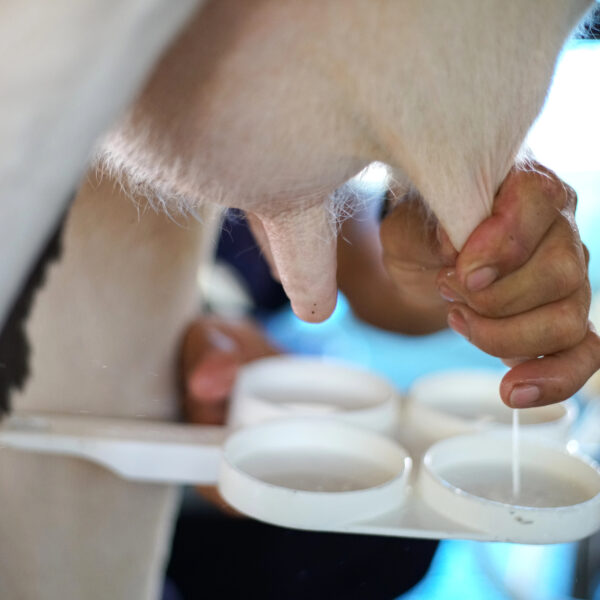
The first thing I check is the udder itself. Run your hands over each quarter and compare them. A quarter that feels warmer, firmer, or slightly swollen than the others can be an early sign that the udder is irritated or inflamed. Sometimes that warmth is the very first thing you notice.
Next, strip a few streams of milk from each quarter and watch it carefully.
Things to look for include:
- flakes or clots in the milk
- watery or unusually thin milk
- thick or stringy milk
- milk that drains slowly through the filter
In some cases the milk may still look completely normal even though the flavor has changed. That’s why taste alone can sometimes be the first clue that something isn’t quite right.
It’s also worth paying attention to milk production and the cow’s behavior. A quarter that suddenly produces less milk or a cow that seems sensitive during milking may need a closer look.
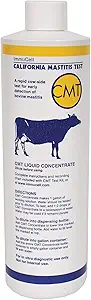
One of the most common reasons for salty milk is mastitis, which is inflammation of the udder. It doesn’t always start dramatically. Early or subclinical mastitis can begin with small changes like a warm quarter or a shift in milk flavor before obvious symptoms appear. If something seems off, running a California Mastitis Test (CMT) can help determine whether somatic cell counts are elevated in a particular quarter.
The key is simply paying attention during milking. The feel of the udder, the look of the milk, and even the flavor can give early clues about udder health. When milk suddenly tastes salty, it’s usually worth investigating rather than ignoring it.
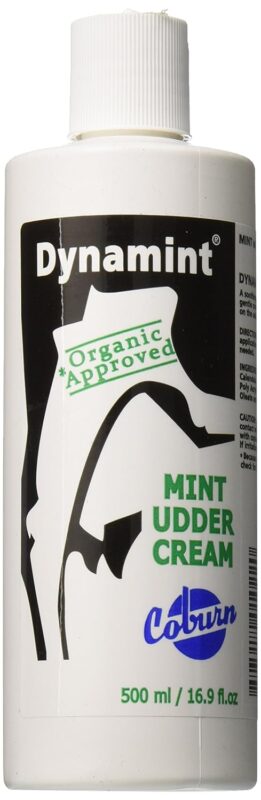
Udder Health Tools I Keep on Hand
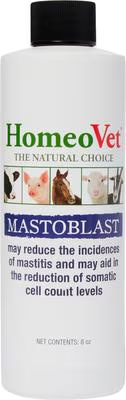
When I’m milking cows, there are a few tools I always keep in the milk room to quickly check udder health and catch problems early.


Is Salty Milk Safe to Drink?
When milk suddenly tastes salty, most homesteaders instinctively wonder the same thing: should we still drink it?
In many cases, salty milk is a sign that the udder is fighting inflammation, most commonly mastitis. Even when the milk still looks normal, the chemistry of the milk has already begun to change. As somatic cell counts rise and the udder responds to irritation or infection, the balance of minerals in the milk shifts. Sodium and chloride increase, lactose decreases, and that change is what gives the milk its salty taste.
Because of this, most dairy farmers choose not to drink milk that suddenly tastes salty, especially if mastitis is suspected. While the milk may not necessarily be dangerous in every case, the quality is reduced and the cow likely needs attention.
Discarding that milk while you check the udder and monitor the cow is usually the safest choice.
There are a few situations where milk may taste slightly salty for reasons other than mastitis. Shortly after calving, while the milk transitions from colostrum to normal milk, the flavor can temporarily be different. Late in lactation, as a cow begins to dry off, milk can also become more concentrated and slightly salty. Even in those cases, many small dairy keepers prefer to feed that milk to pigs, chickens, or barn cats rather than use it for the household.
For most people who milk their own cows, a sudden salty taste is simply a signal to pause and investigate. Checking the udder carefully, watching the cow over the next few milkings, and running a mastitis test if needed can help you catch problems early and keep the herd healthy.
How to Prevent a Cow’s Milk From Tasting Salty
Most of the time, salty milk is simply the udder’s way of telling you something needs attention. Good daily habits in the barn go a long way toward preventing mastitis and keeping milk tasting the way it should.
One of the biggest factors is clean, dry bedding. Wet or manure-soaked bedding creates the perfect environment for bacteria that can enter the teat and cause infection. Keeping stalls bedded well and replacing damp bedding regularly makes a real difference in udder health.
Milking hygiene matters just as much. Taking a few moments to clean the udder before milking helps prevent bacteria from being introduced during the process. Many small dairy keepers use a pre-dip or a clean cloth with warm water to wipe the teats before milking.
It’s also important to fully milk out each quarter. When a quarter isn’t stripped out properly, milk can remain in the udder longer than it should. That leftover milk can create pressure and irritation, which can open the door to mastitis. I’ve seen this happen more often when people are transitioning between hand milking and using a machine, because the two methods empty the udder differently. If you’re curious about the pros and cons of each approach, I wrote a separate article comparing hand milking and machine milking for family milk cows, which goes deeper into that topic.
Another thing to watch for is calves butting the udder. When calves nurse aggressively, they can bump or bruise a quarter, which sometimes leads to inflammation. Most of the time it isn’t a serious issue, but repeated head-butting can occasionally contribute to udder problems.
Old-fashioned knowledge, straight to your inbox
Why Post-Milking Teat Dipping Matters
Finally, post-milking teat dipping is one of the simplest ways to prevent infection. After milking, the teat canal does not close immediately. In fact, the teat can remain open for up to about 45 minutes after milking, which leaves a short window when bacteria can easily enter the udder. A good post dip helps protect the teat during that time while the canal closes naturally.
None of these steps are complicated, but together they form the foundation of good udder health. Clean bedding, careful milking habits, and paying attention to small changes during chores can go a long way toward preventing problems before they start.
Milk cows have a way of telling you when something isn’t quite right. Sometimes it’s a swollen quarter or clots in the milk. Other times it’s something as simple as a change in flavor. Over time you learn to pay attention to those small clues during milking. When milk suddenly tastes salty, it’s usually the cow’s way of asking you to take a closer look.